
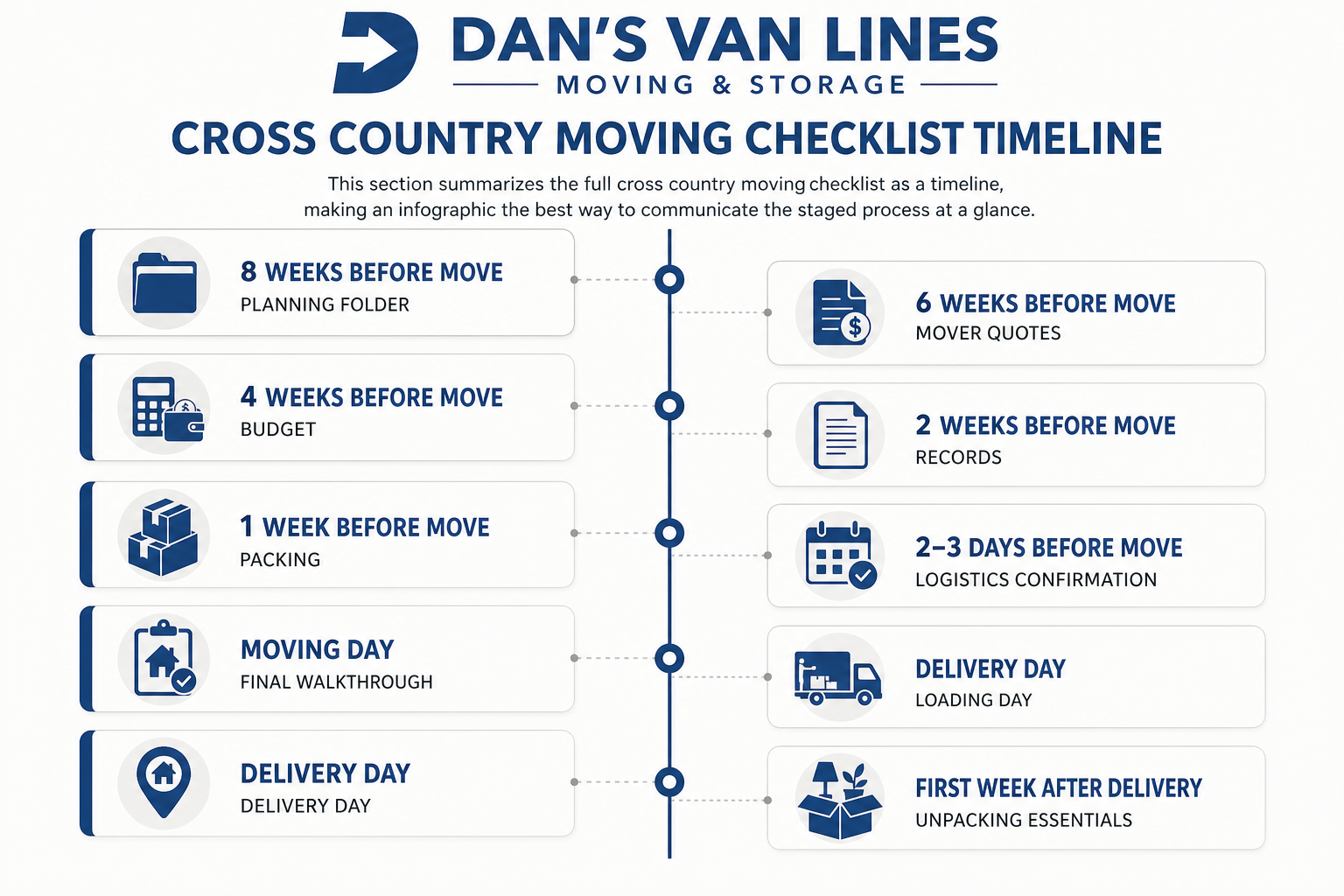
Packing works best when it starts as a plan, not a scramble. Begin 6 to 8 weeks before moving day, start with items you rarely use, and save daily essentials for the final 1 to 2 days. That timeline gives you room to declutter, gather supplies, protect fragile belongings, and label boxes for the home you are moving into.
At Dan’s Van Lines, we help homeowners, renters, and businesses throughout Alexandria and Northern Virginia plan moves with fewer surprises. If you have questions while building your packing plan, you can reach out through our contact page.
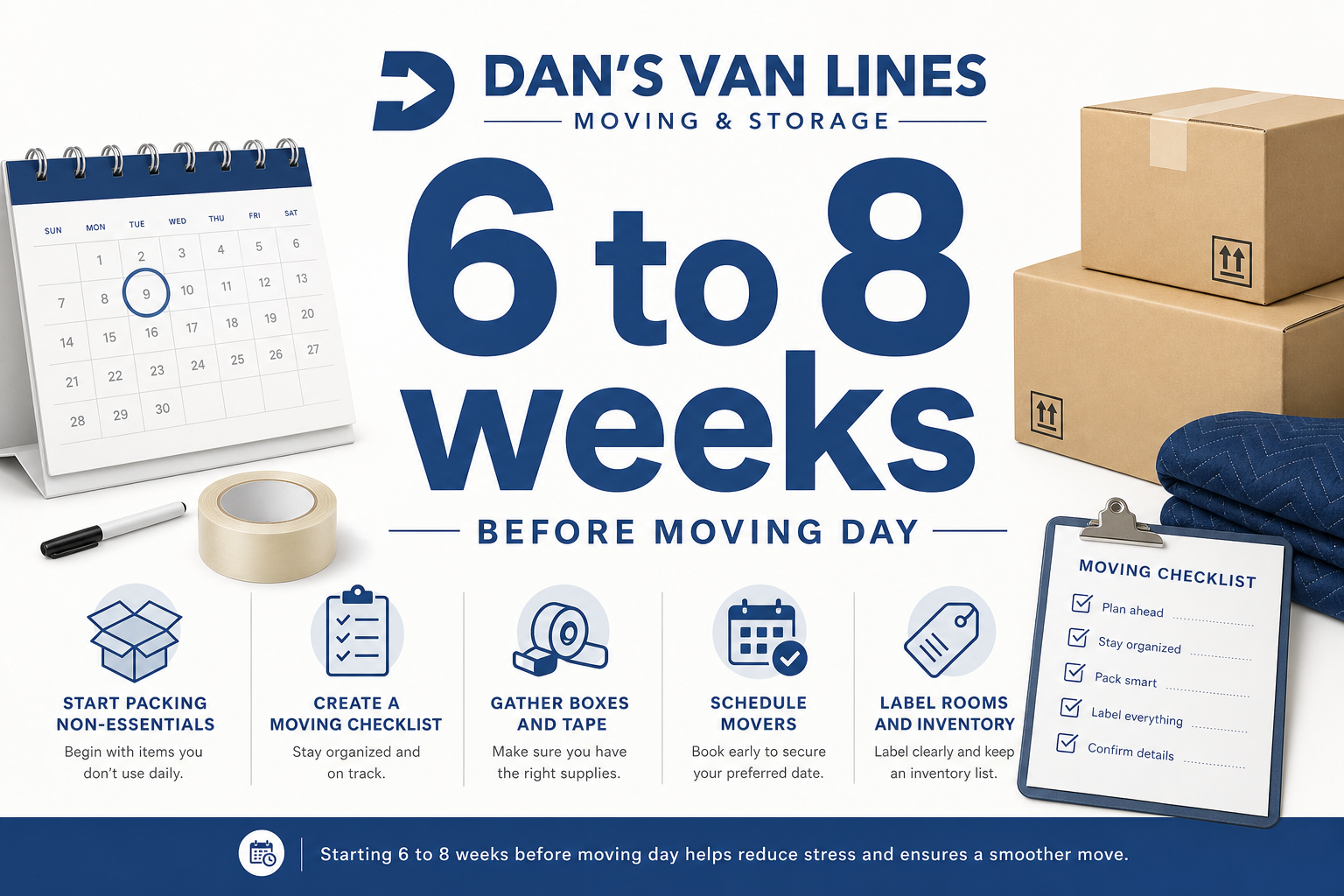
Start Packing 6 to 8 Weeks Before Moving Day
A strong packing timeline keeps your home livable while still making steady progress. Many moving timelines recommend planning and decluttering about 8 weeks out, then packing in phases so you are not forced to reopen boxes for things you still need. The goal is simple: reduce what you move, protect what matters, and keep daily-use items accessible until the end.
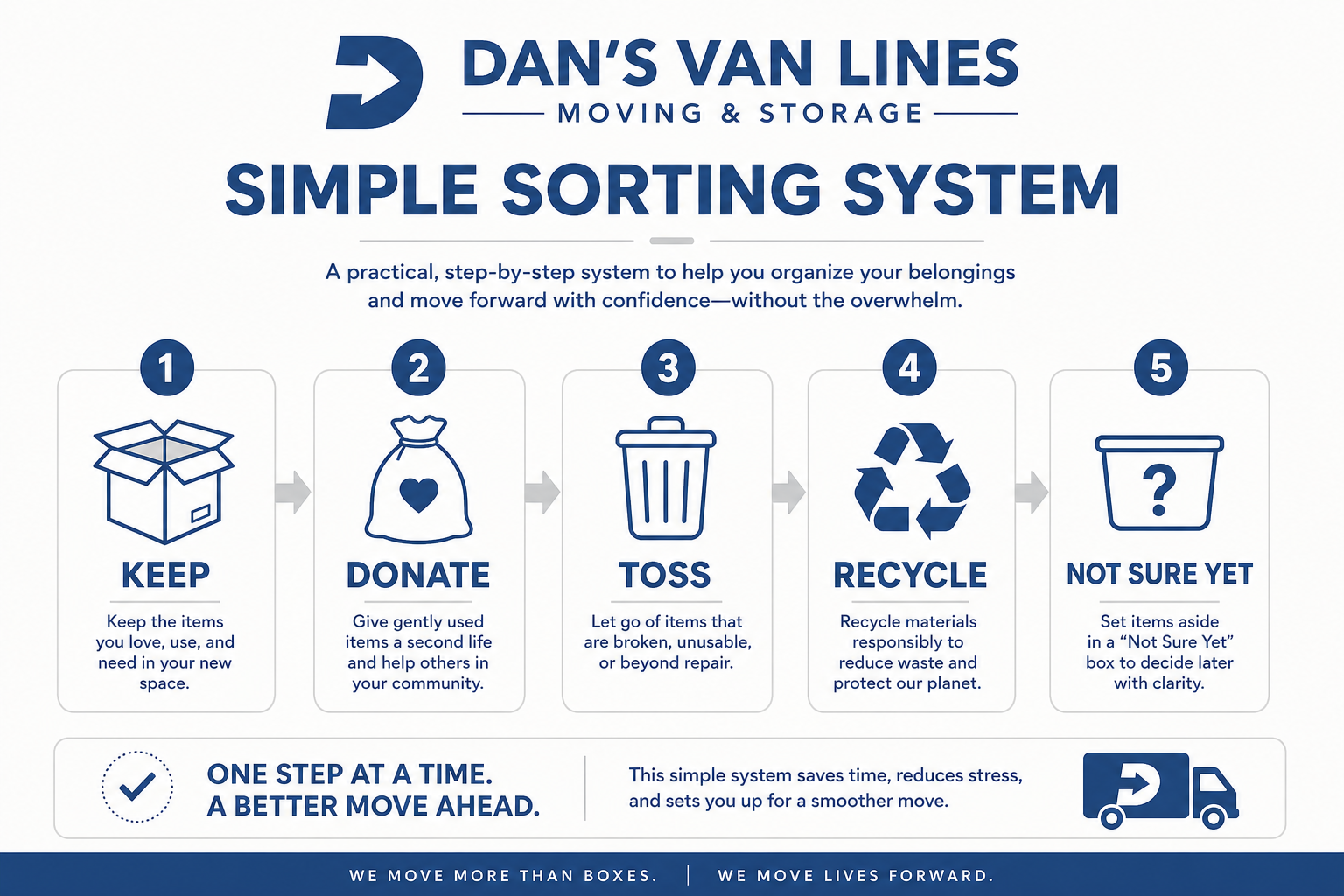
From 8 to 6 weeks before your move, focus on decisions rather than boxes. Walk through each room and create a simple inventory of large furniture, fragile items, high-value belongings, and anything that may need special handling. Sort items into keep, donate, sell, recycle, or discard piles.
A 6 to 8 weeks before moving day timeline gives you enough time to work from least-used spaces toward the rooms you rely on daily. Guest rooms, seasonal storage, formal dining spaces, attics, basements, and hobby areas are good early targets because packing them will not disrupt routines.
From 6 to 4 weeks out, begin boxing non-essential items. Books, out-of-season clothes, décor, artwork not needed for staging, extra linens, hobby supplies, and guest room contents can usually be packed without inconvenience. Around this stage, order packing materials and begin labeling boxes consistently.
From 4 to 2 weeks out, move into frequently used but non-critical spaces. This may include home office shelves, extra closets, toys not used daily, garage items, and non-essential kitchenware. Fully seal each box as you go rather than leaving half-packed boxes open around the house.
During the final week, pack kitchens, bathrooms, daily clothing, kids’ essentials, and the items you still use at night or in the morning. Reserve the last 48 hours for essentials boxes, refrigerator preparation, important documents, chargers, medication, and anything you will personally transport.
Build a Packing List for Moving Before You Buy Supplies
A useful packing list for moving starts with the right materials. Good supplies help boxes stay intact, reduce damage, and make unloading easier. The most common mistake is buying too few boxes or relying on containers too flimsy for heavy household items.
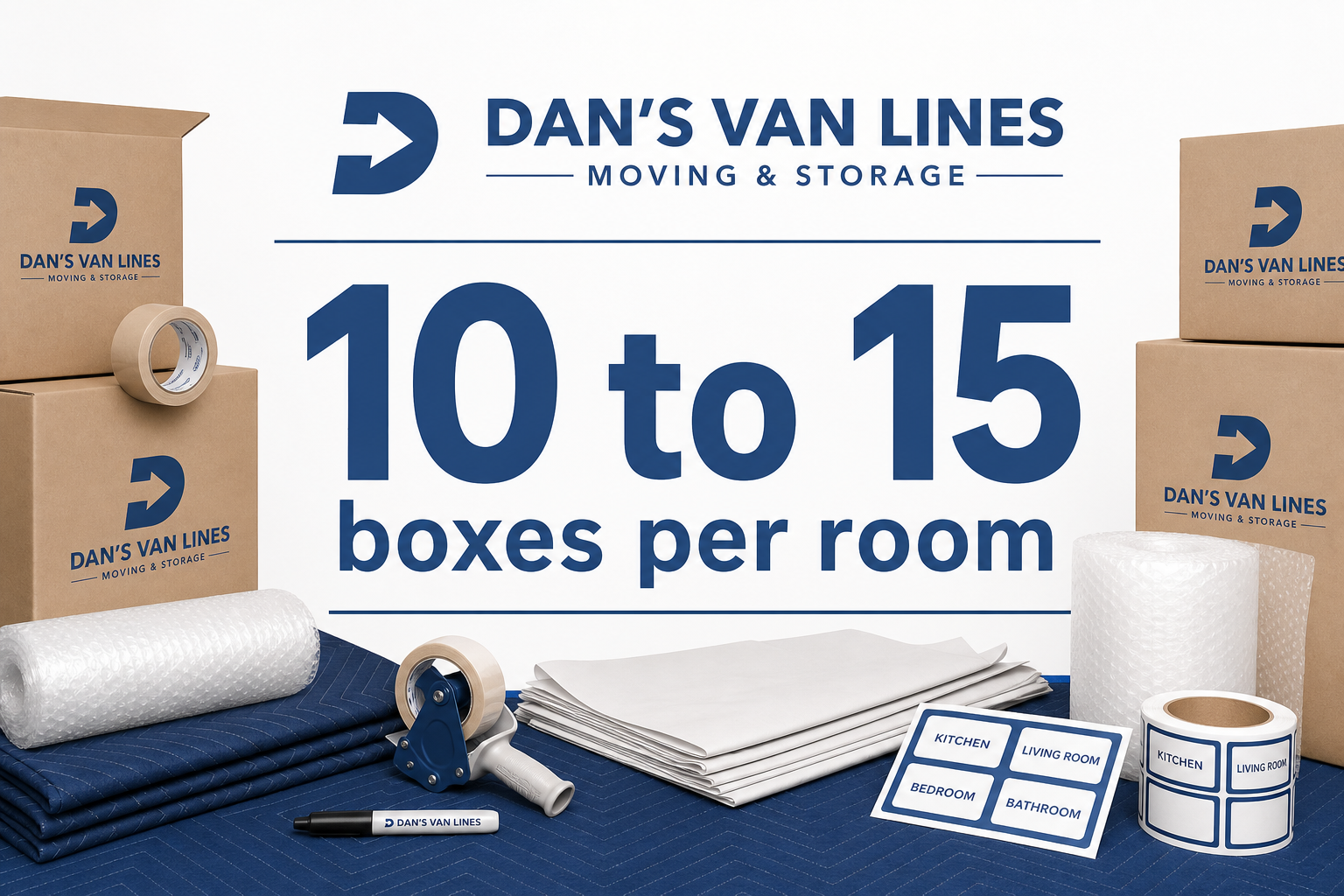
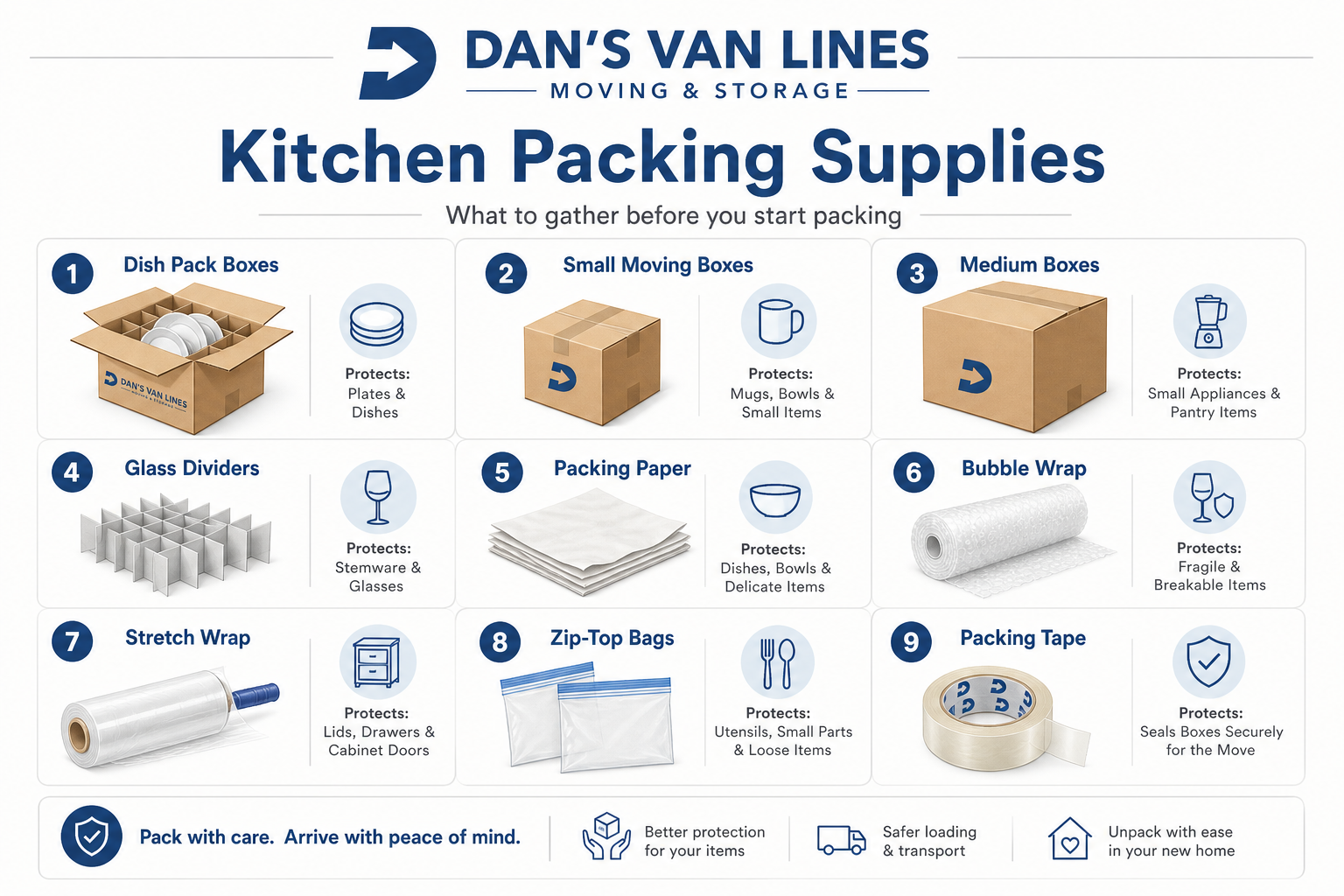
Professional moving checklists commonly recommend sturdy cardboard boxes in multiple sizes, packing tape, bubble wrap, packing paper, furniture pads, and permanent markers. As a rough planning metric, movers often suggest 10 to 15 boxes per room and ordering about 20% more boxes than your first estimate because most households underestimate.
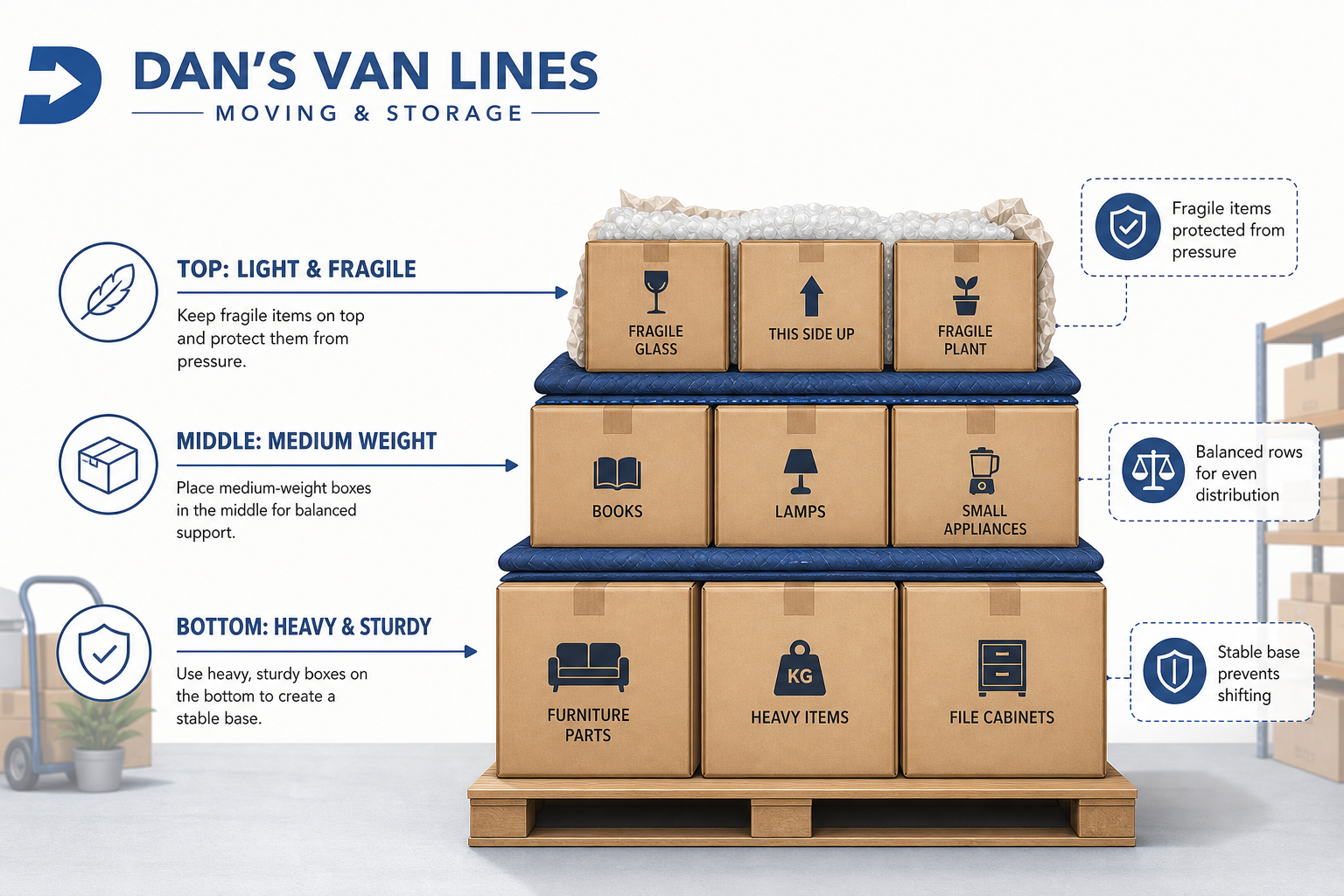
Your supplies should match the weight and shape of what you own. Heavy items need small containers. Bulky, lightweight belongings need large ones. Fragile items need padding and tight packing so they cannot shift during loading, transport, or unloading.
Small boxes: Use these for books, tools, canned goods, documents, and other dense items that become too heavy in larger boxes.
Medium boxes: Use these for kitchenware, pantry items, small appliances, folded clothes, and general household items.
Large boxes: Use these for bedding, pillows, plush toys, light linens, and other bulky but lightweight items.
Wardrobe boxes: Use these for hanging clothes so shirts, suits, dresses, and coats can stay on hangers.
Packing paper or newsprint: Use this for dishes, glassware, and delicate décor that need individual wrapping.
Bubble wrap and foam padding: Use these for fragile, delicate, or high-value belongings that need extra cushioning.
Stretch wrap: Use this to secure drawers, doors, and bundled items before moving.
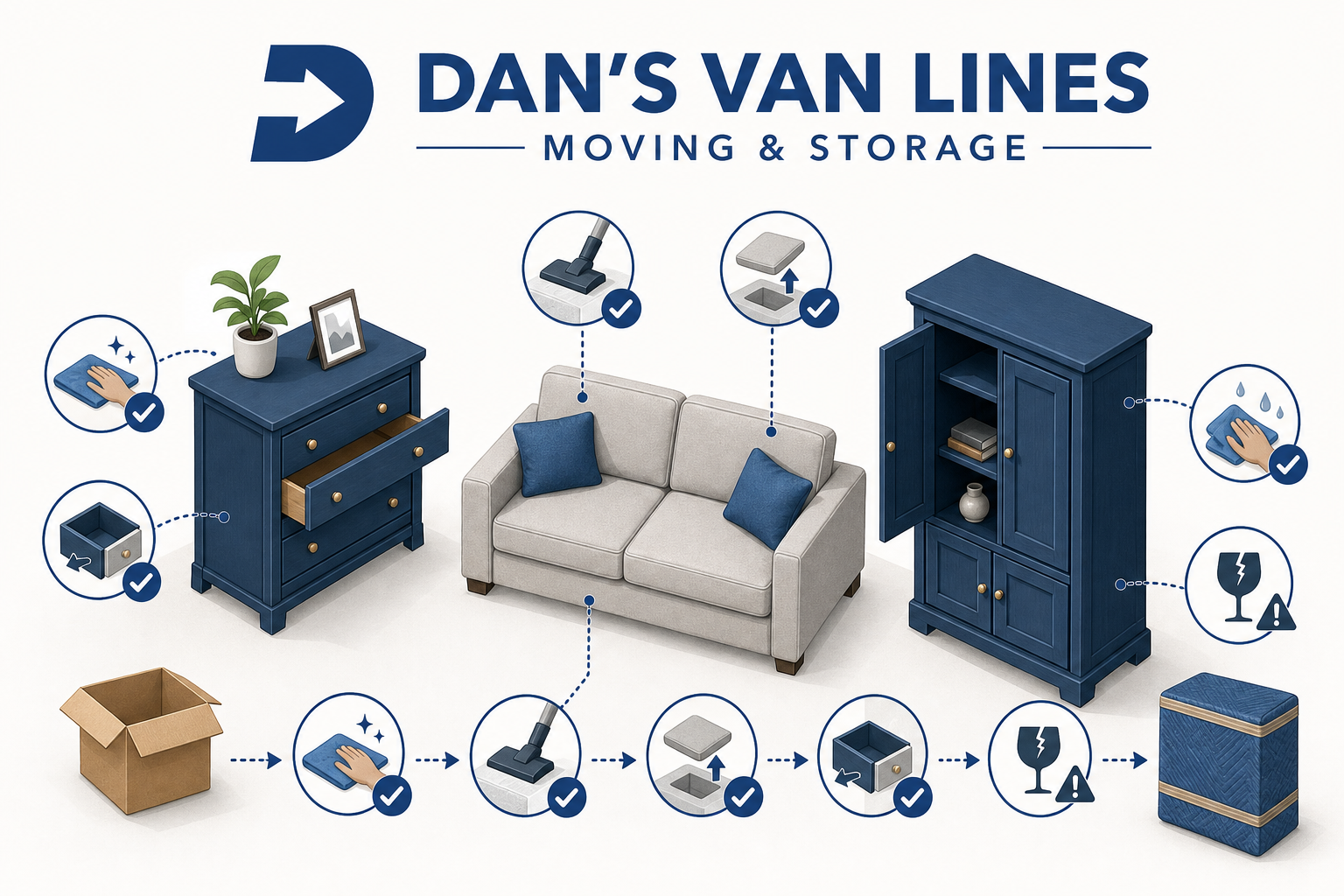
Furniture pads or moving blankets: Use these to protect large pieces and finished surfaces during handling.
Permanent markers and labels: Use these to mark each box with the destination room and a short description.
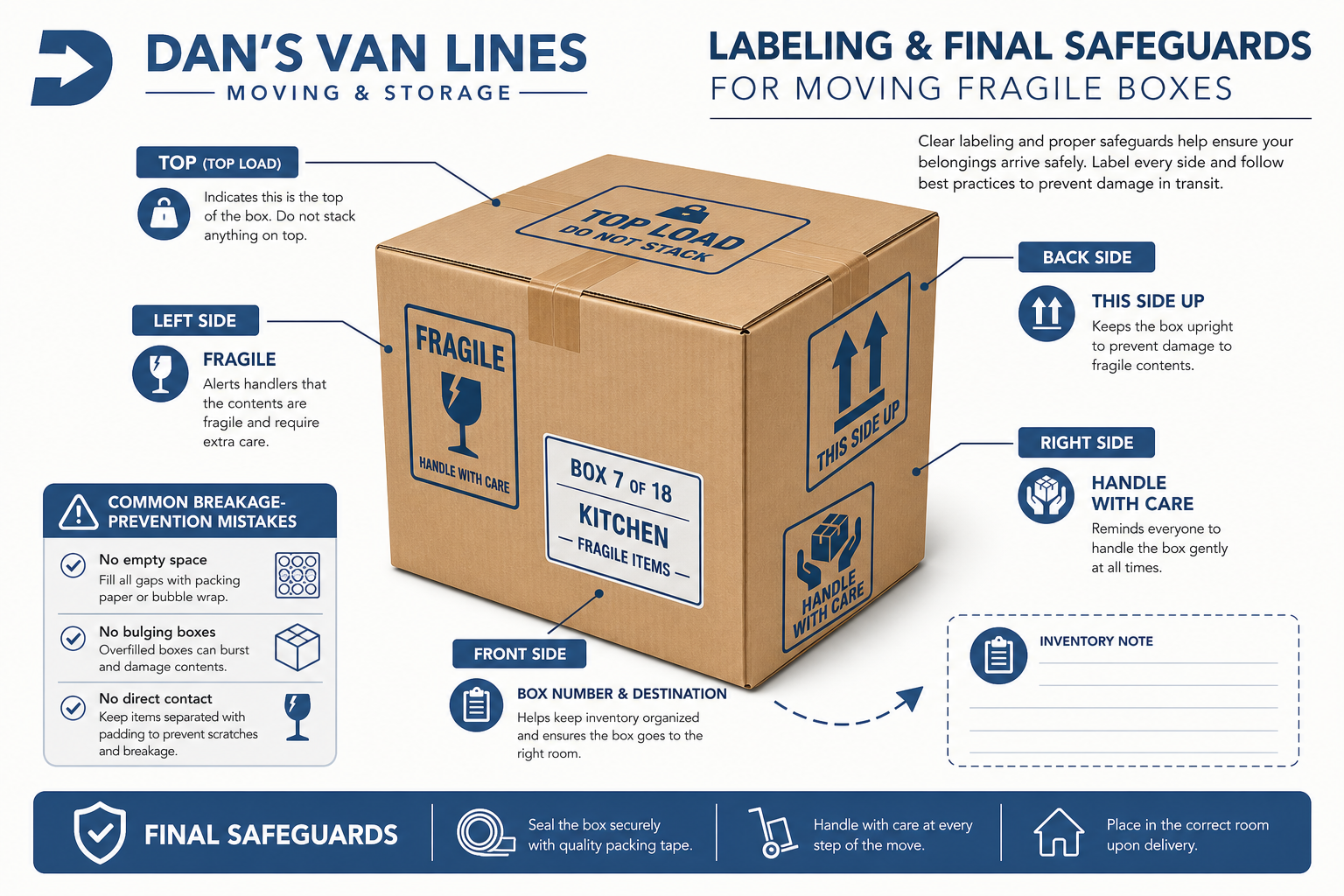
Labeling should be part of your packing list, not an afterthought. Label boxes for the new home, not the current one, so each box can be placed directly in the correct room. Write labels on the side rather than only on top, since stacked boxes often hide top labels.
Create a Packing Checklist for Moving That Controls Clutter and Priority
A packing checklist for moving should do more than tell you what to put in boxes. It should help you decide what not to move. Decluttering early reduces the number of boxes, the time spent packing, and the work waiting in the new home.
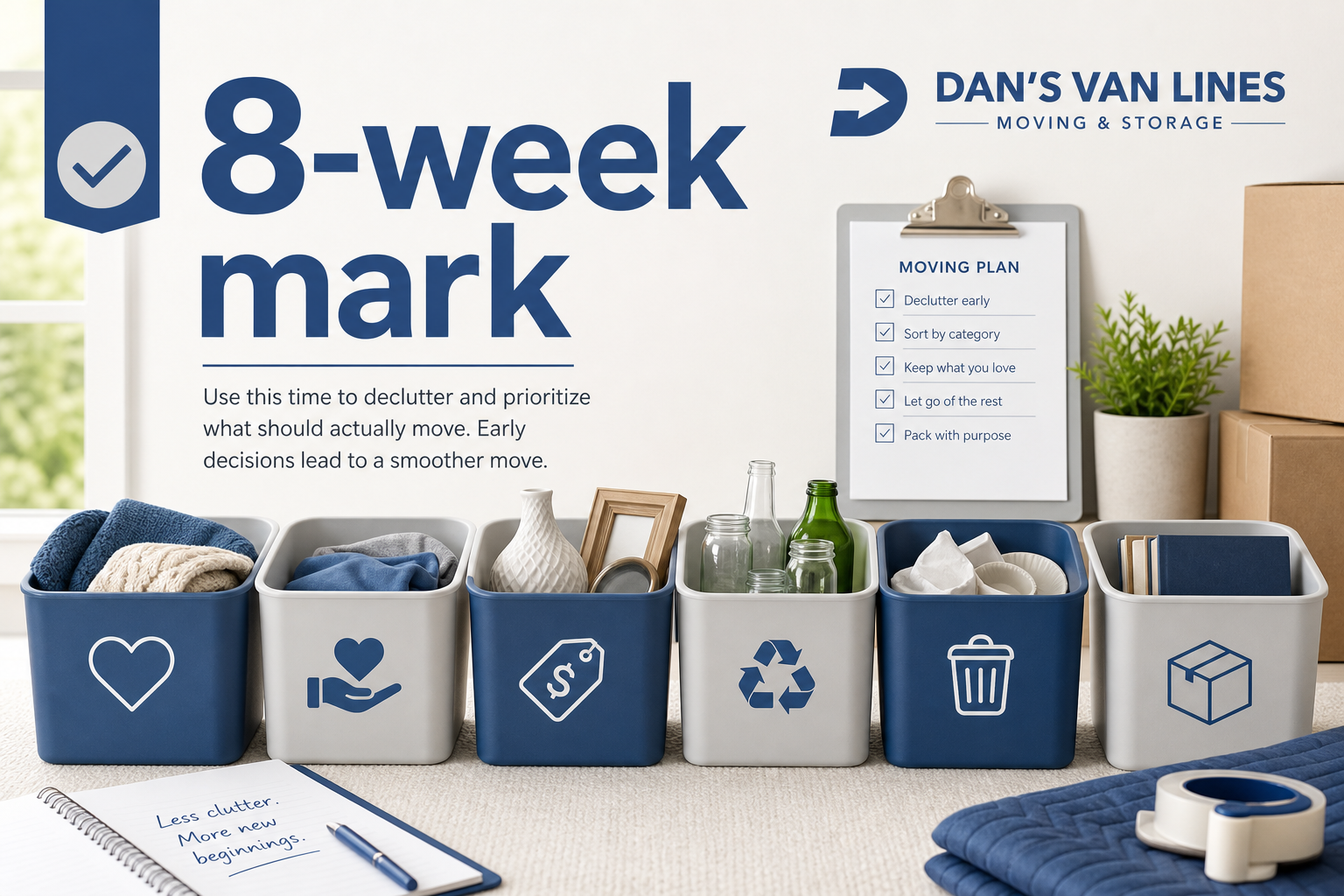
At the 8-week mark, walk room by room and ask whether each item fits your new space, supports your current lifestyle, and is worth the cost and effort to move. Items that are duplicate, no longer fit, or have not been used in a year are strong candidates for donation, sale, recycling, or disposal.
Several moving guides emphasize that the most effective packing strategy is to avoid packing what you do not use. A room-by-room checklist also keeps your decisions organized. Instead of making random piles, assign every item a category and move forward with purpose.
Keep: Items you use regularly, love, need for the new home, or would immediately replace if lost.
Donate: Usable items that no longer fit your home, lifestyle, or space but may still serve someone else.
Sell: Furniture, equipment, or décor with resale value that you do not want to move.
Recycle: Paper, containers, worn materials, and items that can be responsibly recycled instead of boxed.
Discard: Broken, expired, unsafe, or unusable items that should not travel to the next home.
Store: Bulky seasonal or specialty items that you want to keep but may not have room for immediately.
A moving binder or shared digital folder can make your checklist easier to manage. Use it to track mover information, receipts, insurance details, box numbers, inventories, and notes about fragile or high-value belongings. A box inventory in one place can also help you find important items without opening every box.
For moves that include storage, downsizing, or specialty items, add a storage decision column. Rarely used exercise equipment, oversized furniture, seasonal sports gear, specialty tools, and collections may need temporary storage if they will not fit the new home right away.
This is also where Dan’s Van Lines can help you think through packing complexity. If your inventory includes delicate furniture, high-value items, or belongings that may need storage between homes, our team can help align the packing plan with the move date and handling needs.
Pack Each Room in an Order That Protects Your Daily Routine
Room-by-room packing prevents scattered boxes, forgotten drawers, and half-finished spaces. The best sequence starts with rooms you use least and gradually moves toward high-traffic areas. This keeps your home functional while reducing what is left for the final week.
Begin with guest rooms, formal dining rooms, seasonal décor, basement storage, attic storage, and hobby spaces. These areas usually contain items that can be boxed weeks ahead without disrupting work, meals, sleep, or school routines. Mark these boxes as lower priority for unpacking if they do not need to be opened right away.
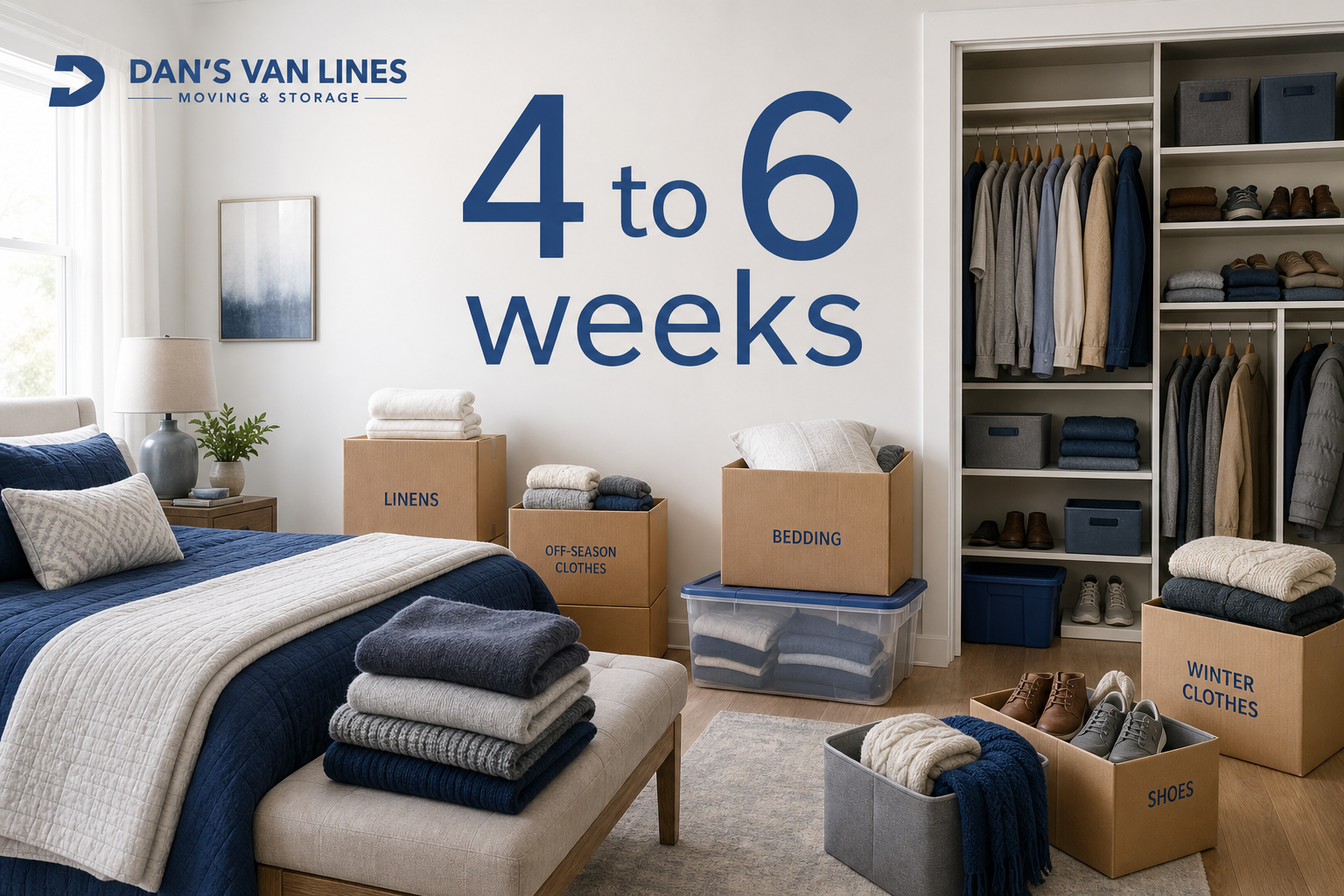
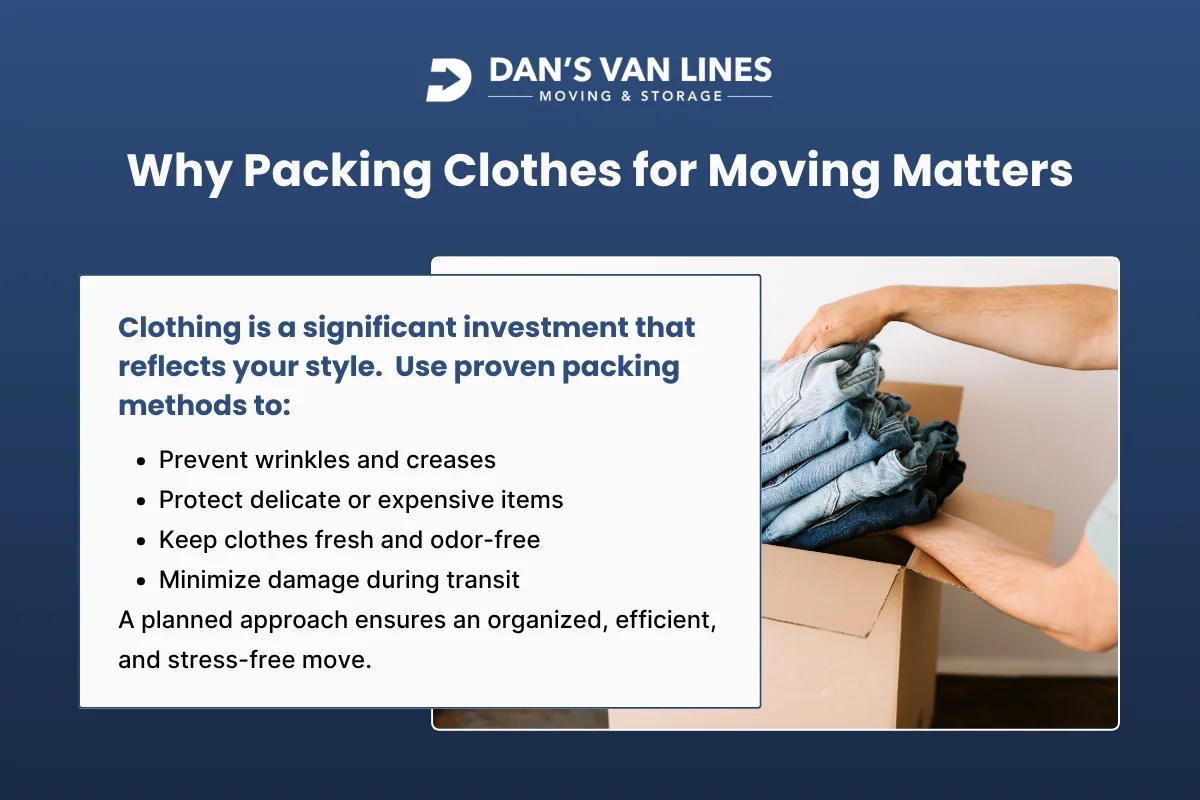
Clothing and linens can be phased in over time. Out-of-season clothing and spare bedding can be packed 4 to 6 weeks before moving. Leave current-season clothes, daily shoes, towels, and one or two bedding sets accessible until the last few days.
Kitchens should be handled in stages because they contain both fragile items and daily-use items. Pack specialty cookware, holiday dishes, serving platters, and rarely used appliances early. Keep everyday cookware, plates, utensils, and basic pantry items available until the final days.
For dishes, wrap each piece individually and place plates vertically like records instead of stacking them flat. This reduces pressure and breakage risk. Medium boxes are usually best for kitchenware because they provide space without becoming unmanageable.
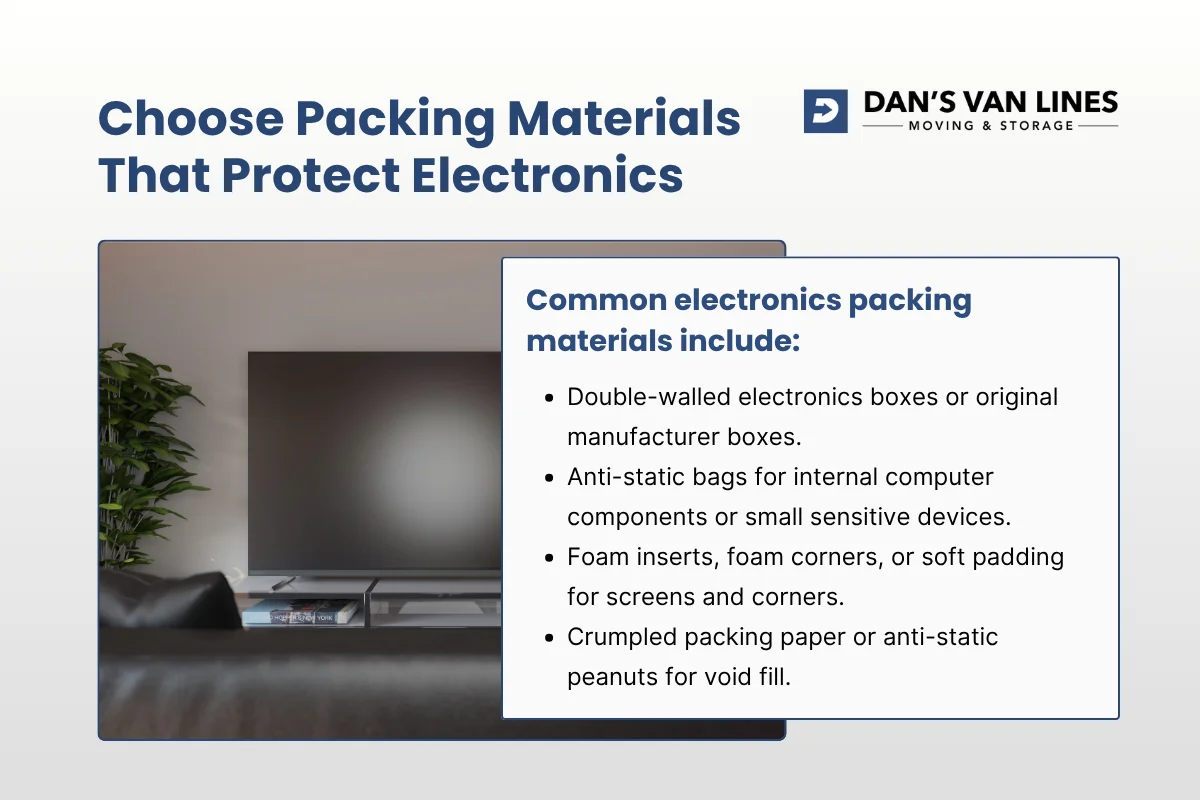
Electronics and home office items need careful organization. Before unplugging devices, take photos of cable connections and label cords with tape or tags. Store cables in bags taped to the related device or in a clearly marked electronics box. Important files and documents should be packed in labeled file boxes and kept accessible.
Bathrooms and daily essentials should be packed last. Toiletries, medications, chargers, children’s items, pet supplies, work-in-progress files, and everyday clothing belong in the final phase. Keeping these items available prevents living out of sealed boxes too early.
Protect Fragile, Valuable, and Specialty Items With Extra Planning
Fragile and high-value items need more than a quick layer of paper. Glassware, fine china, artwork, mirrors, collectibles, antiques, musical instruments, electronics, and sentimental pieces should be identified early so you can gather proper materials and decide whether professional packing or crating is appropriate.
For glassware, china, and delicate décor, use sturdy boxes, generous padding, and individual wrapping. Fill empty spaces so items cannot shift. Mark fragile boxes on multiple sides and include the destination room, which helps movers place them correctly and handle them with care.
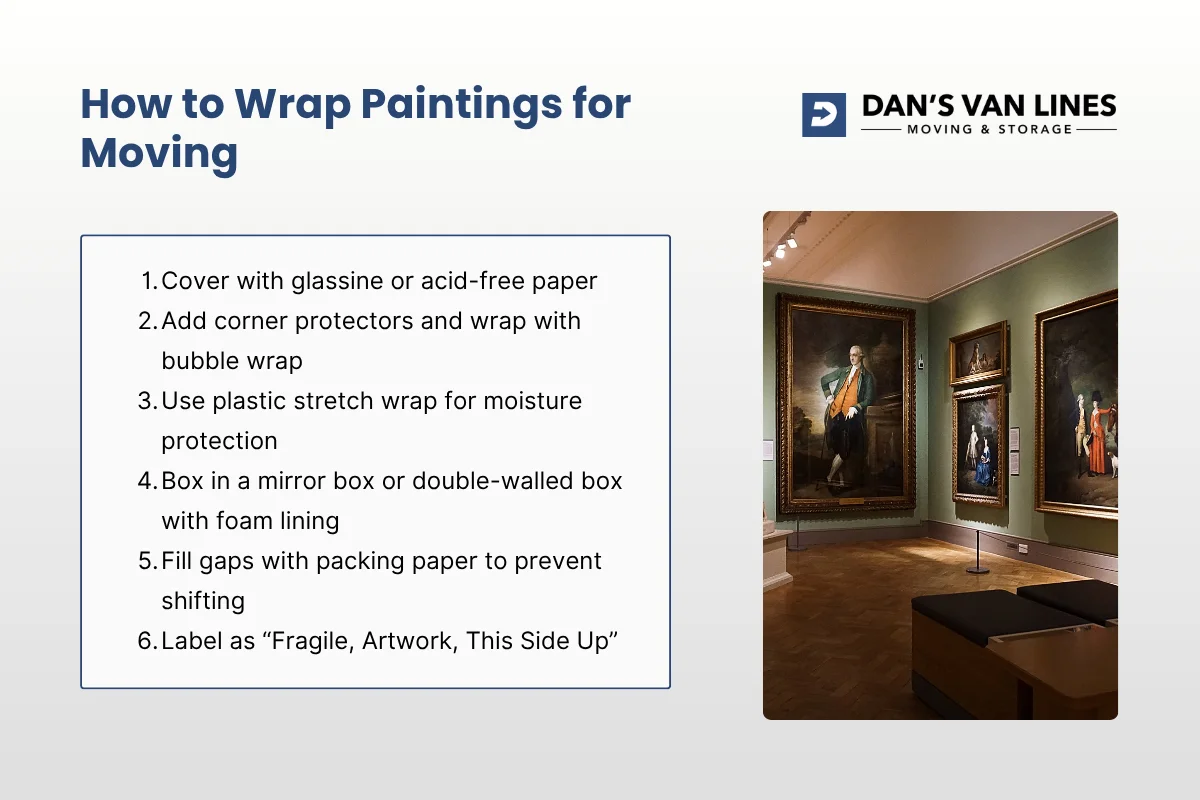
Artwork and mirrors should be packed in picture or mirror boxes when possible. Corners and edges need padding because they are vulnerable during handling. Large or high-value pieces may require custom crating, especially on long-distance moves where road vibration lasts longer.
Books and documents require a different kind of care because weight is the main issue. Use small boxes for books so containers do not become too heavy. Pack books flat or with spines down, and fill open spaces to prevent shifting. Important documents should be gathered early and transported with you rather than loaded with general household goods.
Many moving guides recommend keeping boxes under manageable weight limits, and small boxes are especially important for books and dense items. The destination room and contents should be written clearly on each box so unloading is organized from the start.
Sentimental items deserve their own category in your inventory. Photo albums, heirlooms, keepsakes, and irreplaceable items should be packed in small, well-padded boxes and kept easy to identify. If an item has high monetary or emotional value, list it in your inventory and review handling or valuation options before moving day.
Hazardous materials and perishables should not be packed with regular household goods. Paints, chemicals, propane tanks, and perishable food must be discarded or handled separately because most movers will not transport them. Use the weeks before the move to use up open pantry items and sort anything that cannot safely travel.
Prepare Essentials Boxes and Decide When Professional Packing Makes Sense
The final 48 hours are much easier when essentials are separated before the rest of the home is sealed. Prepare one essentials box per person and one for the household. These boxes should be loaded last and unloaded first so the first night in the new home is manageable.
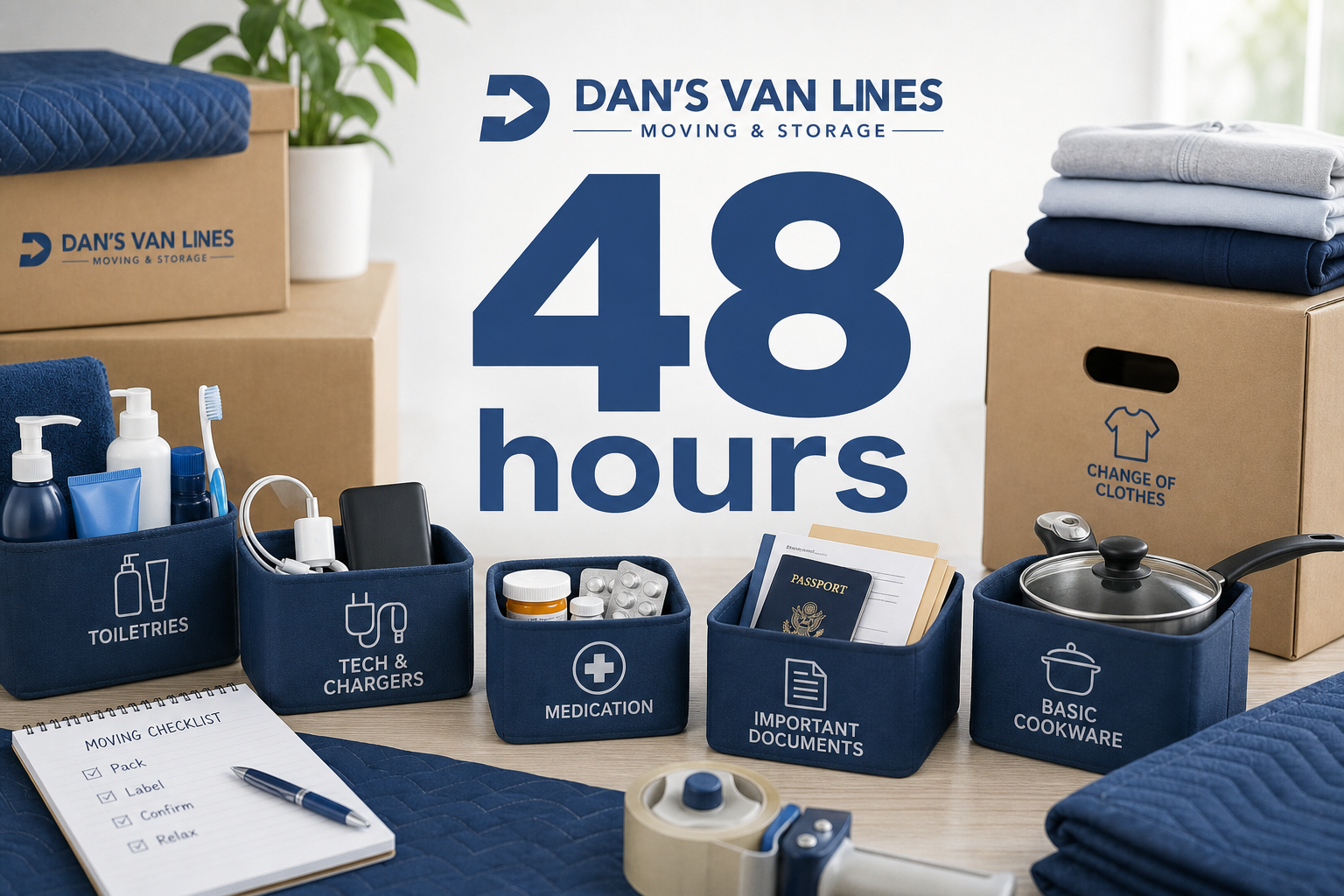
Essentials boxes should include toiletries, basic cookware, medications, chargers, a change of clothes, important documents, and everyday items you cannot be without. Families may also need children’s items, pet supplies, school materials, and a small set of towels. Keep valuables, critical documents, and irreplaceable sentimental items with you rather than placing them in the truck.
The refrigerator should be defrosted and cleaned at least 24 hours before move day to prevent leaks and odors. Kitchens often take longer than expected, so do not leave every cabinet for the last night. Keep a small working set of kitchenware aside, then pack it into a clearly labeled essentials box.
Professional packing becomes worth considering when time, scale, fragility, or distance increase risk. DIY packing often works well for smaller local moves with mostly clothes, books, and soft goods. Larger homes, tight timelines, fragile collections, artwork, antiques, electronics, glassware, and long-distance moves are stronger candidates for full-service or hybrid packing.
A professional packing or hybrid approach can focus expert help on the highest-risk areas while you handle simpler items yourself. For example, you might pack clothing, linens, books, and non-fragile items over several weeks, then have professionals pack the kitchen, artwork, electronics, and delicate décor in the final days.
If you want help turning these packing tips for moving into a practical plan, Dan’s Van Lines can help with local moving, long-distance moving, storage, specialty moving, and full-service packing. Get a Quote through our contact page or call us today at (703) 553-0900.








.webp)
%20(1).webp)
.webp)
.webp)
.webp)
.webp)
.webp)


.avif)
%201.svg)

%201.svg)
%201.svg)