
.webp)
Moving a couch is rarely as simple as it seems. Whether you’re relocating across town or preparing for a long-distance move, the process of moving a sofa or sectional involves more than just muscle. Professional couch movers use specialized techniques and materials to ensure your furniture arrives undamaged, clean, and ready for your new space. This guide explains how expert movers handle couches and sectionals, why their methods matter, and how Dan’s Van Lines in Alexandria, VA can make your move stress-free.
In Alexandria, VA, Dan's Van Lines are your trusted specialists for local and long distance moves. If anything is unclear as you read this guide, feel free to contact us.
Why Professional Couch Movers Matter
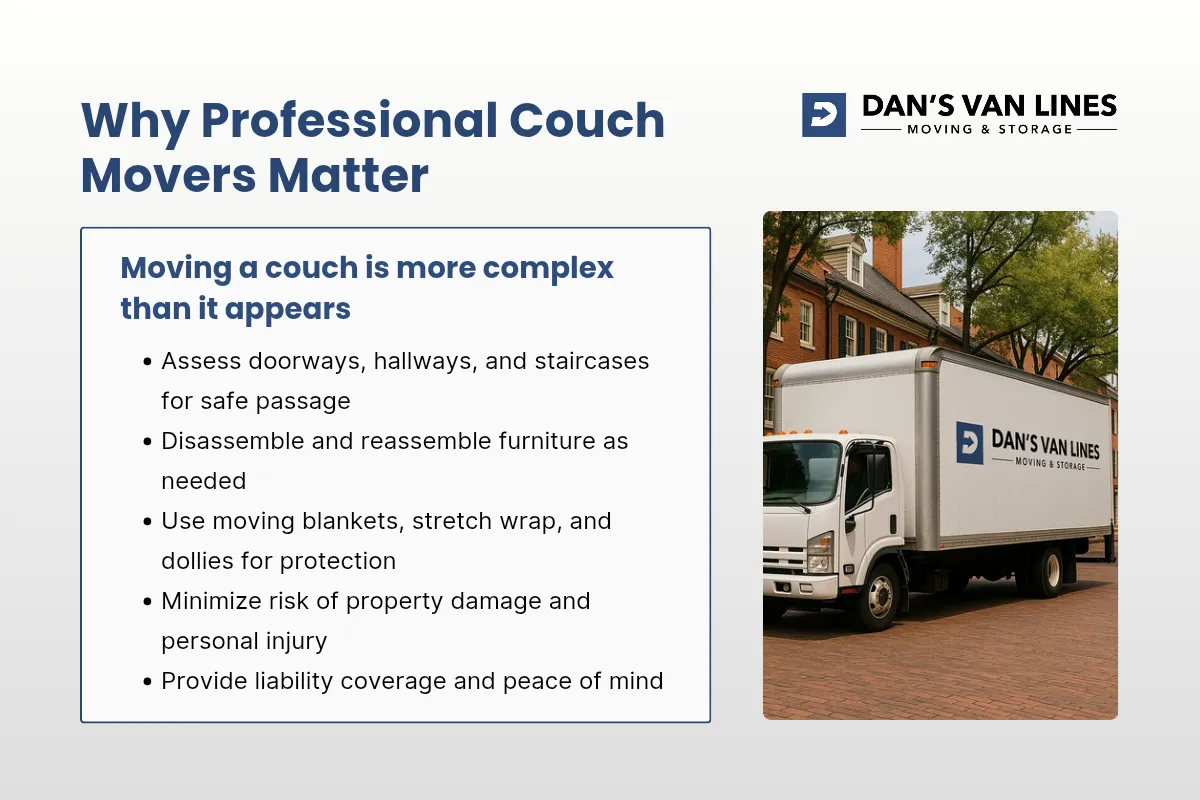
Moving a couch is deceptively challenging. Many people underestimate the size, weight, and awkward shape of most sofas, leading to costly mistakes when attempting a DIY move. Without the right techniques, it’s easy to scrape walls, dent door frames, or tear upholstery. Even a minor miscalculation can result in permanent damage to both your furniture and your home. Worse, improper lifting or maneuvering can cause serious back injuries or strains, especially when navigating stairs or tight corners.
Professional couch movers eliminate these risks by applying years of hands-on experience and specialized training. They know how to assess the best route through your home, measure doorways and hallways for clearance, and disassemble or reassemble furniture as needed. Their expertise allows them to anticipate and solve problems before they arise, ensuring a smooth and efficient process from start to finish.
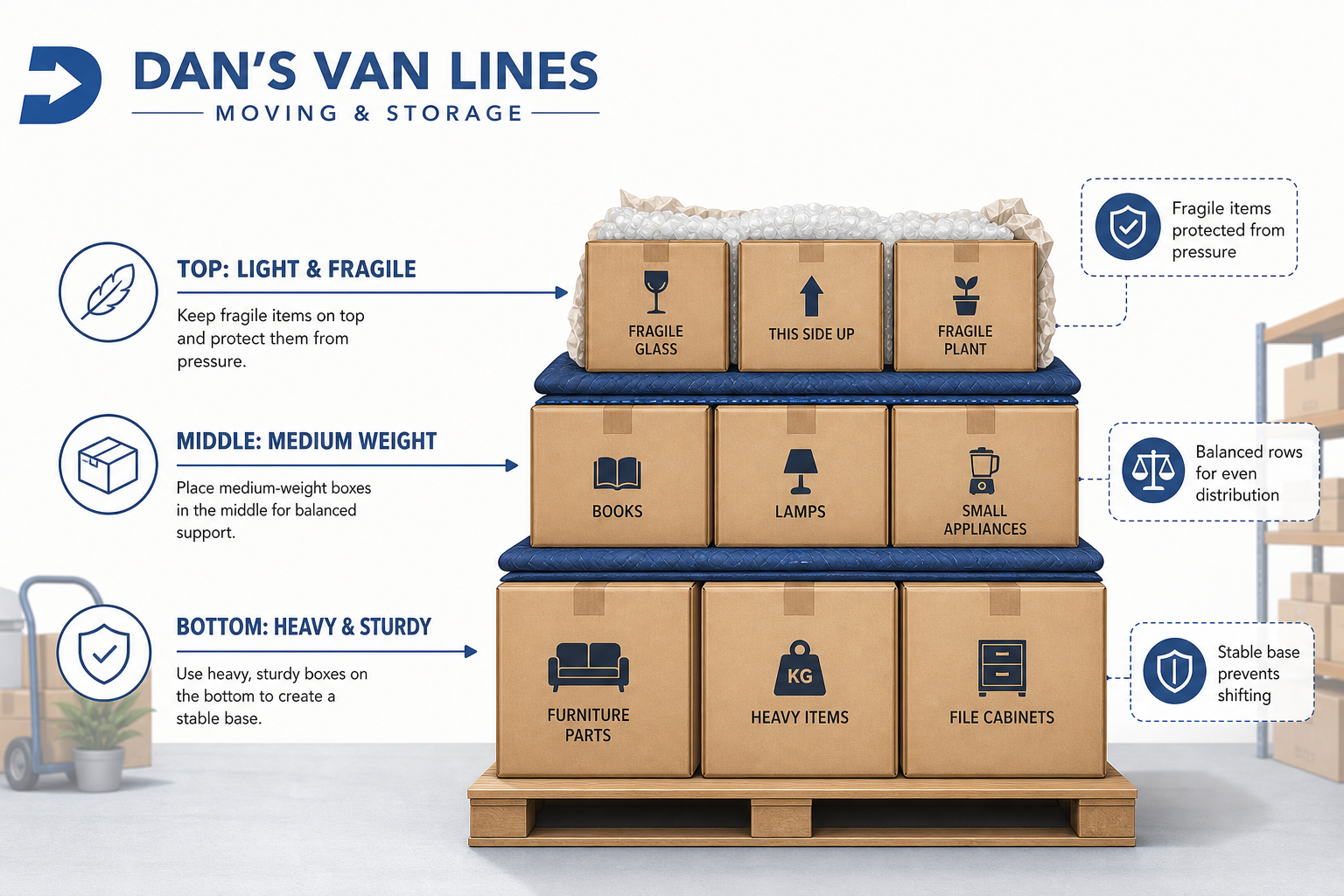
Equipped with industry-grade tools, such as moving blankets, stretch wrap, dollies, and lifting straps, professional movers can protect your couch from dirt, moisture, and impact damage. They use proven strategies for wrapping and securing each piece, minimizing the chance of scuffs, rips, or dents during transit. This attention to detail not only preserves the appearance and value of your furniture but also safeguards your property from accidental damage.
For both homeowners and renters, hiring professional couch movers is a smart investment. It saves time, reduces stress, and provides peace of mind knowing your belongings are in capable hands. With liability coverage and a commitment to customer satisfaction, professional movers offer a level of security and efficiency that DIY efforts simply can’t match. In most cases, the cost of hiring experts is far less than the potential expense of repairing damaged furniture or property, or dealing with a preventable injury.
Step-by-Step: How Pros Wrap and Prepare a Couch for Moving
Proper wrapping is the foundation of safe couch moving. Movers follow a detailed process to shield your sofa from dirt, moisture, and impact damage. Here’s how the pros do it:
Preparation: Disassembly and Cleaning
Before any wrapping begins, movers remove all cushions, pillows, and detachable legs. This reduces the weight and bulk of the couch, making it easier to maneuver. Hardware is stored in labeled bags for easy reassembly. Cleaning the couch with a vacuum and fabric cleaner ensures no debris gets trapped under the protective layers, which is especially important for long-term storage or long-distance moves. Allowing the couch to dry fully before wrapping prevents moisture buildup inside the layers, which could otherwise lead to mold or odors during transit. This attention to detail is a hallmark of professional service and a key reason to trust experienced movers with your furniture.
Layer One: Moving Blankets for Impact Protection
Moving blankets are draped over every surface of the couch, including arms, back, and any exposed frame. For sectionals, each piece is wrapped individually after disconnecting brackets or clips. The thick padding of these blankets absorbs shocks and prevents scratches or dents during handling and transport. For leather couches, blankets are especially important, they prevent plastic wrap from sticking to the surface, which can cause damage or discoloration. Movers use blankets sized specifically for furniture, ensuring full coverage and maximum protection.
Layer Two: Securing with Tape and Stretch Wrap
Once the blankets are in place, movers use packing tape to secure them. Importantly, the tape never touches the upholstery directly, which avoids sticky residue or fabric damage. After the blankets are secured, industrial-strength stretch wrap is applied from top to bottom in overlapping layers. This creates a tight seal that keeps out dirt, dust, and moisture. For extra protection, bubble wrap may be added to vulnerable areas like arms and corners. The result is a multi-layered shield that can withstand the rigors of moving trucks and unpredictable weather conditions.
Moving Sectionals: Disassembly and Individual Wrapping
Sectional sofas are popular for their comfort and versatility, but their size and modular design can make them especially challenging to move. Unlike standard couches, sectionals often consist of multiple interconnected pieces, each with its own shape and weight. Professional movers address these challenges by carefully disassembling the sectional before transport. This process typically involves unfastening connecting brackets, clips, or screws that hold the sections together. By separating each piece, movers can more easily maneuver the components through doorways, hallways, and staircases, significantly reducing the risk of accidental damage to both the furniture and the property.
Once disassembled, each section is wrapped individually using the same multi-layer protection process applied to standard couches. Movers start by removing all cushions and pillows, which lightens each piece and prevents shifting during transit. Moving blankets are draped over every surface to cushion against impacts, followed by a layer of stretch wrap to seal out dust and moisture. Hardware such as screws and brackets is carefully bubble-wrapped and stored in clearly labeled bags, ensuring nothing is lost and reassembly at your new home is straightforward. For especially heavy or bulky sections, movers use shoulder dollies or lifting straps to distribute weight evenly and maintain control, which is particularly important when navigating stairs or long hallways. This attention to detail and use of specialized equipment helps prevent injuries and ensures your sectional arrives in perfect condition.
How Movers Navigate Couches Through Doors and Tight Spaces
One of the most common challenges during a move is getting a couch through a doorway or other tight space. Professional movers approach this task with careful planning and precision. The process begins with accurate measurements of both the couch and the doorway, ensuring there is at least 2-4 inches of clearance on all sides. If the fit is especially tight, movers may remove the door from its hinges, which can provide an additional 2-3 inches of space, often just enough to make the difference between a successful move and a frustrating obstacle.
Preparation is key. Movers clear the path on both sides of the doorway, removing any obstacles and laying down blankets or sliders to protect floors from scratches and scuffs. For particularly narrow spaces, the couch may be stood on end and carefully pivoted through the opening vertically. This technique is especially effective in homes with high ceilings, as it leverages the couch’s height rather than its width. In some cases, the couch may need to be angled or tilted to fit through unusually shaped or sized doorways. Throughout the process, movers use lifting straps or shoulder dollies to distribute the weight of the couch, reducing strain and improving control. These tools also help prevent accidental drops or bumps that could damage the furniture or the home as described by Division 1 Moving.
- Measure both the couch and the doorway before attempting to move.
- Remove doors from hinges for extra clearance if needed.
- Clear all obstacles and protect floors with blankets or sliders.
- Use lifting straps or shoulder dollies to distribute weight and reduce strain.
- Pivot the couch vertically or at an angle for tight fits.
By following these steps, professional movers achieve a remarkable 95% first-try success rate when moving couches through challenging spaces. This efficiency minimizes the need for further disassembly or risky maneuvers, saving time and reducing the likelihood of damage.
Stair Navigation: Keeping Your Couch and Home Safe
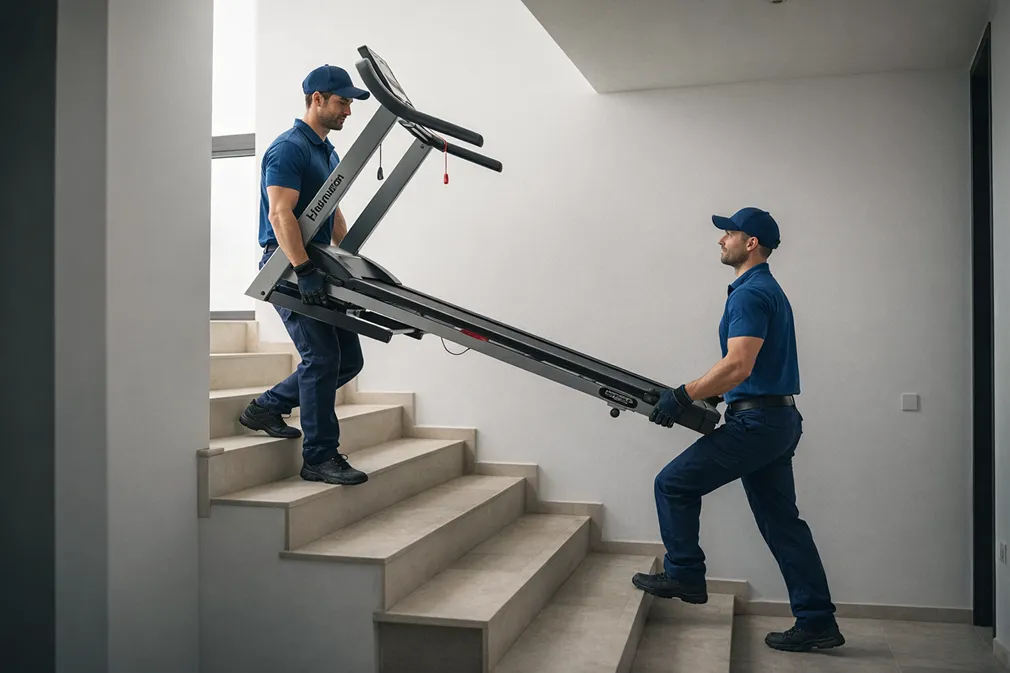
Stairs present a unique set of challenges when moving large furniture like couches and sectionals. The risk of damage to both the furniture and the property increases significantly, as does the potential for personal injury. Professional movers address these risks through careful coordination and the use of specialized techniques. Team members communicate clearly, using “high-side/low-side” calls to guide the couch around turns and up or down steps. For sectionals, each piece is moved separately, often standing upright to fit around tight landings or corners.
Lifting straps are used to harness body leverage, reducing hand strain and improving control over the heavy load. Movers always measure landings in advance; if a landing is less than 36 inches wide, they may carry the couch vertically or pad the railings to prevent accidental scrapes and dents. To maintain safety and prevent fatigue, breaks are taken every 10-15 steps, allowing movers to rest and reposition as needed. Thorough wrapping is especially important on stairs, as unprotected fabric is highly susceptible to abrasion from railings, walls, or steps. By following these protocols, movers significantly reduce the risk of damage and ensure a smooth, safe transition for your furniture.
Protecting Your Couch from Dirt, Moisture, and Damage
Ensuring your couch arrives at its destination in pristine condition requires more than just careful handling. Professional movers use a combination of protective materials and techniques to guard against dirt, moisture, and physical damage. Moving blankets provide a thick, cushioned barrier that absorbs shocks and prevents scratches or dents. Stretch wrap is applied over the blankets to seal out dust, dirt, and moisture, which is especially important when moving in inclement weather or storing furniture for any length of time.
Foam guards are added to the corners and edges of the couch, as these areas are most vulnerable to bumps and scrapes during the move. For moves involving rain or snow, plastic wrap is used to create a waterproof barrier, keeping upholstery dry and free from water stains. Movers are also careful to avoid prolonged contact between wood and plastic, which can cause damage over time. Once the move is complete, couches are unwrapped immediately to allow the fabric to breathe and prevent any trapped moisture from causing mold or odors. This meticulous approach ensures your furniture remains clean, dry, and undamaged throughout the entire moving process.
Professional vs. DIY Couch Moving: What’s the Difference?
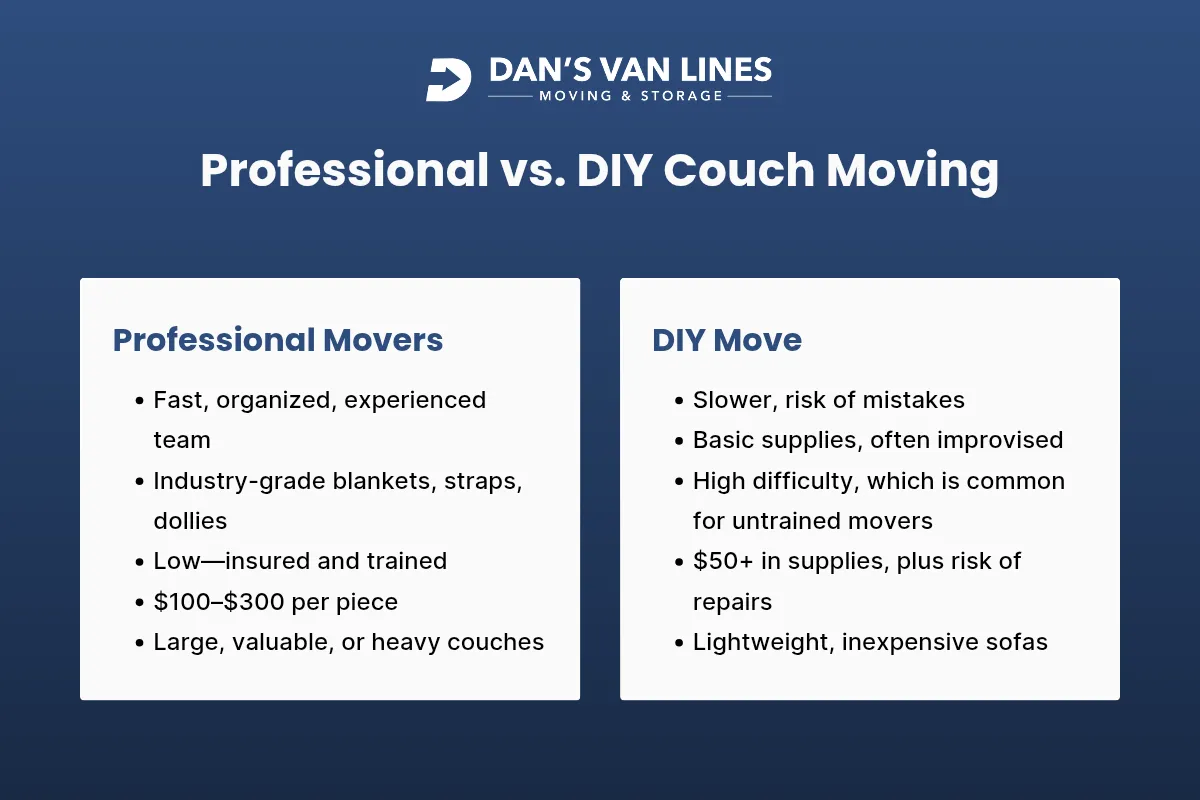
While it’s possible to move a small couch with a few friends, the risks increase with larger or more valuable pieces. Professional movers bring efficiency, liability coverage, and specialized tools to the job. They are trained to handle complex situations, such as moving a 90-degree L-shaped sectional through a narrow stairwell. The cost of hiring pros typically ranges from $100 to $300 per piece, while DIYers may spend around $50 on supplies alone. Most importantly, professionals treat your furniture as if it were their own, reducing the risk of injury and damage.
- Professionals pack and move faster, saving you time and effort.
- They carry insurance, offering peace of mind in case of accidents.
- Specialized tools like strap dollies and shoulder harnesses make heavy lifting safer.
- DIY moves are best for lightweight, inexpensive couches and short distances.
- Back strains and property damage are common risks for untrained movers.
For most homeowners, the added value and reduced stress of hiring professionals far outweigh the cost.
Essential Tools and Materials Used by Couch Movers
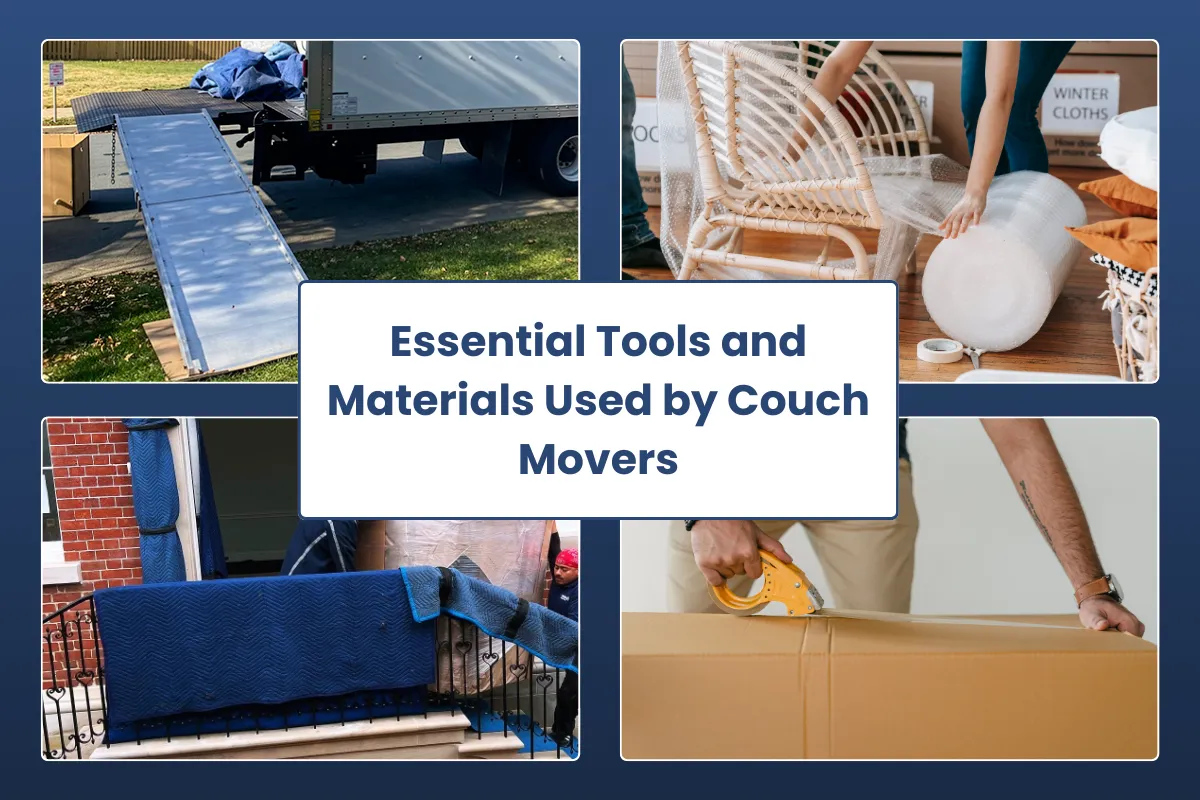
Professional movers rely on a specific set of tools and materials to ensure every couch is moved safely and efficiently. These items are chosen for their ability to protect both the furniture and the movers themselves. Here’s what you can expect the pros to use:
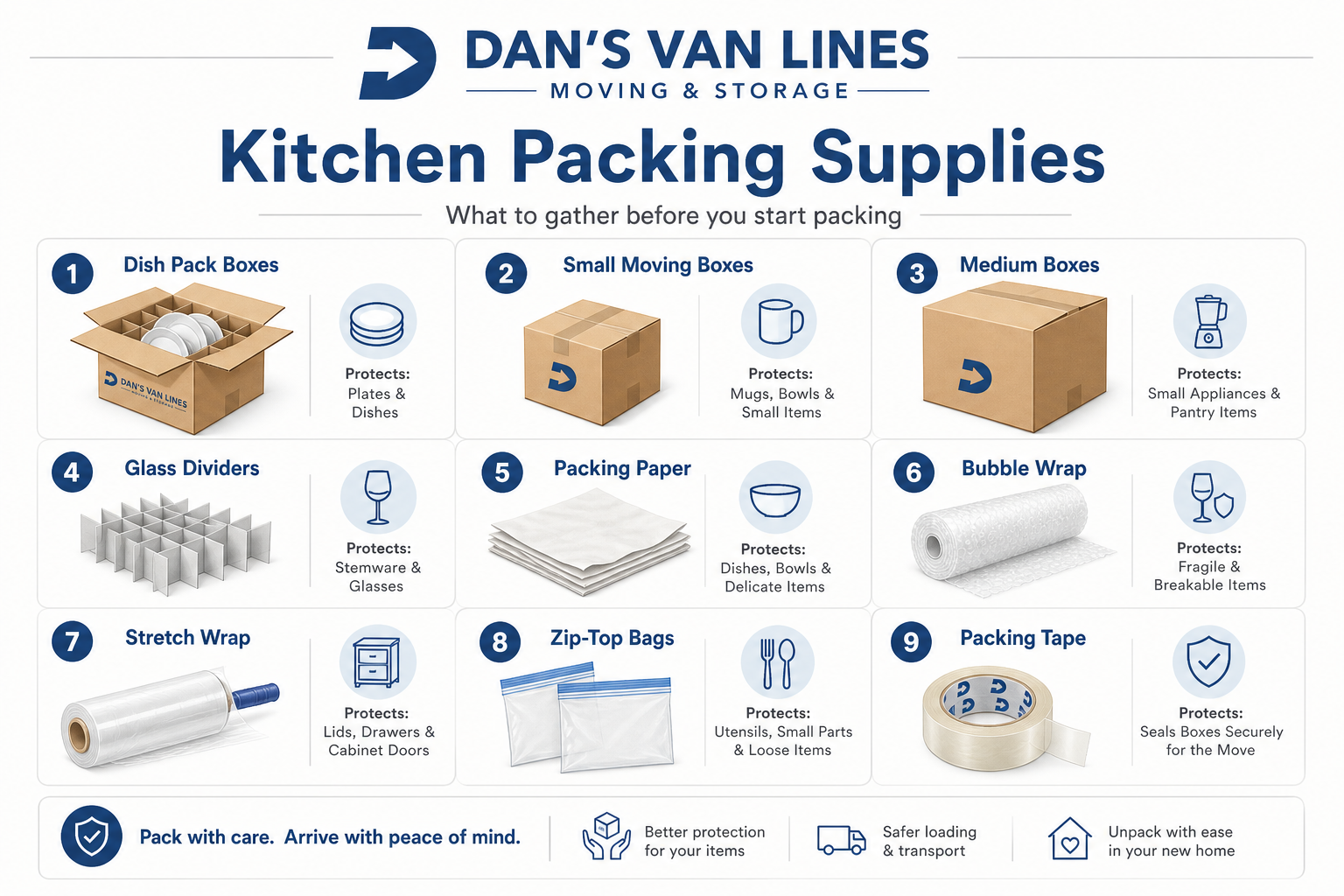
- Moving blankets and pads: Absorb shocks and prevent scratches.
- Industrial stretch wrap: Seals out dirt, dust, and moisture.
- Packing tape and straps: Secure blankets and loads without damaging upholstery.
- Dollies and sliders: Make moving heavy couches easier, especially on stairs.
- Gloves: Improve grip and protect hands during lifting.
- Foam guards and bubble wrap: Add extra protection to vulnerable areas.
These tools, combined with professional know-how, ensure that 99% of couches arrive at their destination undamaged, according to mover claims.
Frequently Asked Questions About Couch Moving
Can all couches fit through standard doors?
Most couches can fit through standard doors if properly measured and maneuvered. Removing doors from hinges and standing the couch vertically can provide the extra clearance needed. For especially large or awkwardly shaped couches, partial disassembly may be required.
How long does it take to wrap and move a couch?
Professional movers typically spend 10-15 minutes wrapping each piece, balancing speed with thorough protection. The total time to move a couch depends on factors like stairs, doorways, and distance to the truck.
Is it safe to move a couch in the rain?
Yes, as long as the couch is wrapped in waterproof materials like stretch wrap and plastic. Movers take extra precautions to keep upholstery dry and may use tarps or additional layers for added protection.
What if my couch is too large to fit through the door?
Movers can often remove arms or backs from the couch, or disassemble sectionals into smaller pieces. In rare cases, windows or alternative entry points may be used, but this is typically a last resort.
Why Choose Dan’s Van Lines for Your Next Move?
Dan’s Van Lines brings years of experience, local expertise, and a commitment to customer satisfaction to every move in Alexandria, VA. Our team uses industry-leading techniques and materials to ensure your couch, and all your furniture, arrives safely and on time. We handle everything from careful wrapping and disassembly to navigating tight spaces and stairs, so you don’t have to worry about anything.
If you’re planning a move and want peace of mind that your couch will be protected every step of the way, contact Dan's Van Lines today. Our friendly team is ready to answer your questions and provide a free, no-obligation quote for your next move.











.webp)
%20(1).webp)
.webp)

.webp)
.webp)
.webp)


.avif)
%201.svg)

%201.svg)
%201.svg)