
Relocating across state lines or even across the country presents a long list of decisions, but few are as impactful as deciding whether to ship your car or drive it to your new destination. This choice affects your budget, schedule, the condition of your vehicle, and even your peace of mind. At Dan’s Van Lines, we’ve helped countless families and individuals in Alexandria and Northern Virginia navigate this exact decision. Let's break down the real costs, logistics, and hidden factors to help you make the best choice for your move.
Cost Comparison: Shipping vs Driving Your Car
The first question most people ask is: which is cheaper , shipping the car or driving it yourself? The answer isn’t always straightforward, because the total cost involves much more than the upfront price.
Breaking Down the Costs
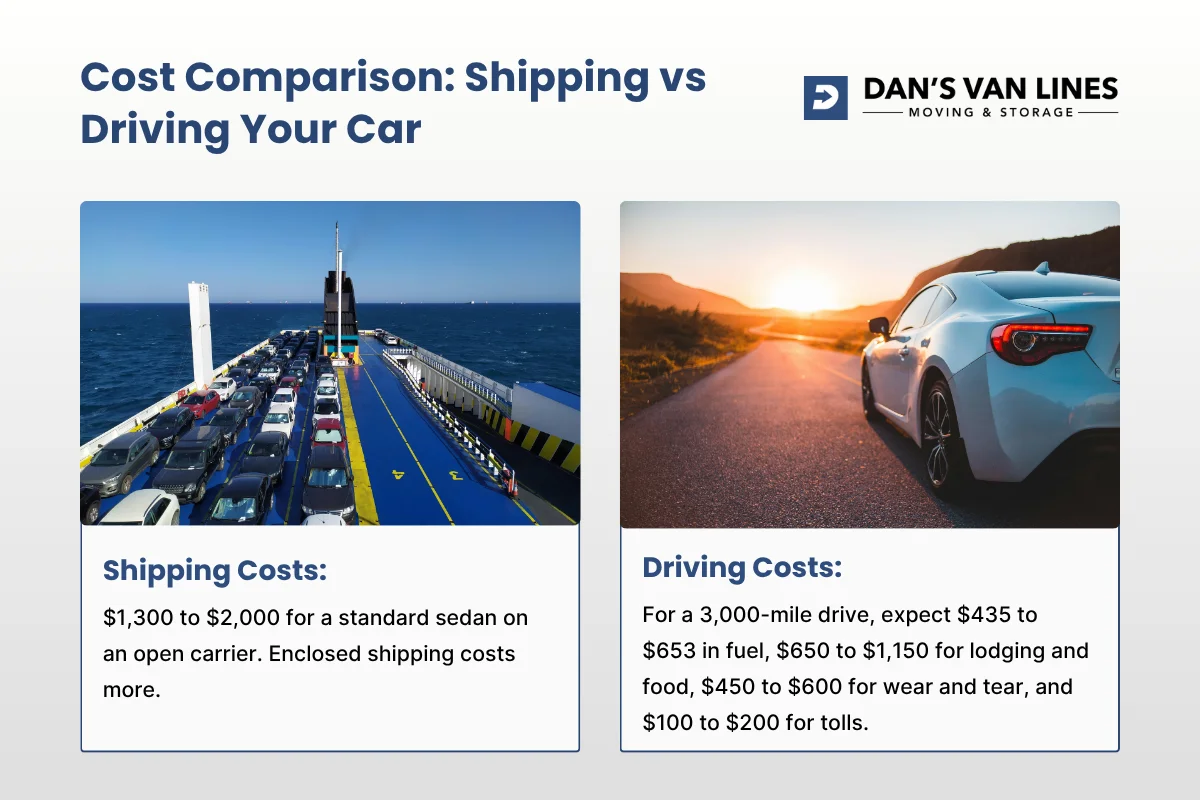
Shipping a car typically comes with an upfront cash outlay. For a standard sedan on an open carrier, expect to pay between $1,300 and $2,000 for a cross-country move. Enclosed shipping, which offers more protection, can cost 40, 100% more. Factors like vehicle size, distance, and carrier type play a role in the final quote.
Driving your car might seem less expensive at first, but expenses quickly add up. For a 3,000-mile drive, here’s what you might encounter:
Expense Category Estimated Cost Range Notes Fuel $435 , $653 Depends on your vehicle's fuel efficiency Lodging and Food $650 , $1,150 Includes accommodation and meals Wear and Tear $450 , $600 Covers mechanical and cosmetic maintenance Tolls and Miscellaneous $100 , $200 Includes road tolls and other small expenses
Totaling these, driving can cost between $1,485 and $2,350 for a cross-country journey. And this doesn’t even factor in the value of your time.
Opportunity Cost and Hidden Expenses
One often-overlooked factor is the value of your time. Spending 4, 6 days driving means time away from work, family, or other priorities. For those with demanding schedules or higher incomes, the true cost of driving can easily surpass the cost of shipping.
Time Efficiency: The Real Value of Shipping
Time is a resource you can’t replace. When considering whether you should ship a car or drive it, think about how much your days are worth.
What You Gain by Shipping
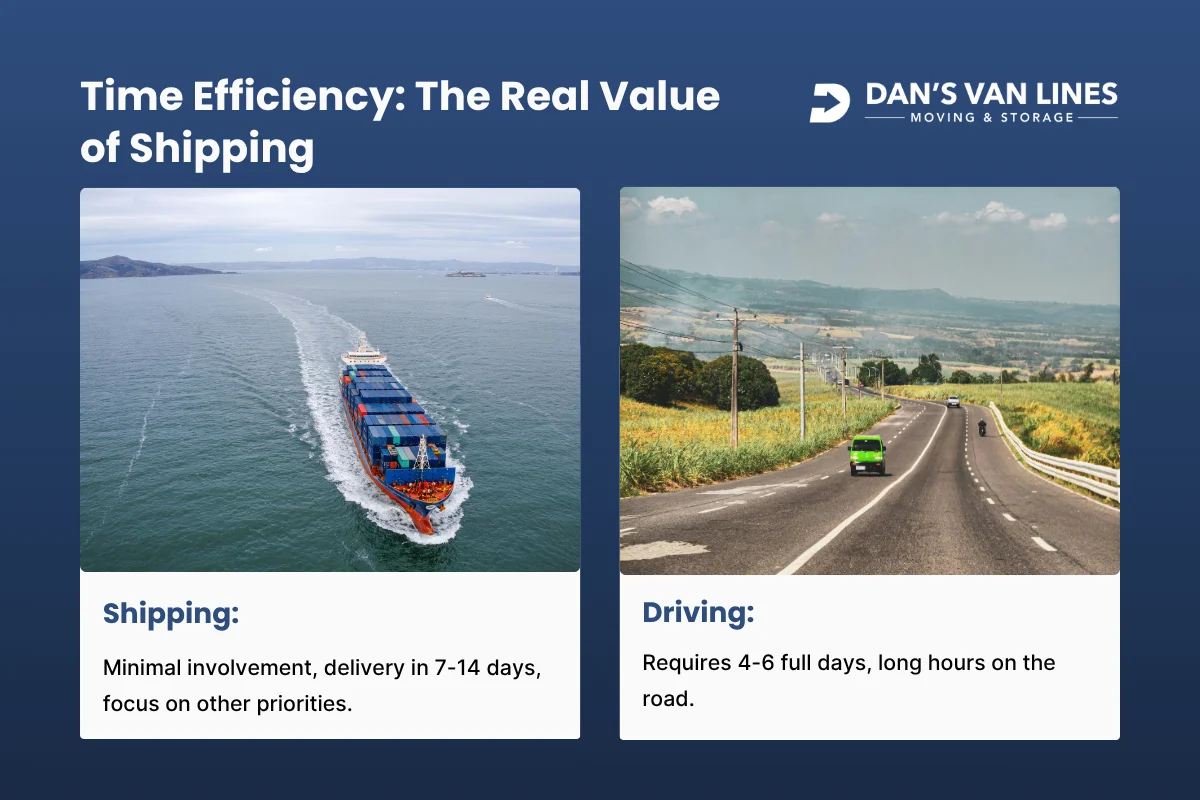
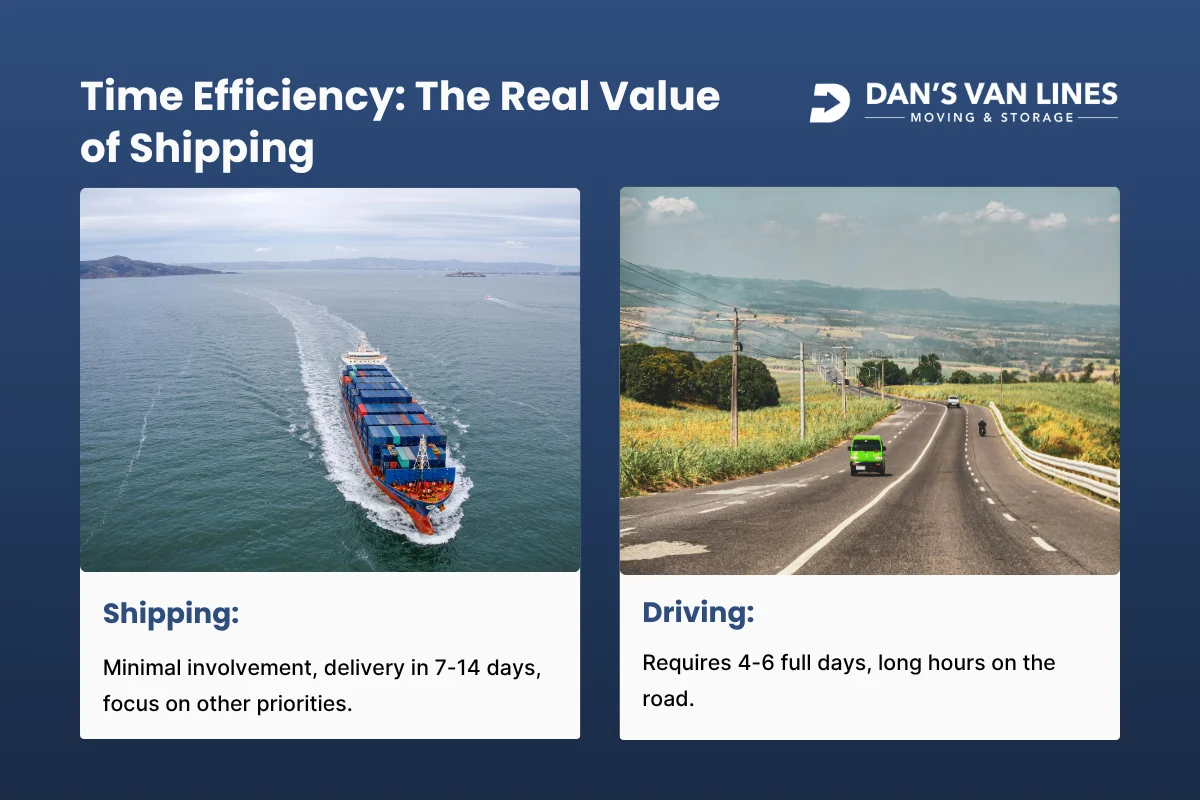
Minimal personal involvement , just a few hours for handoff and paperwork
Carriers typically deliver within 7, 14 days, with no effort required from you
Ability to focus on work, family, or travel while your car is in transit
No need to plan hotels, meals, or rest stops
If you drive, you’ll need to dedicate 4, 6 days, each involving long hours on the road. For busy professionals or families with tight schedules, car shipping can be a lifesaver.
Wear and Tear: Protecting Your Car’s Value
Every mile you add to your car takes a toll, both mechanically and financially. This is especially critical for newer vehicles, leased cars, or high-value models.
Driving: Accelerated Depreciation and Risks
Engine, transmission, brakes, and tires accumulate wear (costing $0.10, $0.30 per mile)
Increased risk of paint chips, windshield cracks, and interior wear
Higher mileage reduces resale and trade-in value
Potential for breakdowns far from home
Shipping: Preserving Vehicle Condition
Shipping your car nearly eliminates mechanical and cosmetic wear during transit. While there is a minor risk of transport-related damage, reputable carriers provide insurance to cover these events.
Shipping is particularly wise for luxury vehicles, classic cars, or any vehicle you want to keep in top condition. By reducing mileage, you help maintain your car’s value over the long term.
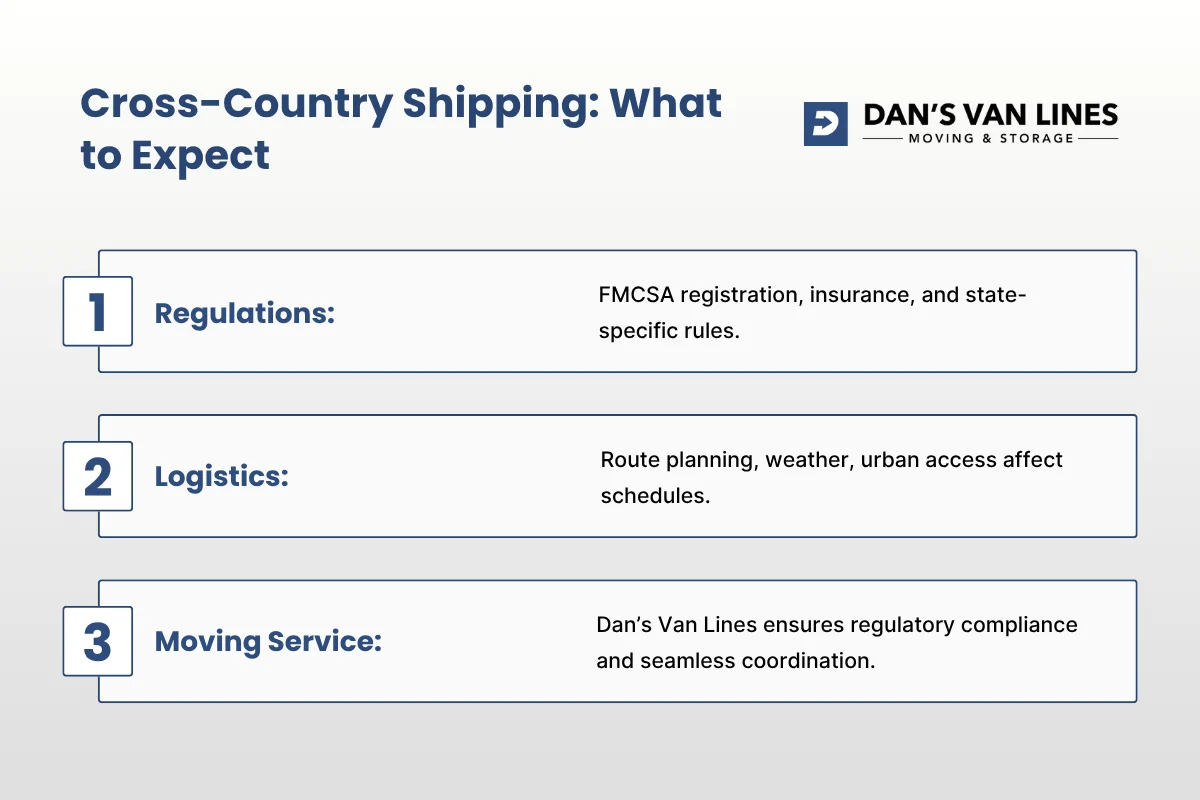
Cross-Country Shipping: What to Expect
Shipping a car across state lines is more involved than simply loading it onto a truck. There are regulatory, logistical, and timing considerations that can affect your move.
Regulatory Compliance and Documentation
registered with the FMCSA and carry appropriate insurance
You’ll receive a Bill of Lading , a legal contract and condition report
State-specific rules may impact timing or logistics
With Dan’s Van Lines, we handle all regulatory paperwork and coordinate directly with certified carriers, so you don’t have to worry about compliance or missing documentation.
Logistical Planning
Route planning, weather, and urban access can affect pickup and delivery schedules. Our team coordinates your car’s shipment with your household move, minimizing scheduling conflicts and ensuring a seamless relocation.
How Dan’s Van Lines Coordinates Auto Transport
We take pride in offering a fully integrated moving experience for our clients in Alexandria and throughout Northern Virginia. Our approach to auto transport is rooted in our 25+ years of relocation expertise.
Seamless Coordination with Your Move
We schedule auto transport in sync with your household move
All logistics, insurance, and documentation managed for you
One point of contact for your entire relocation
By working with FMCSA-registered carriers and managing every detail, we streamline the process and reduce your stress. This integration is especially valuable if you’re moving long distance or internationally, as it eliminates the hassle of juggling multiple vendors.
If you need secure storage between moves, our warehouse storage solutions can keep your vehicle and belongings safe until you’re ready for delivery.
Environmental Impact: Shipping Versus Driving
Sustainability is an increasing priority for many families. When weighing whether you should ship a car or drive it, consider the environmental footprint of each option.
Greenhouse Gas Emissions
Fact Details CO₂ Emissions per Mile (Passenger Car) Approximately 411 grams of CO₂ are emitted for every mile driven by a passenger car. Total Emissions for Solo 3,000-Mile Drive Driving alone for 3,000 miles generates about 1.2 metric tons of CO₂. Auto Transport Truck Emissions Auto transport trucks emit more CO₂ per mile compared to passenger cars, but the emissions are divided among all the vehicles being transported. Efficiency of Shipping Shipping vehicles can be a more efficient option, particularly for cars that are less fuel-efficient.
For long distances, especially if you would fly or take a train instead of driving, shipping your car may actually reduce your household’s total environmental impact.
Insurance Coverage: Protecting Your Investment
Insurance is a crucial consideration in car transport. Whether you drive or ship, understanding your coverage is essential.
Shipping Insurance Details
FMCSA mandates minimum liability and cargo insurance for carriers
Coverage typically excludes personal belongings inside your car
High-value vehicles may need supplemental insurance
Always document your car’s condition before and after shipping
With Dan’s Van Lines, we verify carrier insurance and help you understand the policy limits and exclusions. Our team ensures you have peace of mind throughout your move.
Customer Experiences: Shipping vs Driving
Feedback from our clients and from industry surveys shows that satisfaction often hinges on convenience, cost, and risk management.
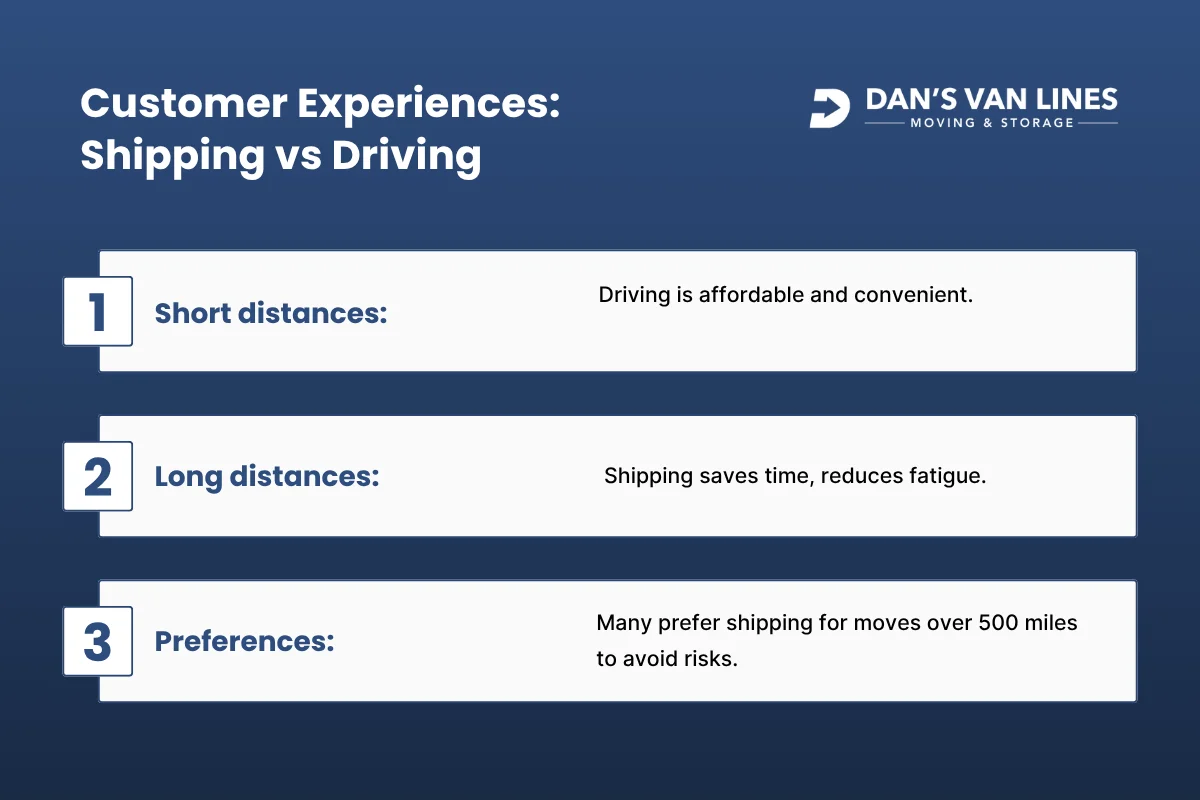
For short distances, driving is usually more affordable and convenient
For long distances, shipping wins on comfort, time savings, and reduced fatigue
Shipping appeals to those who want to avoid long hours behind the wheel and potential accidents
Understanding timelines and insurance makes shipping stress-free
Many clients in Alexandria and Northern Virginia choose shipping for moves over 500 miles, citing the ability to focus on other priorities and avoid the risks of cross-country driving.
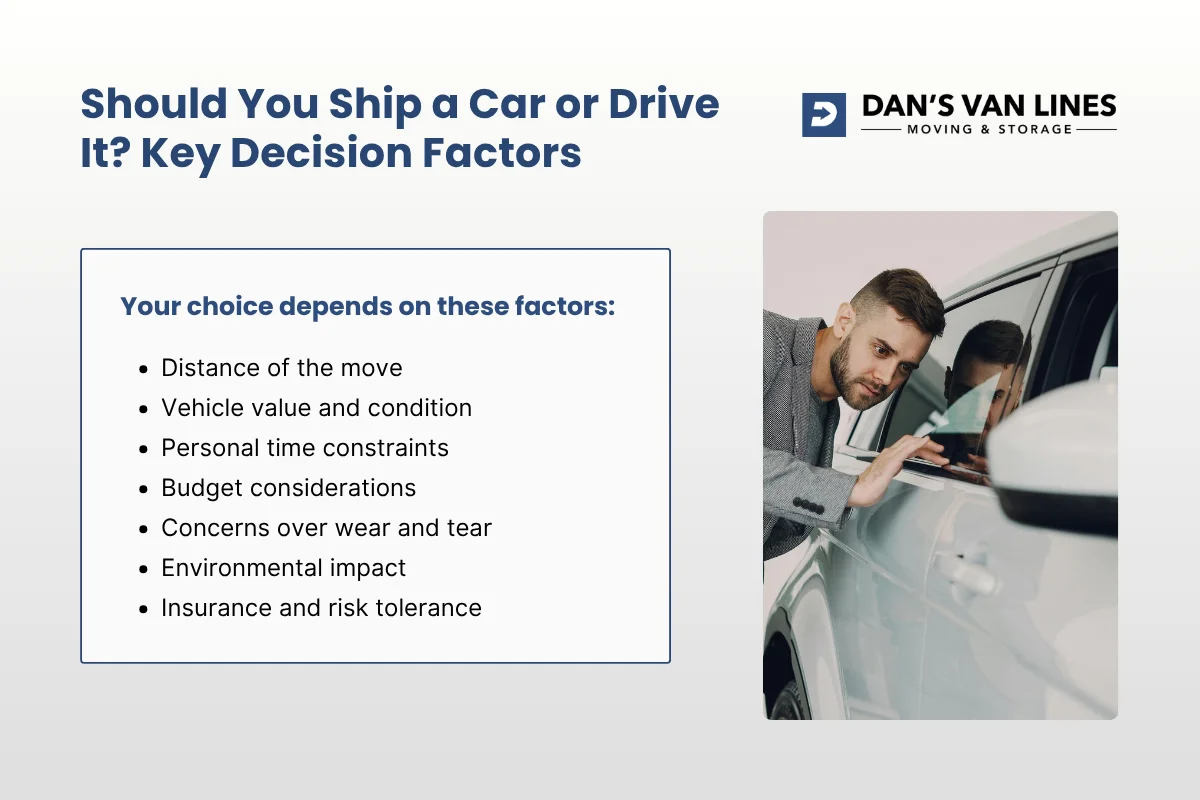
Should You Ship a Car or Drive It? Key Decision Factors
Ultimately, the best choice depends on your unique situation. Consider these factors before making your decision:
Distance of the move
Value and condition of your vehicle
Personal time constraints and schedule
Budget and willingness to pay for convenience
Desire to avoid wear, tear, and depreciation
Environmental concerns
Insurance and risk tolerance
If you’re relocating within Alexandria or across Northern Virginia, driving may make sense for short hops. For longer moves, or if you’re already coordinating a household relocation, shipping your car with a professional team like Dan’s Van Lines can simplify your transition and protect your investment.
Move Confidently with Dan’s Van Lines
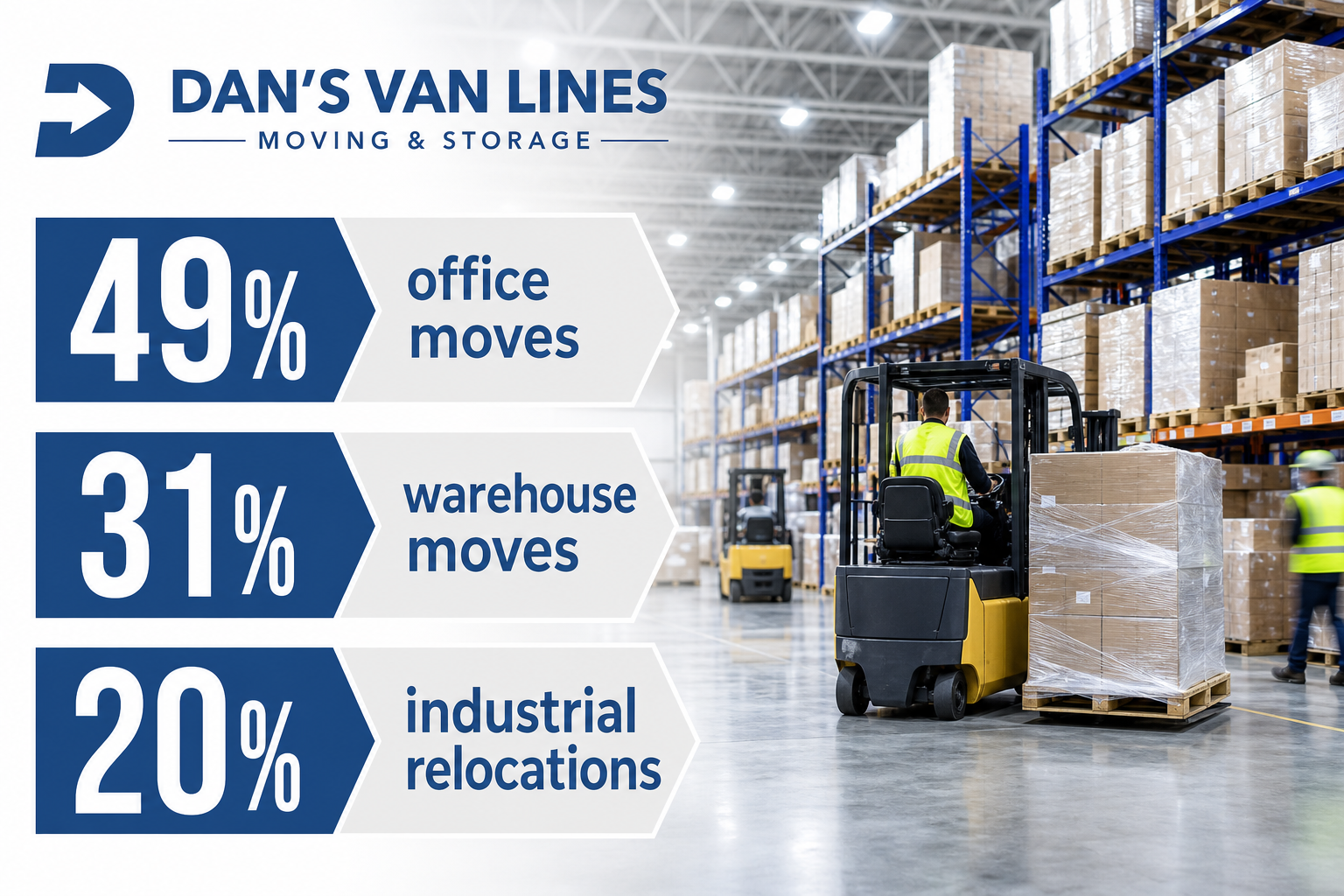
Shipping a car or driving it is a major decision, but you don’t have to tackle it alone. At Dan’s Van Lines, we help Northern Virginia families weigh every factor and coordinate every detail. Our experienced movers manage household, office, and specialty moves, and our integrated auto transport services ensure your vehicle arrives safely and on schedule.
Ready to plan your move in Alexandria or the surrounding areas? Get a quote today or call us at (703) 553-0900. Let Dan’s Van Lines make your next move smooth, secure, and stress-free.








.webp)
%20(1).webp)
.webp)

.webp)

.webp)
.webp)
.webp)



.avif)
%201.svg)

%201.svg)
%201.svg)