
Artwork is more than just decoration, it’s an investment, a memory, and often irreplaceable. When it’s time to move, whether across Alexandria, VA or across the country, packing artwork the right way is crucial for protecting both its value and its beauty. Even a short trip in the back of a moving truck can expose art to risks like scratches, impacts, moisture, and temperature fluctuations. That’s why understanding how to pack artwork for moving is essential for homeowners and collectors alike.
At Dan’s Van Lines, we’ve helped thousands safely relocate their cherished pieces. With decades of experience serving Northern Virginia, our team knows the best methods and materials to ensure your artwork arrives in pristine condition. This guide shares our proven strategies, from selecting the right supplies to wrapping, crating, and documenting your art for peace of mind during your move.
Choosing the Right Packing Materials for Artwork
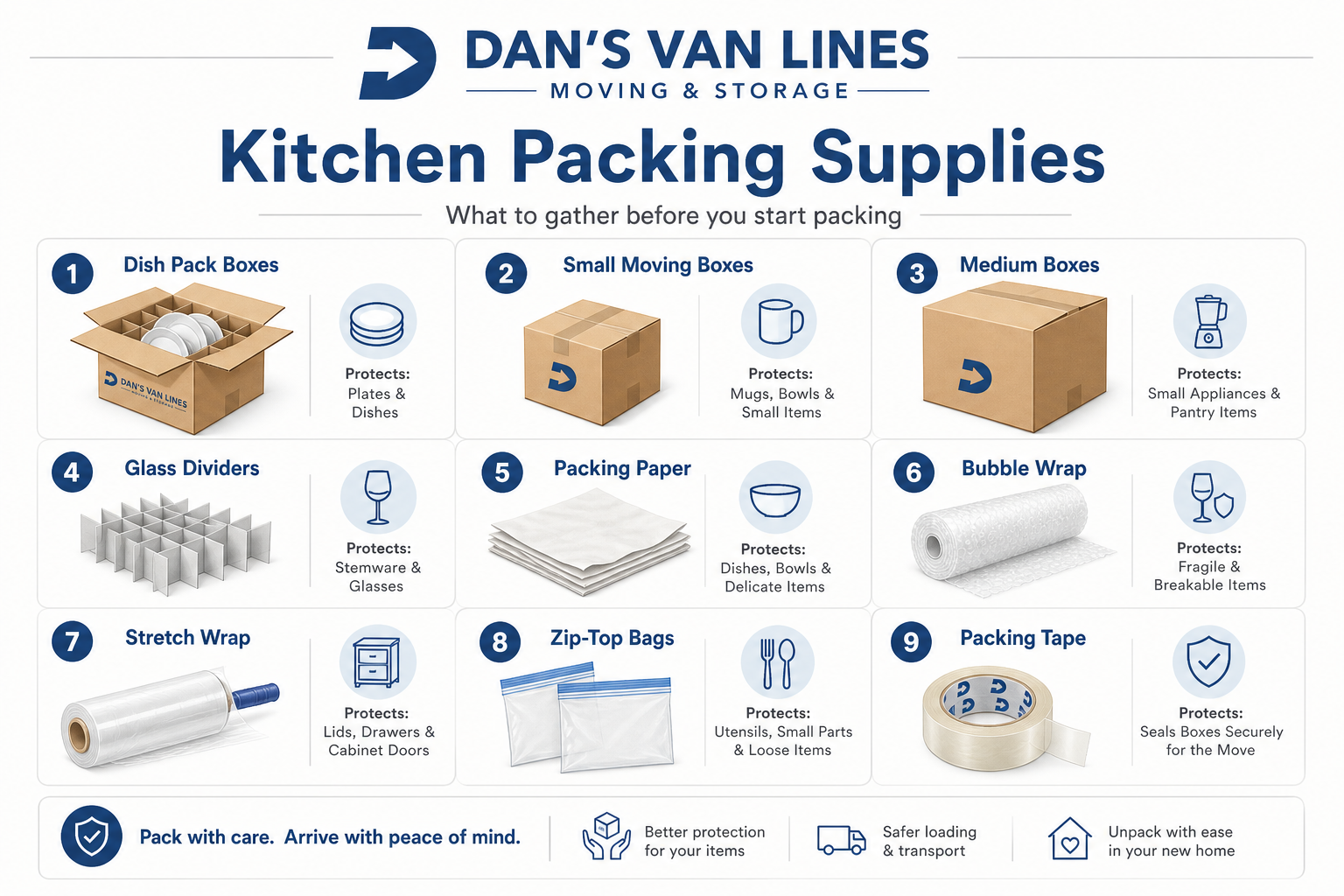
The foundation of safe artwork transport is the right packing materials. Using high-quality, purpose-built supplies shields your art from bumps, vibrations, and environmental threats. When considering how to pack artwork for moving, never skimp on materials, your artwork’s safety depends on it.
Here’s what you’ll need for effective protection:
Acid-free tissue or glassine paper (for direct surface contact)
Bubble wrap (as a cushioning layer, never directly on art)
Polyethylene or polyurethane foam sheets
Cardboard corner protectors
Sturdy, double-walled boxes or custom crates
Plastic stretch wrap for moisture protection
Packing tape and labels
Marine-grade plywood for valuable or fragile works
Avoid newspaper, its ink can leave marks. For temperature-sensitive works, line boxes with half-inch styrofoam sheets to buffer against rapid changes. For high-value pieces, double-boxing adds an extra layer of security, with foam or packing material filling all voids between containers.
Always use clean, fresh packing materials. If you must use recycled boxes, ensure they’re rigid and undamaged to maintain structural support.
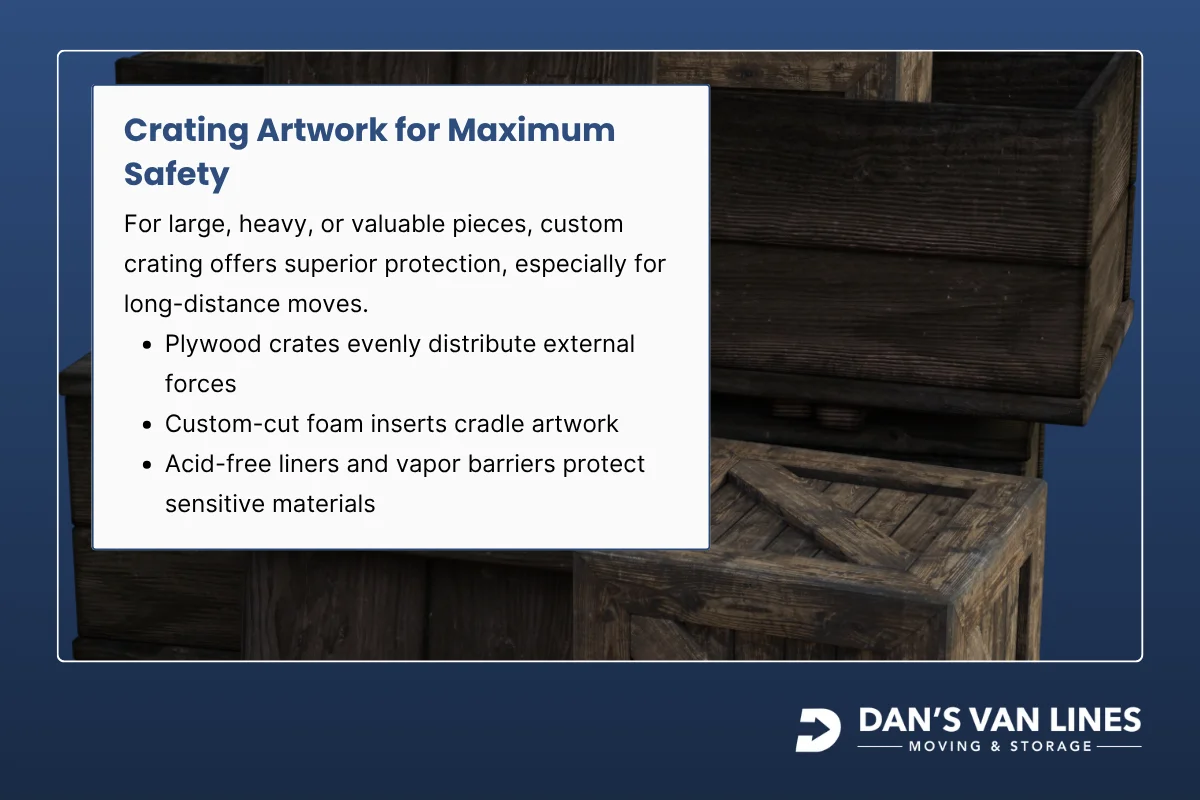
Crating Artwork for Maximum Safety
Some artwork, especially large, heavy, or extremely valuable pieces, requires more than just boxes. Custom crating delivers superior protection, especially for long-distance or international moves.
Professional crating encases artwork in a tailored, rigid structure. The crate’s walls (often marine-grade plywood) distribute external forces evenly, while custom-cut foam inserts cradle each piece, absorbing shocks and vibrations. Acid-free liners and vapor barriers shield against humidity and chemical transfer, which can harm sensitive materials like canvas, wood, and mixed-media art.
Consider crating for:
Paintings over 36 inches in any dimension
Top-heavy or irregularly shaped sculptures
Works on paper or with delicate surface finishes
Any piece valued over $1,000
While custom crates add cost, they offer unmatched peace of mind. For museum-grade moves, every detail, from fasteners to internal cradles, is chosen to immobilize and protect your art. Pair crating with transit insurance for complete protection against the unexpected.
Use a custom-built crate with internal foam supports
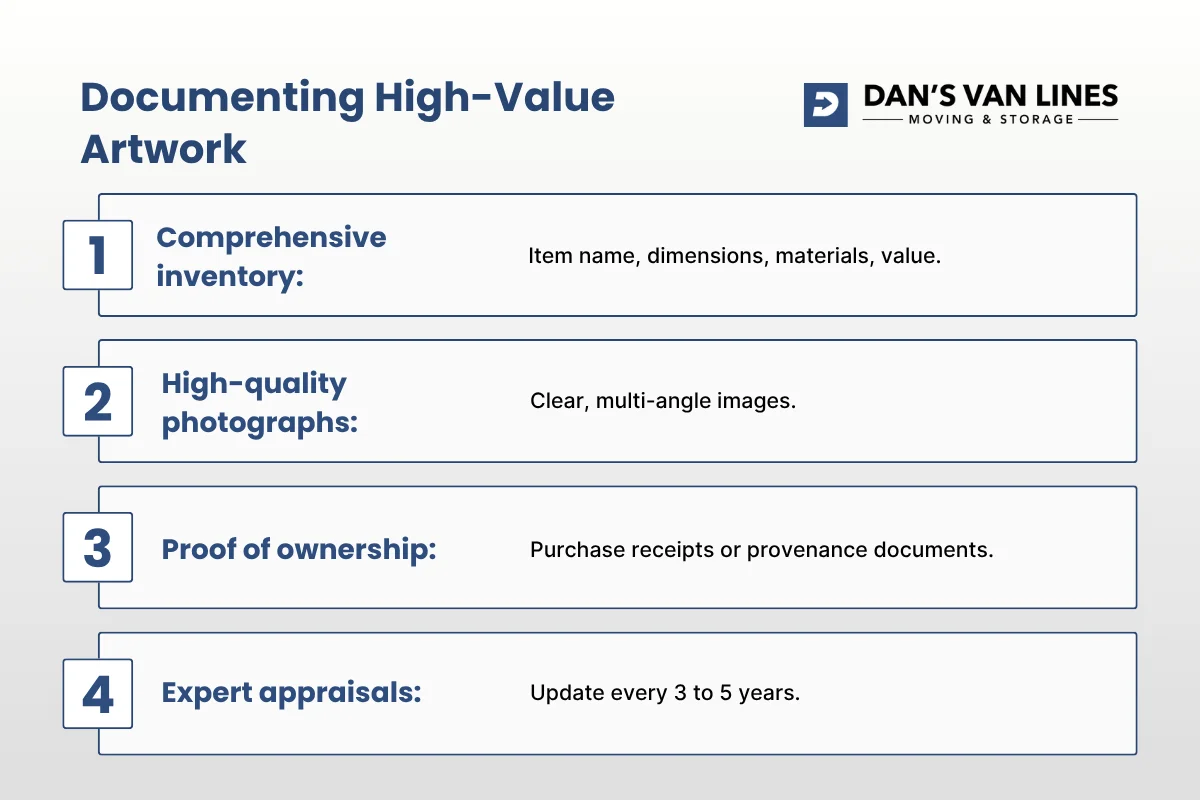
Documenting High-Value Artwork
Proper documentation is a critical, often overlooked step in how to pack artwork for moving. If the unthinkable happens, loss or damage, having detailed records is invaluable for both insurance claims and recovery.
Documentation Element Description Comprehensive Inventory List each item with its name, dimensions, materials, and current appraised value. High-Quality Photographs Capture clear, multi-angle images of each item before packing to document their appearance. Condition Reports Record any existing flaws or damage prior to moving or storage. Proof of Ownership Include copies of purchase receipts or documents showing provenance. Expert Appraisals Obtain evaluations from certified professionals, updating them every 3 to 5 years.
Store these records digitally (preferably in the cloud) and keep a backup on a physical drive. Share copies with your moving company and insurer. Document again after your move, comparing the condition upon arrival. This simple step can save you hours of disputes and ensure full compensation if needed.
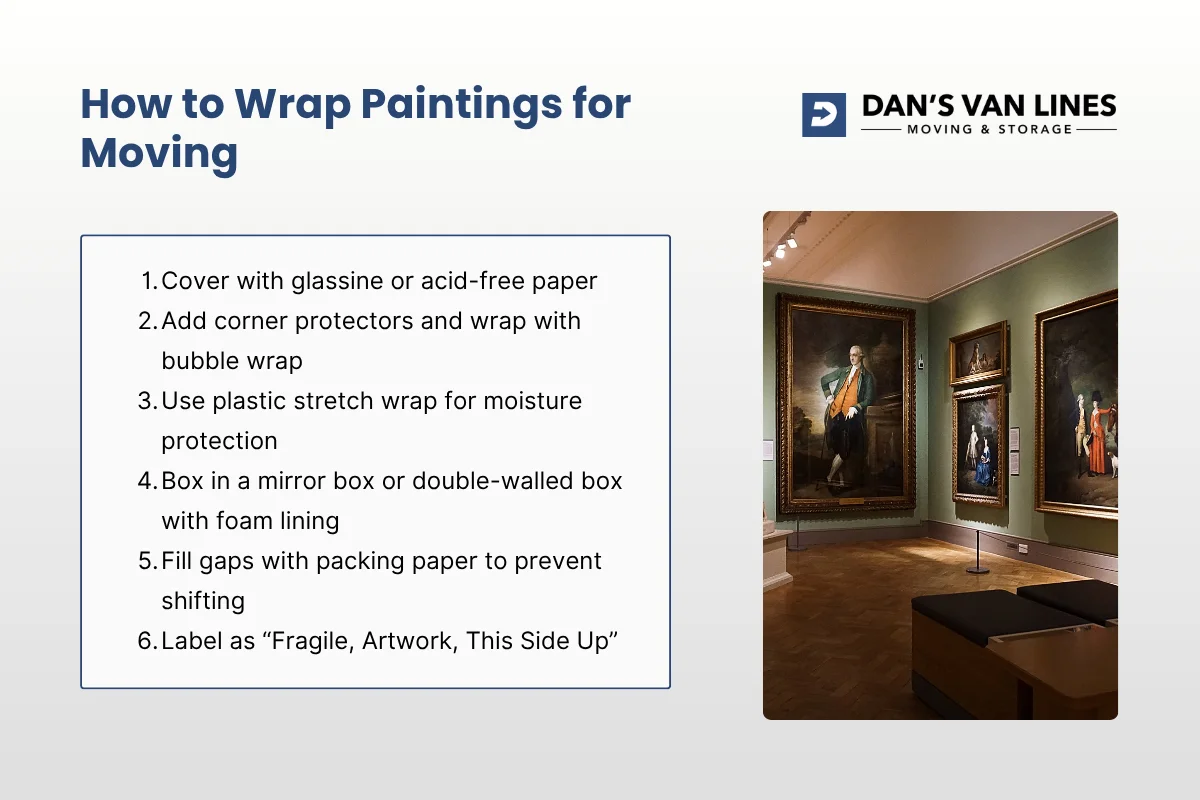
How to Wrap Paintings for Moving
Paintings, whether canvas or framed, are exceptionally vulnerable to scratches, impacts, and environmental changes. The secret to safe wrapping is a multi-layered approach, starting from the artwork’s surface and working outward.
Follow these steps for best results:
Surface Protection: Lay the painting face down on a clean, flat surface. Cover with glassine or acid-free paper, ensuring full coverage with no tape touching the art.
Cushioning: Place cardboard or foam corner protectors on each corner. Wrap the entire painting in bubble wrap (bubbles facing out), securing with tape only on the wrap, not the art.
Moisture Barrier: Wrap the cushioned painting in plastic stretch wrap for humidity protection, especially during rainy or humid moves.
Boxing: Slide the wrapped piece into a mirror box or appropriately sized, double-walled box lined with foam sheets.
Void Fill: Fill any gaps with crumpled packing paper or foam inserts to prevent shifting.
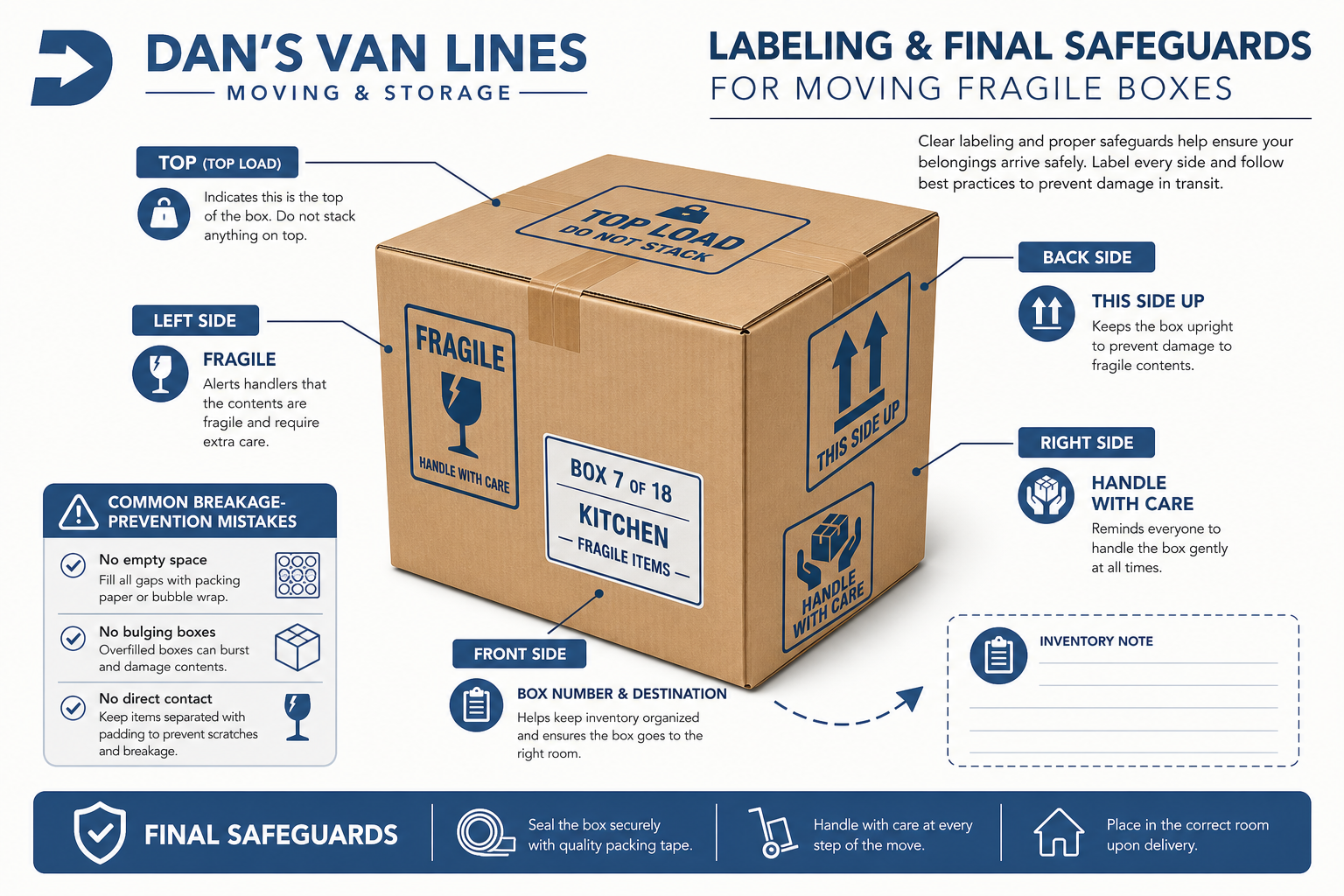
Label: Clearly mark the box as “Fragile , Artwork , This Side Up.”
Store paintings vertically to maintain stretcher bar tension and prevent warping. Never lay them flat, as stacked weight can cause permanent dents or tears.
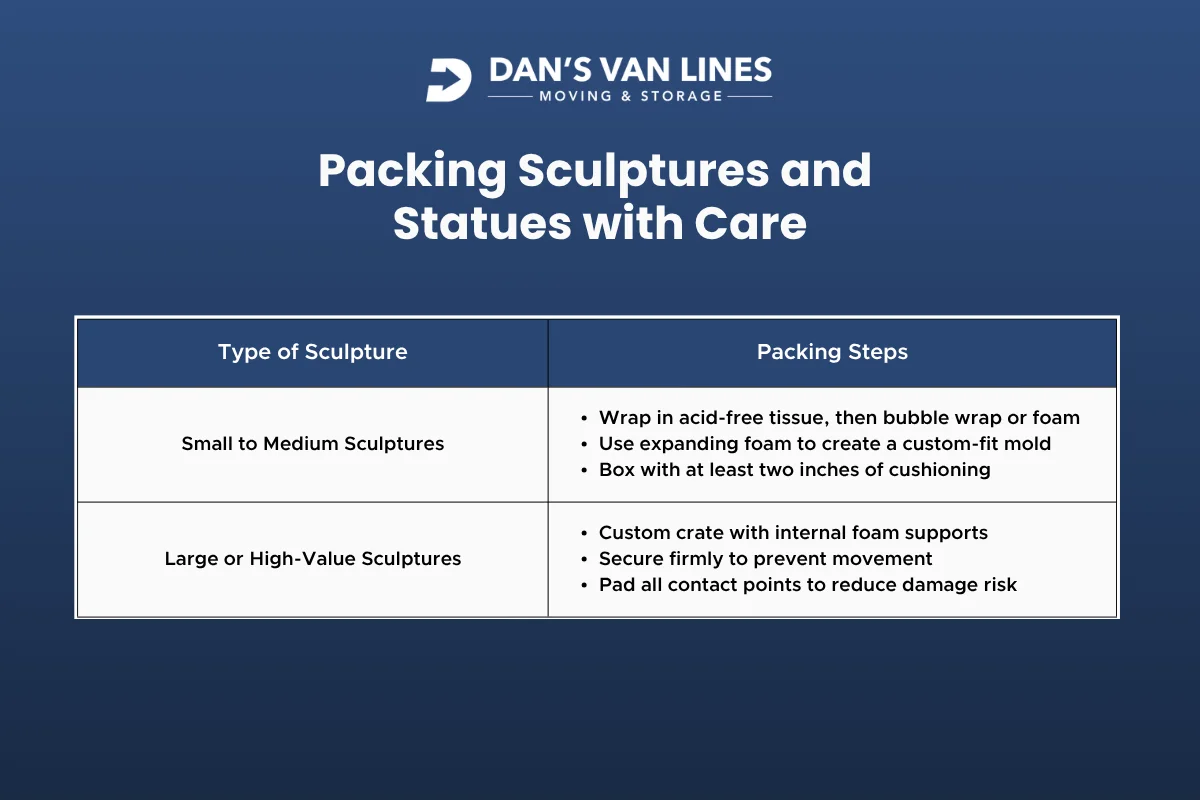
Packing Sculptures and Statues with Care
Sculptures and statues often have irregular shapes and vulnerable protrusions. Their safe transport depends on immobilization and shock absorption, especially for heavier or delicate pieces.
Type of Sculpture Packing Steps Small to Medium Sculptures
Wrap the sculpture in acid-free tissue, then cover with bubble wrap or soft foam for added protection.
Fill any empty spaces with expanding foam to create a custom-fit “negative mold.”
Place the wrapped sculpture in a sturdy cardboard box, making sure there is at least two inches of cushioning on every side.
Large or High-Value Sculptures
Choose a custom-built crate with internal foam supports for maximum safety.
Secure the sculpture firmly inside the crate to prevent any movement during transit.
Thoroughly pad all contact points to eliminate pressure spots and reduce the risk of damage.
Avoid Styrofoam peanuts, they can fragment and create dust. Instead, use foam inserts or soft padding. Label boxes with handling instructions and keep upright where possible.
Handling and Packing Mirrors and Other Fragile Items
Mirrors, glass-fronted frames, and other fragile items demand extra attention. Breakage is most likely at the edges and corners, so reinforcement is key.
Here’s how to pack mirrors and fragile art:
Apply painter’s tape in an “X” across the glass to minimize shattering
Wrap with acid-free paper, then bubble wrap
Use corner protectors for all edges
Slide into a mirror box or custom crate
Fill gaps with foam or crumpled paper for immobilization
Label as “Fragile , Glass , Do Not Lay Flat”
Never allow glass-to-glass contact. Pack mirrors vertically, and avoid stacking. This reduces pressure on the glass and lowers the risk of cracks during transit.
Professional Packing Services: The Ultimate Safeguard
While do-it-yourself packing might be sufficient for smaller or less valuable items, professional packing services provide unmatched protection for your most treasured or high-value collections. At Dan’s Van Lines, our full-service packing ensures your possessions are handled with the utmost care. Our certified, background-checked technicians undergo extensive training and use only archival and museum-grade materials to safeguard your items. We offer custom crating solutions for oversized or especially delicate pieces, and our services include insurance integration for full-value protection. Additionally, we document inventory and item condition for your records, and our efficient packing processes save you valuable time and reduce stress throughout your move.
Our team brings specialized expertise to every move, ensuring your artwork is handled with the care it deserves. We understand the unique needs of homeowners, galleries, and businesses throughout Alexandria and Northern Virginia.
Additional Tips for a Successful Artwork Move
Beyond packing techniques, a few extra steps can make your artwork move smoother and safer:
Move artwork last and unload it first to minimize handling
Maintain a stable temperature and humidity during transport
Use climate-controlled trucks for sensitive pieces
Communicate special requirements to your moving team
Check insurance policies for coverage limits and exclusions
If you have a large collection or extremely valuable items, consider professional inventory management software or barcoding for tracking. This level of organization is especially important for long-distance or international relocations.

Trust Dan’s Van Lines for Artwork Moves in Northern Virginia
Moving artwork doesn’t have to be stressful. With the right knowledge and materials, you can minimize risks and safeguard your treasured pieces. Whether you’re moving across Alexandria, relocating your home, or managing an office move, Dan’s Van Lines offers the expertise, resources, and personalized attention to ensure your collection arrives safely.
If you want even greater peace of mind, our team provides professional packing, crating, and moving services tailored to artwork and fragile items. With over 25 years of experience in Northern Virginia, we’re your trusted partner for local, long-distance, and specialty moves.
Ready to protect your art for the journey ahead? Get a quote or call us at (703) 553-0900 to speak with a moving specialist today.








.webp)
%20(1).webp)
.webp)
.webp)
.webp)
.webp)
.webp)


.avif)
%201.svg)

%201.svg)
%201.svg)