
Packing for a cross country move is different from packing for a same-day local move. The boxes are not just traveling farther. They may spend several days in transit, sit through overnight stops, and experience more vibration, stacking pressure, and handling than they would during a short move across town.
That changes how you should think about materials, timing, labeling, weight, and loading order. A box that might survive a short local move in a lightly packed truck may not hold up as well when stacked under other cartons for a long-distance trip.
At Dan’s Van Lines, we help homeowners, renters, and families in Alexandria and Northern Virginia plan moves with the realities of distance in mind. If you have questions while preparing your packing plan, we welcome you to reach out before moving day so you can avoid preventable problems.
Cross country packing requires more planning than local move preparation
A local move is often completed within a smaller radius and may involve one load and one unload. Cross-country and long-distance moves typically involve more miles, more time, and a higher chance that belongings will be stacked, shifted, or handled more than once.
Many carriers treat moves beyond about 50 miles as long-distance, while cross-country moves often mean much greater distance and longer transit windows. Because of that, moves beyond about 50 miles require more durable preparation than a quick local relocation.
For packing, the key difference is that every box must be ready for extended travel. That means stronger cartons, tighter cushioning, clearer labels, and a more deliberate packing sequence. It also means you should plan earlier, because rushing usually leads to loosely packed boxes, missing labels, and items packed in the wrong order.
Longer transit increases the need for stronger materials
Cross-country transit exposes belongings to more vibration, stacking, and temperature changes than most local moves. Boxes may be placed under other cartons for days, and fragile items may be affected by bumps, braking, or shifting inside the truck.
For this reason, high-quality moving boxes are worth prioritizing. Sturdy corrugated cartons, heavy-duty tape, packing paper, bubble wrap, foam sheets, stretch wrap, and moving blankets all serve a purpose. Flimsy or heavily worn boxes are a greater risk when they must hold weight for a longer period.
Local moves sometimes allow for shortcuts, such as reused lightweight boxes or carrying fragile pieces separately in a personal vehicle. A cross-country move leaves less room for improvisation. Packing should assume that items will be stacked, transported over distance, and separated from you for longer than a day.
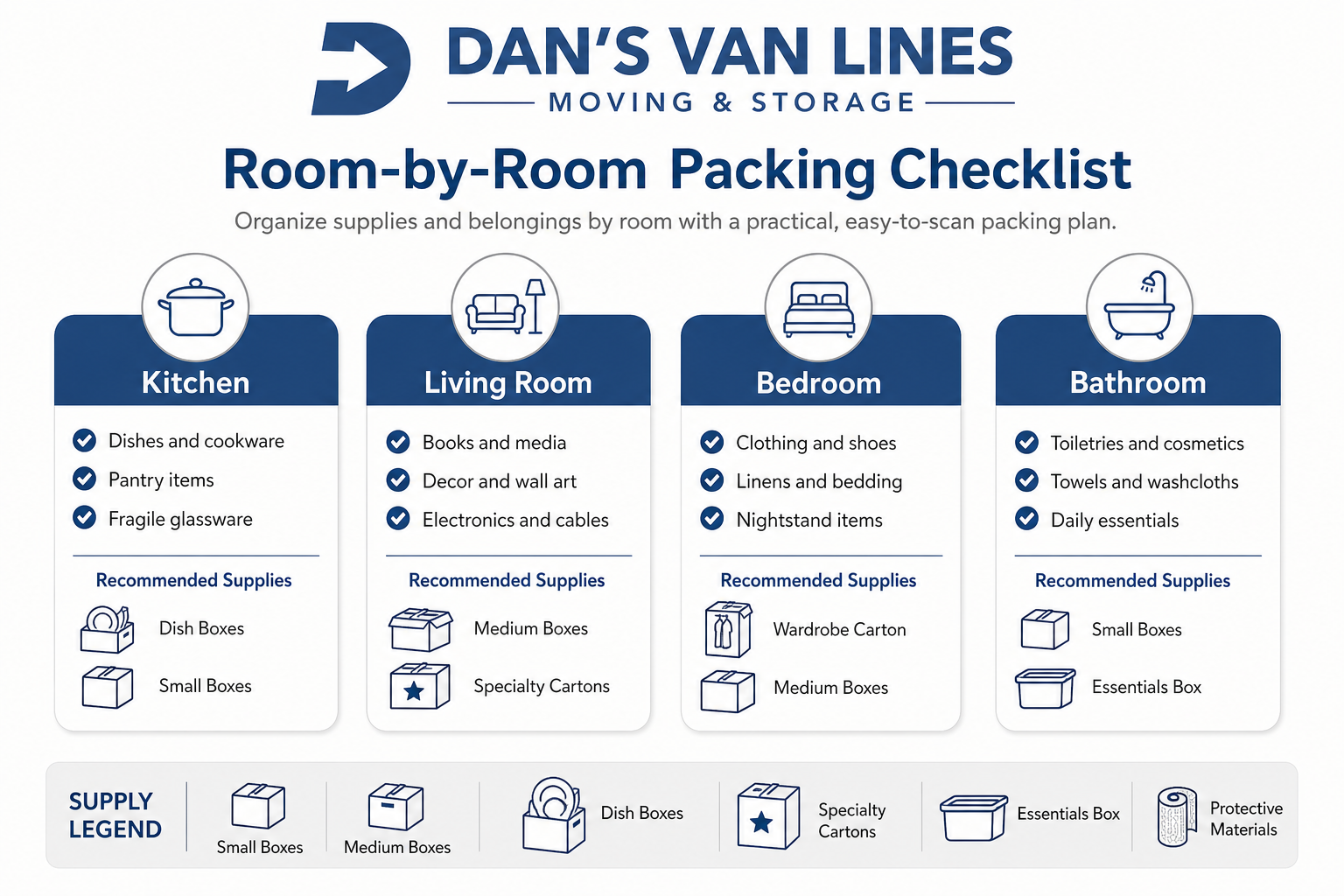
A practical cross country packing list starts room by room
A cross country packing list should begin before the first box is taped. The most useful list is organized room by room, because that helps you understand how many boxes you need, which items require special materials, and which belongings may not be worth shipping.
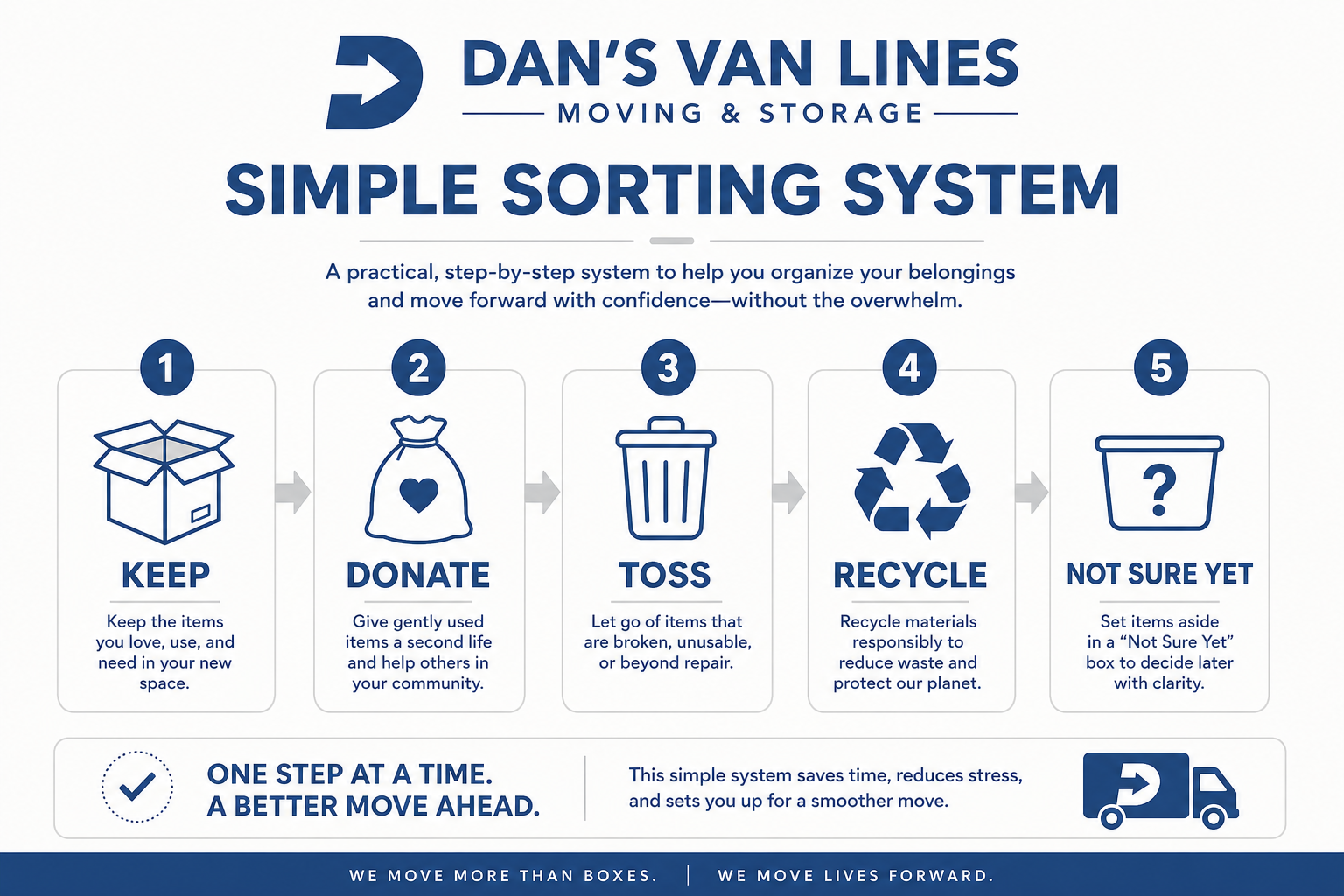
This is also the point where decluttering matters. Shipping items a long distance can add cost and complexity, so old electronics, expired pantry goods, damaged furniture, and items you no longer use should be sorted before packing begins. A room-by-room list helps you separate what to keep, donate, sell, or discard.
The goal is not just to gather supplies. The goal is to match each item with the right container, protection, label, and timing. A structured list also reduces last-minute scrambling and makes it easier to identify which items should be packed by you and which may need professional packing help.
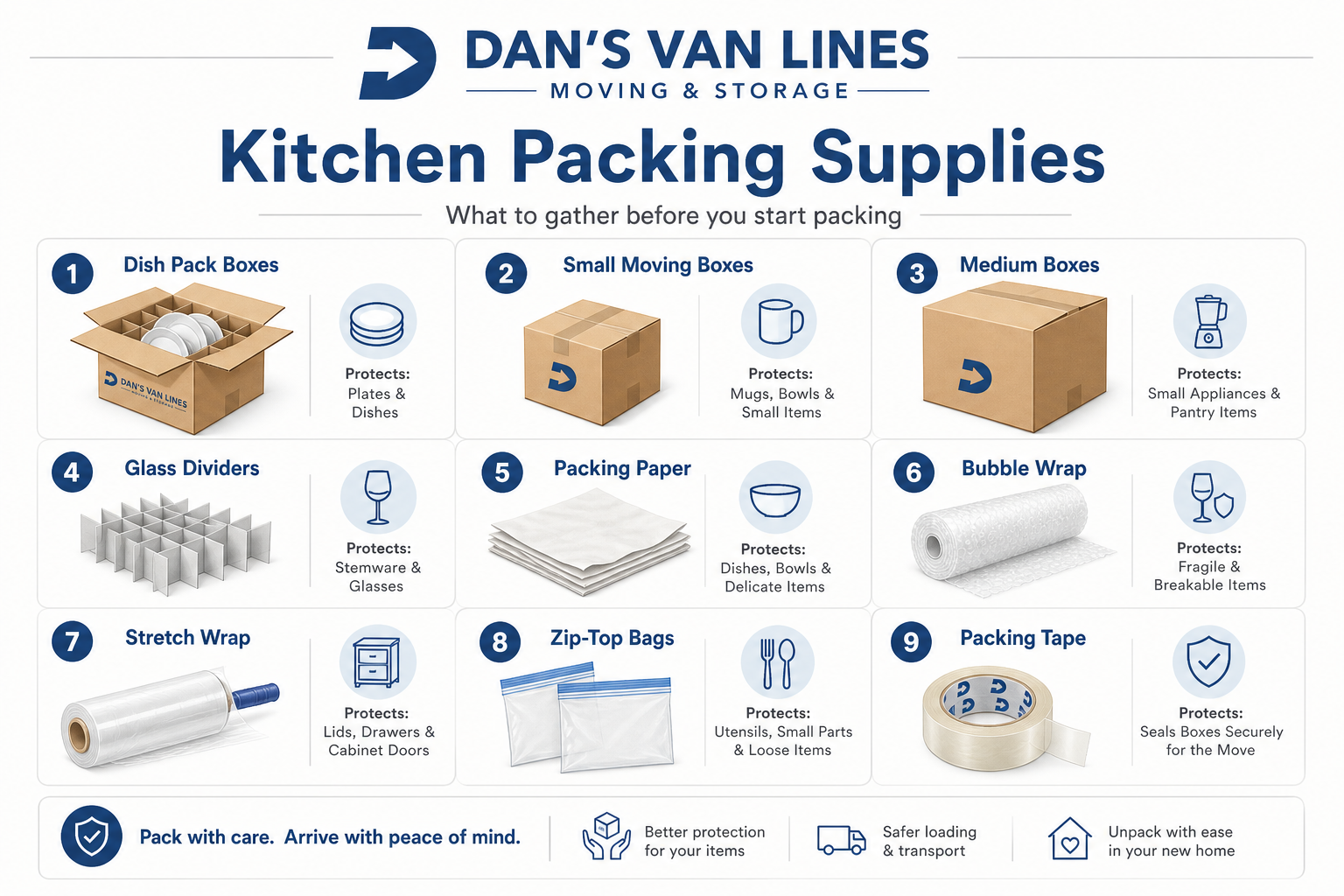
Small boxes: Use these for dense items such as books, dishes, and other heavy household goods that would make larger boxes too difficult to lift.
Medium boxes: Use these for kitchen items, bathroom items, and mixed household goods that need a balance of space and manageable weight.
Large boxes: Reserve these for lightweight bulky items such as linens, pillows, bedding, and soft goods.
Dish boxes with dividers: Use these for plates, stemware, and glassware that need individual support during long transit.
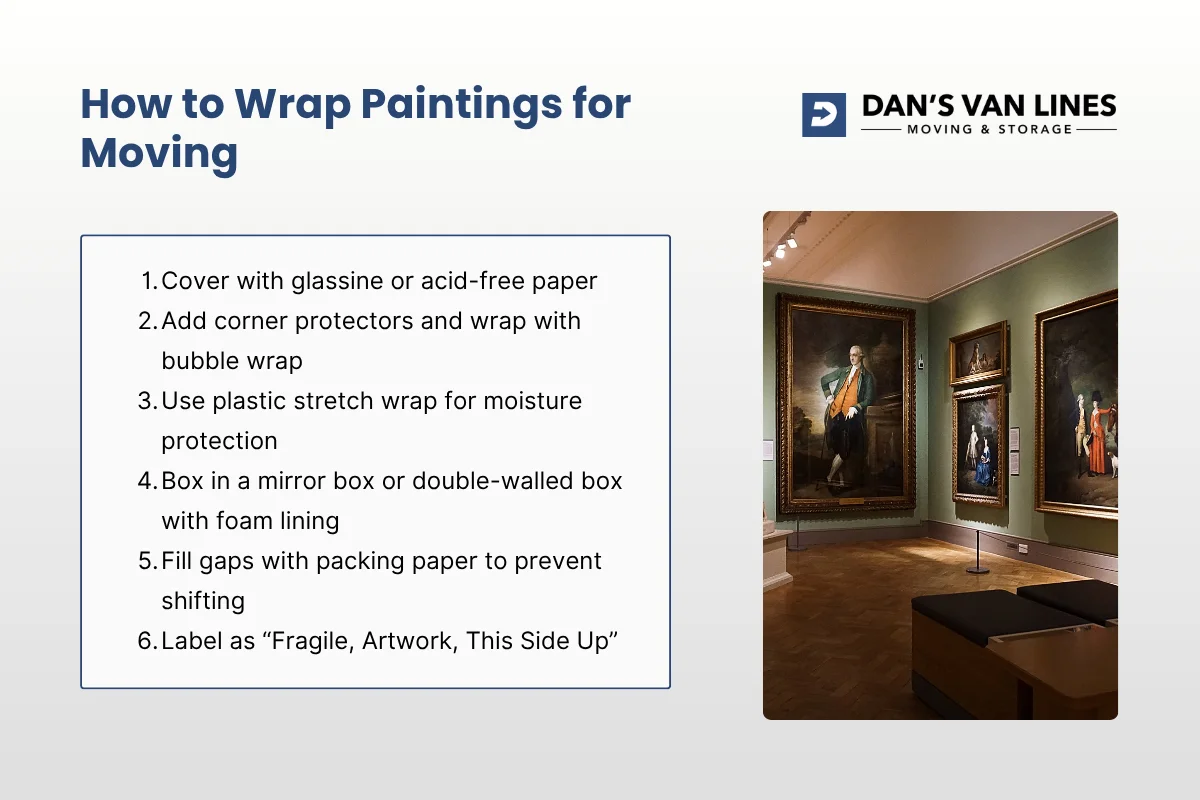
TV, picture, and specialty cartons: Use these for framed artwork, mirrors, televisions, and other flat fragile items that should not be forced into standard cartons.
Protective materials: Include packing paper, bubble wrap, foam sheets, heavy-duty tape, moving blankets, plastic stretch wrap, and permanent markers.
Essentials boxes: Prepare boxes or personal travel kits with toiletries, a change of clothes, medicine, phone chargers, basic kitchen items, and important documents.
Separate transport items: Set aside jewelry, passports, birth certificates, financial records, irreplaceable photos, and high-value collectibles to travel with you when possible.
Essentials boxes should be packed last and opened first
Cross-country moves often separate you from most of your belongings for several days. That is why essentials boxes deserve their own place in your packing plan. These boxes should contain the items you need immediately when you arrive, not the items you hope to find after opening a dozen cartons.
Clearly label these boxes “OPEN FIRST” and include specific contents on the label when helpful, such as chargers, medicine, paper towels, toiletries, or basic kitchen items. Pack them last so they are easy to access, and make sure they are loaded in a way that allows them to be unloaded early.
The best packing tips for cross country moves focus on box strength and internal cushioning
Good packing starts inside the box. Long-distance damage often happens because items move, rub, tip, or press against each other. Even a strong box can fail to protect its contents if empty spaces are left inside.
Before sealing a carton, gently test whether items shift. If you can hear movement, add crumpled packing paper, foam sheets, or another suitable filler until the contents feel secure. The goal is to create a box that acts like one stable unit rather than a container full of loose objects.
Fragile items need special attention. A professional guide on packing fragile items for long-distance moves recommends wrapping individual pieces, placing heavier fragile items at the bottom, setting lighter pieces above, and filling gaps so nothing can shift in transit.
Heavy items belong in small boxes and light items belong in large boxes
One of the most important packing tips for cross country moves is simple: do not make boxes too heavy. Several packing experts recommend keeping boxes around 50 pounds or less to reduce the risk of box failure and injuries during lifting.
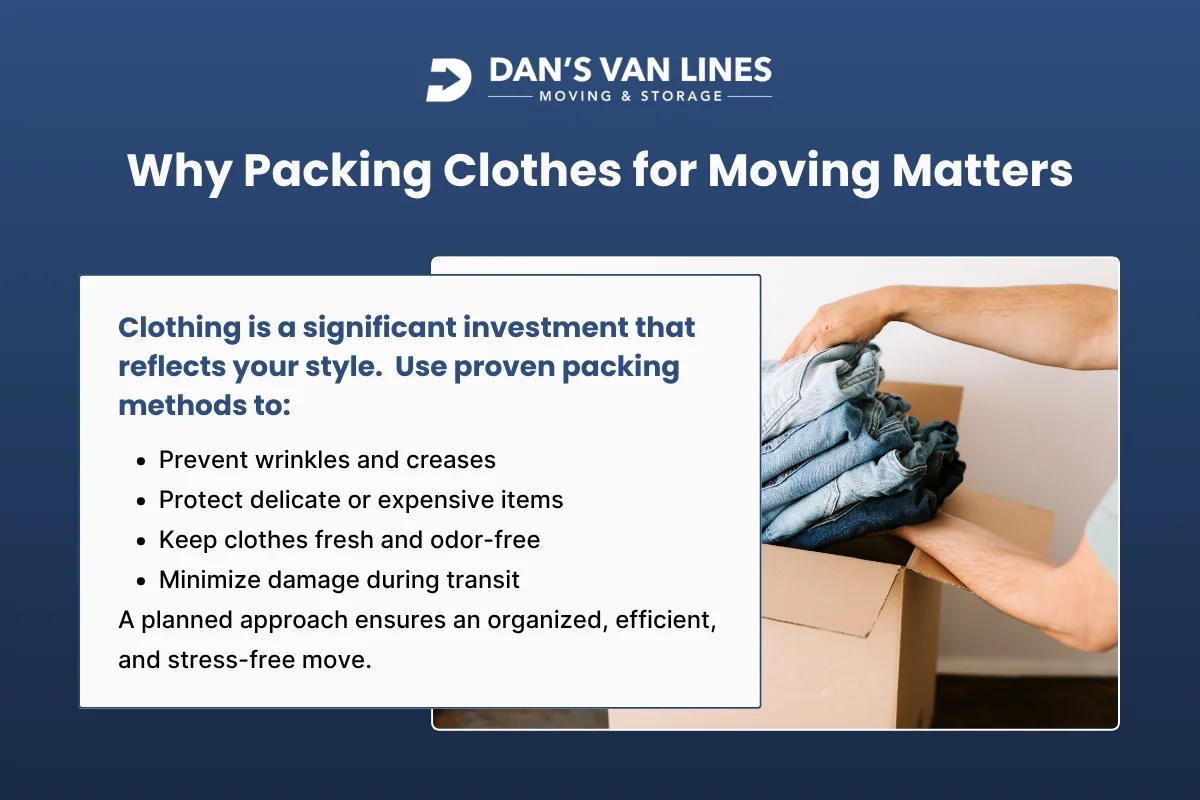
Dense items such as books, dishes, and canned goods should be divided among smaller cartons. Lightweight items such as pillows, bedding, and linens can go in larger boxes. This keeps boxes easier to carry and makes them safer to stack.
Inside each box, put heavier items on the bottom and lighter items on top. This protects delicate contents and helps the box maintain its shape under pressure. It also makes the carton more predictable when movers lift and place it in the truck.
Fragile items need individual wrapping and structured support
For dishes, glasses, décor, and similar items, wrap each piece individually before placing it into the box. Dish boxes with cardboard dividers are especially helpful for plates and stemware because they keep each piece separated and supported.
Bubble wrap is useful for breakables and electronics, while packing paper helps cushion and prevent surface contact. Foam sheets or inserts can fill gaps so items do not slide when the truck turns, brakes, or travels over uneven roads.
Mirrors, TVs, framed artwork, and large glass items should be wrapped carefully and placed in appropriate specialty cartons when possible. These items should never be packed loosely or placed where heavy boxes can press against them.
Box stacking works best when weight, shape, and fragility are planned together
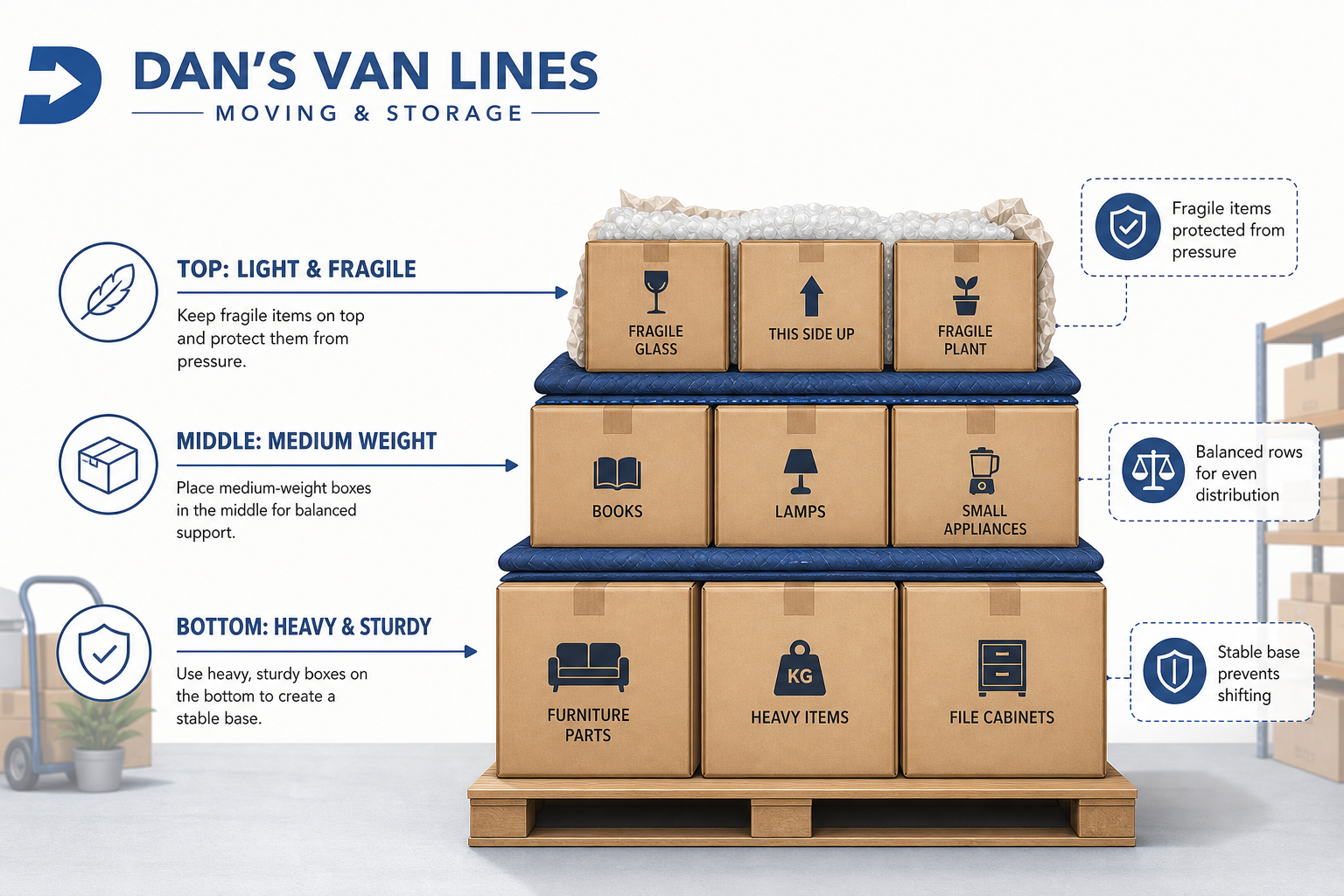
Stacking boxes for a cross-country move is not just a matter of filling space. The way cartons are stacked affects whether they crush, shift, or remain stable during transit. Good stacking starts with the weight and condition of each box.
Heavy, sturdy boxes form the lower layers. Medium-weight boxes can sit above or beside them. Light or fragile boxes should stay toward the top and away from pressure points. This creates a stable structure while reducing the risk that delicate contents will be crushed.
Boxes also stack better when they are fully packed but not overfilled. Underfilled boxes can collapse under weight, while overfilled boxes may bulge and fail to sit flat. A box with a flat, taped top and a firm shape is much easier to stack securely.
Truck loading order protects the entire shipment
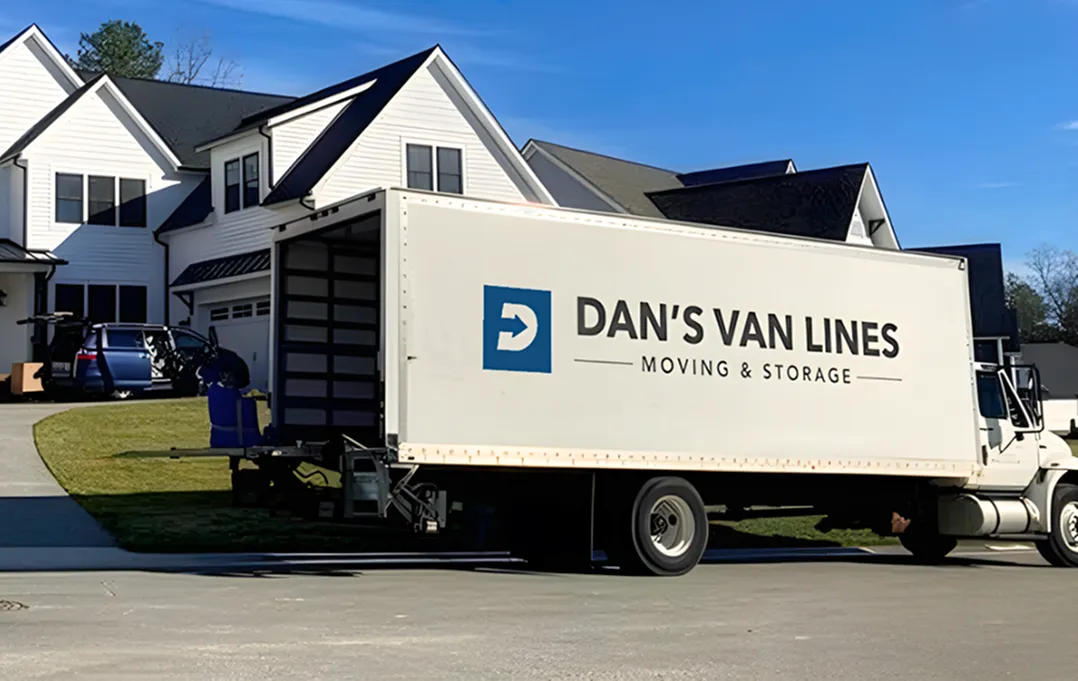
The same logic applies inside the moving truck. Heavy appliances and large furniture typically go against the front wall of the truck near the cab. Medium-weight furniture and boxes fill the middle areas. Lighter and fragile cartons are placed toward the top and back.
This loading order creates a stable base and reduces shifting over long distances. One truck loading guide explains that a stable sequence begins with heavy furniture first, followed by medium boxes, then light or fragile boxes last, creating a strong wall of items with the heaviest pieces supporting the load.
Weight should also be balanced across the truck’s width. Heavy boxes should not all sit on one side. Balanced loading helps keep the shipment more stable and reduces the chance that cargo will shift during turns, braking, or highway travel.
When our crews handle long-distance moving from Northern Virginia, this kind of loading discipline is part of protecting the shipment, not just fitting items into the truck. The way belongings are packed, stacked, padded, and secured all work together during extended travel.
Weight distribution matters for safety, damage prevention, and cost control
Weight distribution begins before the truck is loaded. It starts with each box. If a large carton is packed with books, dishes, or other dense items, it becomes harder to lift, more likely to be dropped, and more likely to fail under its own weight.
Keeping boxes manageable protects both your belongings and the people handling them. It also makes stacking easier because each carton can be placed more precisely. When a box is too heavy, it may be dragged, tilted, or set down abruptly, increasing the chance of damage.
Weight distribution also affects the loaded truck. Guidance on truck loading order and balance explains that heavy boxes should be distributed evenly across the truck, because uneven loading can affect handling, fuel efficiency, and brake performance over longer distances.
Good weight distribution reduces crushing and shifting
When heavy boxes are spread out, they can support the shipment without creating excessive pressure in one area. When they are stacked improperly, they can crush lighter boxes or cause uneven rows that are more likely to lean.
A good rule is to build from strong to delicate. Heavy cartons and sturdy furniture create the base. Medium items fill the structure. Fragile and lightweight cartons sit above, protected from direct pressure. Gaps should be filled with pads, blankets, or smaller suitable items so belongings do not slide into open spaces.
Securing the load as it is built also matters. Ratchet straps or rope may be used at intervals so cargo remains tight during transit. This is especially important for cross-country routes where the truck may travel through varied roads and conditions over several days.
Labeling and inventory systems keep cross-country moves organized
Labels become more important when your belongings are traveling a long distance. During a local move, you may be able to recognize boxes quickly or direct each item as it comes off the truck. During a cross-country move, boxes may remain stacked for days and arrive when you are tired from travel.
A strong labeling system helps movers place boxes in the correct rooms, helps you find essentials quickly, and supports a cleaner unloading process. It also reduces the frustration of opening several boxes just to locate chargers, medicine, dishes, or bedding.
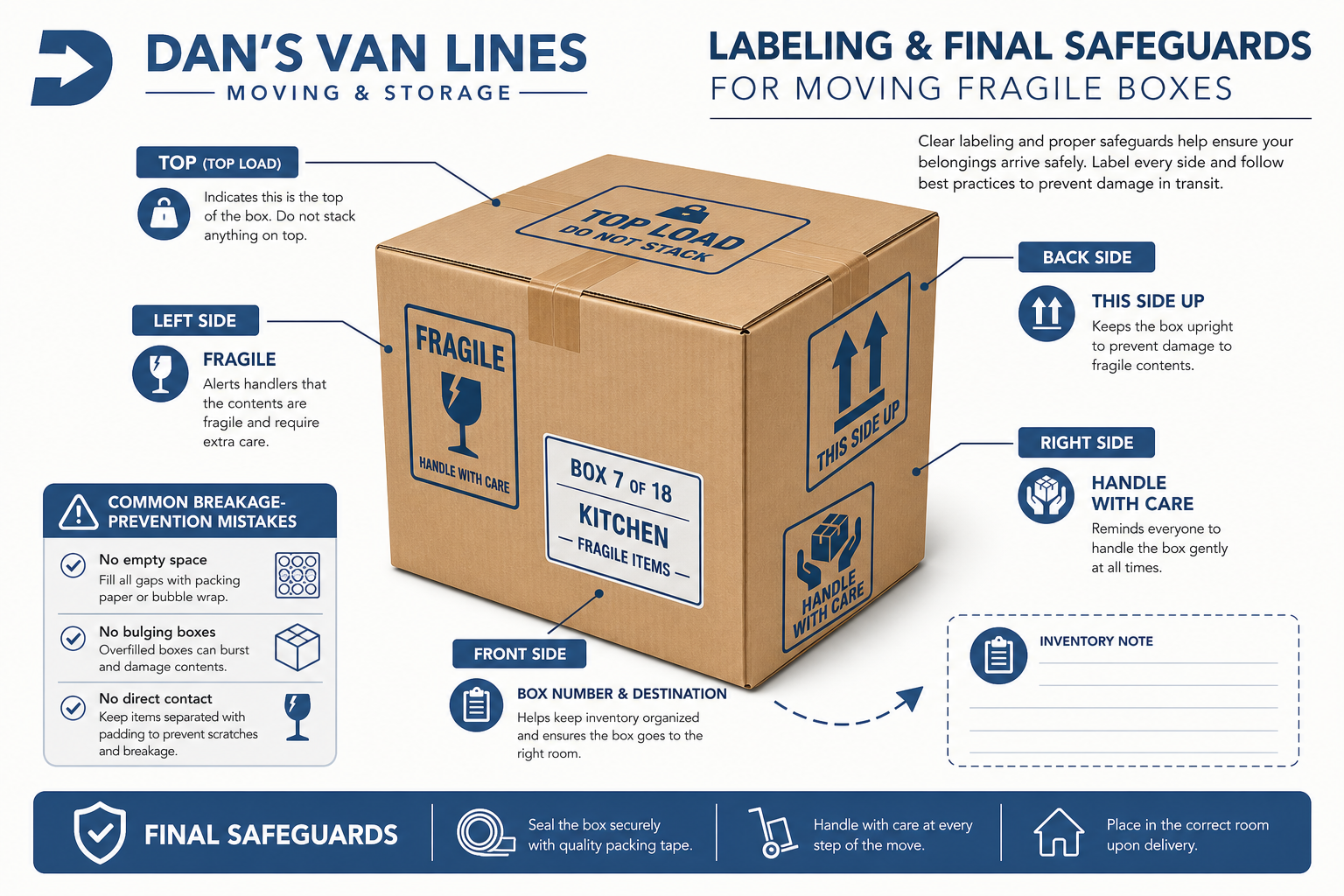
One recommended strategy is the Rule of Three labeling strategy, which suggests labeling the top and at least two adjacent sides of every box so the information remains visible when cartons are stacked.
Destination room: Mark where the box should go, such as kitchen, primary bedroom, bathroom, office, or storage.
Box number: Assign each carton a number that matches a master inventory list.
Handling notes: Add clear instructions such as “FRAGILE,” “HEAVY,” “THIS SIDE UP,” or “OPEN FIRST.”
Color coding: Use colored tape or markers to identify rooms quickly during unloading.
Master contents list: Keep detailed contents in a notebook, spreadsheet, or moving app rather than writing everything on the box.
A numbered inventory helps track boxes without exposing private contents
Numbering each box gives you a practical way to track belongings. Instead of writing detailed contents on the outside, you can list the box number, destination room, and contents in a private master log.
This is useful during a cross-country move because it lets you confirm that each box loaded at origin is delivered at destination. It also helps you prioritize unpacking. If box 12 contains daily kitchen items and box 35 contains seasonal decorations, your inventory tells you which one matters first.
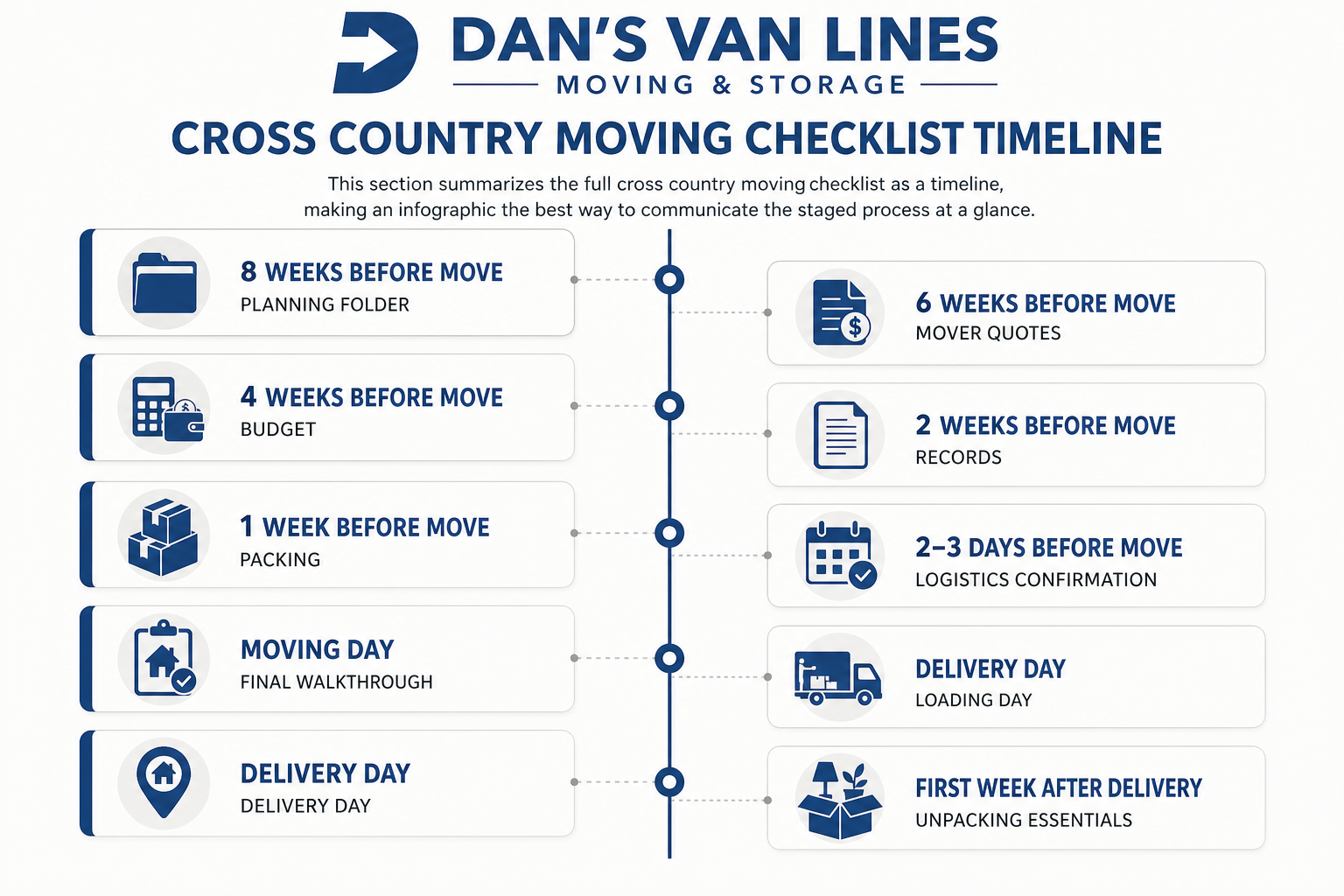
A low-stress cross-country packing timeline starts four to six weeks before moving day
Cross-country packing is easier when it happens in stages. Starting four to six weeks before moving day gives you time to declutter, gather supplies, pack non-essentials, label carefully, and set aside items that should travel with you.
Trying to compress the process into the last week often leads to poor decisions. Items get mixed from different rooms, fragile pieces are packed without enough cushioning, and essentials disappear into unmarked boxes. A steady timeline helps avoid that.
Several long-distance packing guides recommend beginning well before moving week, and one six-week long-distance packing timeline starts with decluttering, then moves into supplies, non-essential packing, address-related tasks, medication refills, and final checks.
Six weeks before moving day, sort and reduce what you ship
Begin with decluttering. Work room by room and decide what will be kept, donated, sold, or discarded. This is especially valuable for a long-distance move because excess items take space, add handling, and complicate packing.
Focus on items that are easy to evaluate early, such as damaged furniture, unused décor, old electronics, expired pantry goods, and belongings that no longer fit your new home plans. The less unnecessary volume you pack, the easier the rest of the process becomes.
Four weeks before moving day, gather supplies and pack non-essentials
At this stage, purchase or reserve the materials you need. Include sturdy boxes in several sizes, heavy-duty tape, packing paper, bubble wrap, foam sheets, stretch wrap, moving blankets, and permanent markers.
Start packing items you do not use daily. Off-season clothing, extra linens, books, décor, stored items, and less-used kitchen items are good early candidates. Label each box as you pack it so you do not create an unlabeled stack to sort later.
Two weeks before moving day, increase packing and confirm details
Two weeks out, continue packing everyday items that can be spared. This is also the time to handle tasks such as forwarding mail, transferring utilities, refilling medications, and confirming mover arrival windows.
Keep an eye on essentials. Do not accidentally pack documents, chargers, medicine, toiletries, or basic first-night items too early. Set aside a specific area for personal travel kits and open-first boxes so they do not get mixed into the main shipment.
Moving week, finish essentials and inspect every storage area
During moving week, finish the last boxes and check closets, cabinets, drawers, garages, storage areas, and other easy-to-miss spaces. Pack essentials last, then make sure they are clearly labeled and easy to identify.
This is also the time for final checks. Confirm that fragile boxes are marked correctly, heavy boxes are not overloaded, and valuables or important documents are separated from the main shipment when appropriate.
Full-service packing is worth considering for complex cross-country moves
Some cross-country moves are manageable with careful self-packing. Others call for professional help, especially when there are many fragile items, limited time, physical limitations, or specialty belongings that require experienced handling.
Full-service or partial packing can be especially useful for kitchens, glassware, framed art, electronics, large collections, and other items that need the right materials and techniques. It can also help when your schedule is too tight to pack gradually over several weeks.
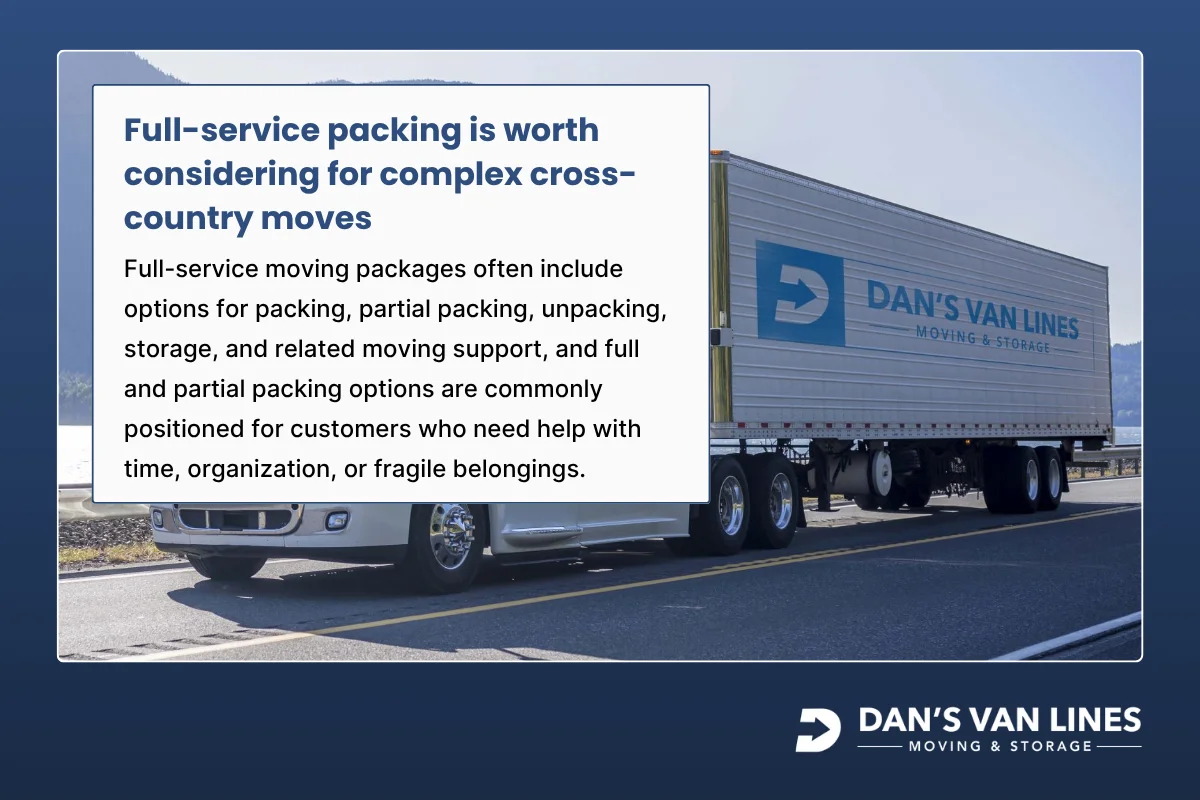
Full-service moving packages often include options for packing, partial packing, unpacking, storage, and related moving support, and full and partial packing options are commonly positioned for customers who need help with time, organization, or fragile belongings.
For many families, partial packing is a practical middle ground. You might pack clothing, linens, books, and non-fragile items yourself, while asking professionals to handle dishes, stemware, artwork, or specialty pieces. This keeps you involved while reducing risk where careful packing matters most.
Prepare belongings for longer transit by thinking beyond the box
Cross-country packing is not only about cartons. Furniture, upholstery, electronics, documents, and valuables all need a plan. Longer transit means each category should be protected according to how it can be damaged.
Wood furniture benefits from moving blankets because they protect surfaces from scuffs and dents while allowing the furniture to breathe. Upholstered pieces can be protected with plastic stretch wrap to reduce exposure to dust, dirt, and minor abrasions.
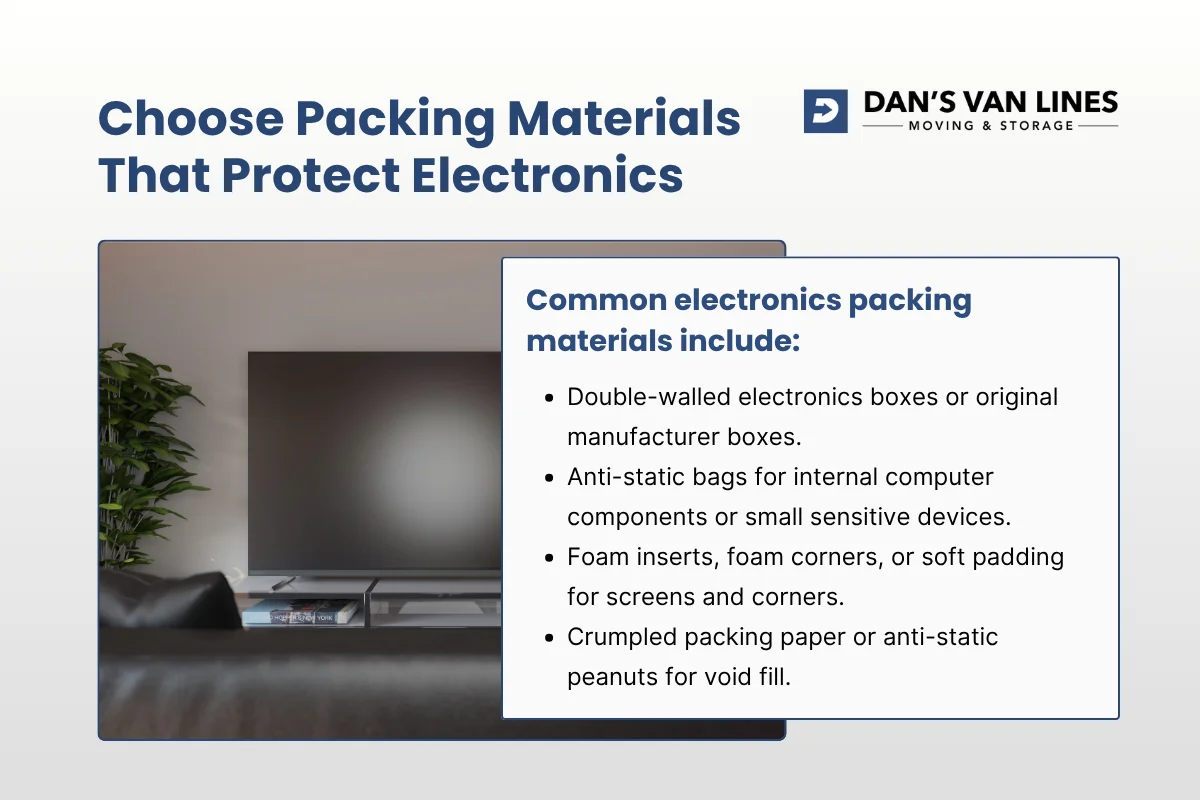
Electronics should be cushioned on all sides and packed in appropriately sized boxes. Labels such as “FRAGILE” and “THIS SIDE UP” should be clear. Important documents, jewelry, high-value collectibles, and irreplaceable photos are often best kept separate from the main shipment and carried with you when possible.
Large specialty items such as pianos, large glass tables, fine art, or collections may require custom crating, specialized padding, or professional handling. If you are unsure whether an item should be packed by you, professionally packed, or transported separately, it is better to decide before moving week.
Get a Quote for cross-country moving and packing support
Packing for a cross country move works best when every decision supports longer transit: stronger boxes, better cushioning, smart weight distribution, careful stacking, clear labels, and a realistic timeline. The more distance your belongings travel, the more important those details become.
If you are planning a long-distance move from Northern Virginia and want help deciding what to pack yourself, what to label as fragile, or whether full-service packing is the right fit, Dan’s Van Lines can help. Get a Quote by calling (703) 553-0900 or visiting https://www.dansvanlines.com/contact-us.









.webp)
%20(1).webp)
.webp)
.webp)

.webp)
.webp)
.webp)


.avif)
%201.svg)

%201.svg)
%201.svg)