
Packing fragile items well is less about moving slowly and more about controlling pressure, vibration, and empty space. Glassware, dishes, ceramics, collectibles, and sentimental pieces usually break when they touch each other, shift inside a box, or sit under weight they were never meant to carry.
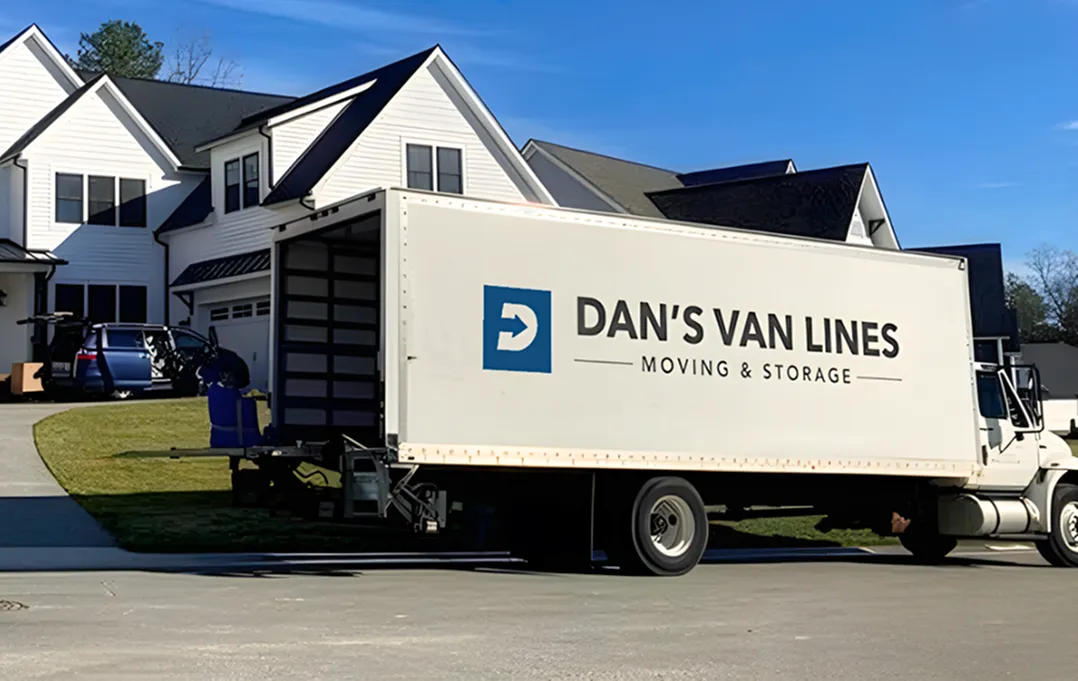
At Dan’s Van Lines, we help homeowners and renters throughout Alexandria and Northern Virginia plan safer moves with careful packing, loading, and handling practices. If you have questions about preparing delicate items for an upcoming move, you can reach out through our contact page.
Choose sturdy supplies before packing fragile items
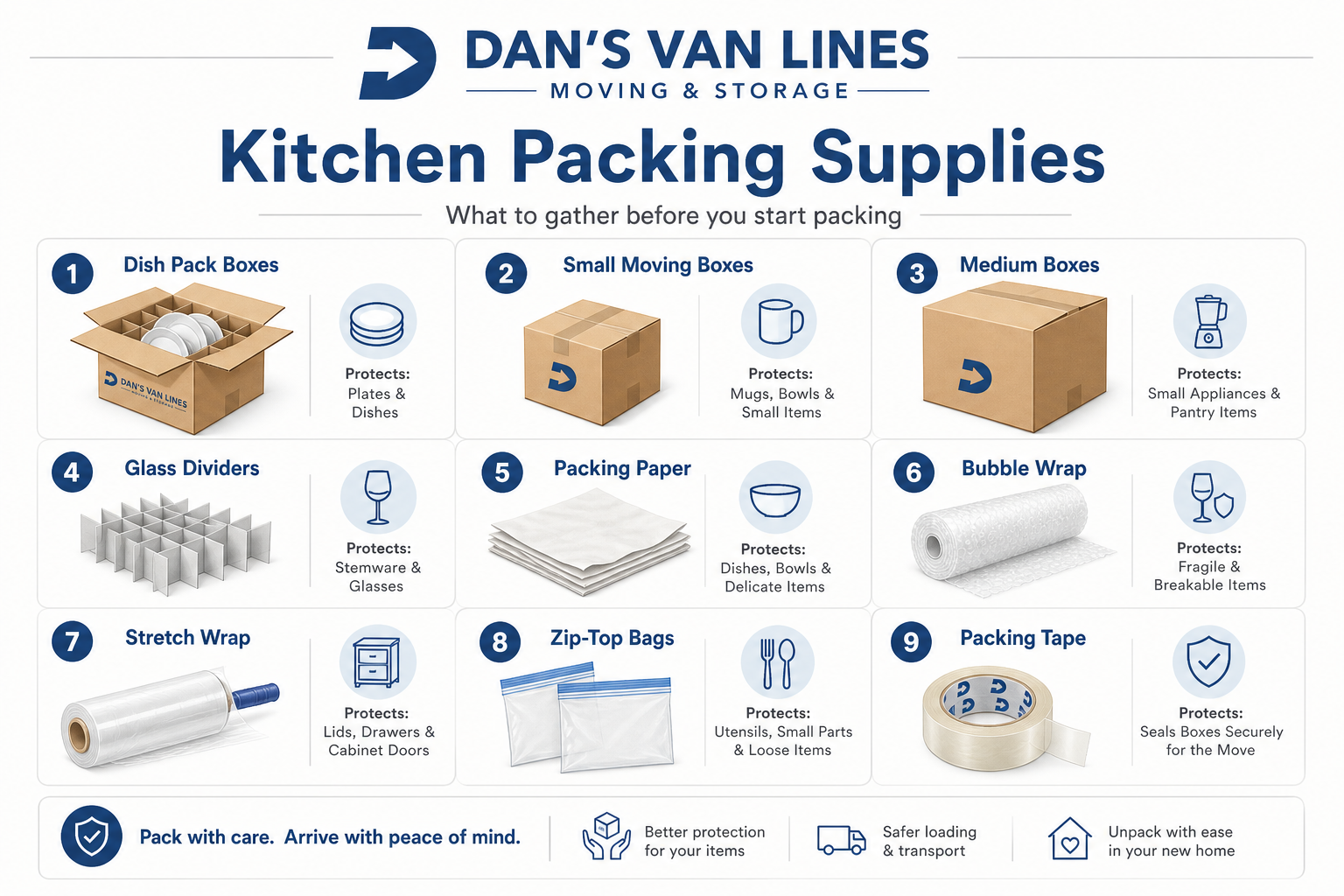
The right supplies make fragile packing more predictable. Weak boxes, oversized cartons, and thin filler create movement, which is exactly what you want to avoid. Before wrapping the first plate or glass, set up materials that support the weight and shape of what you are packing.
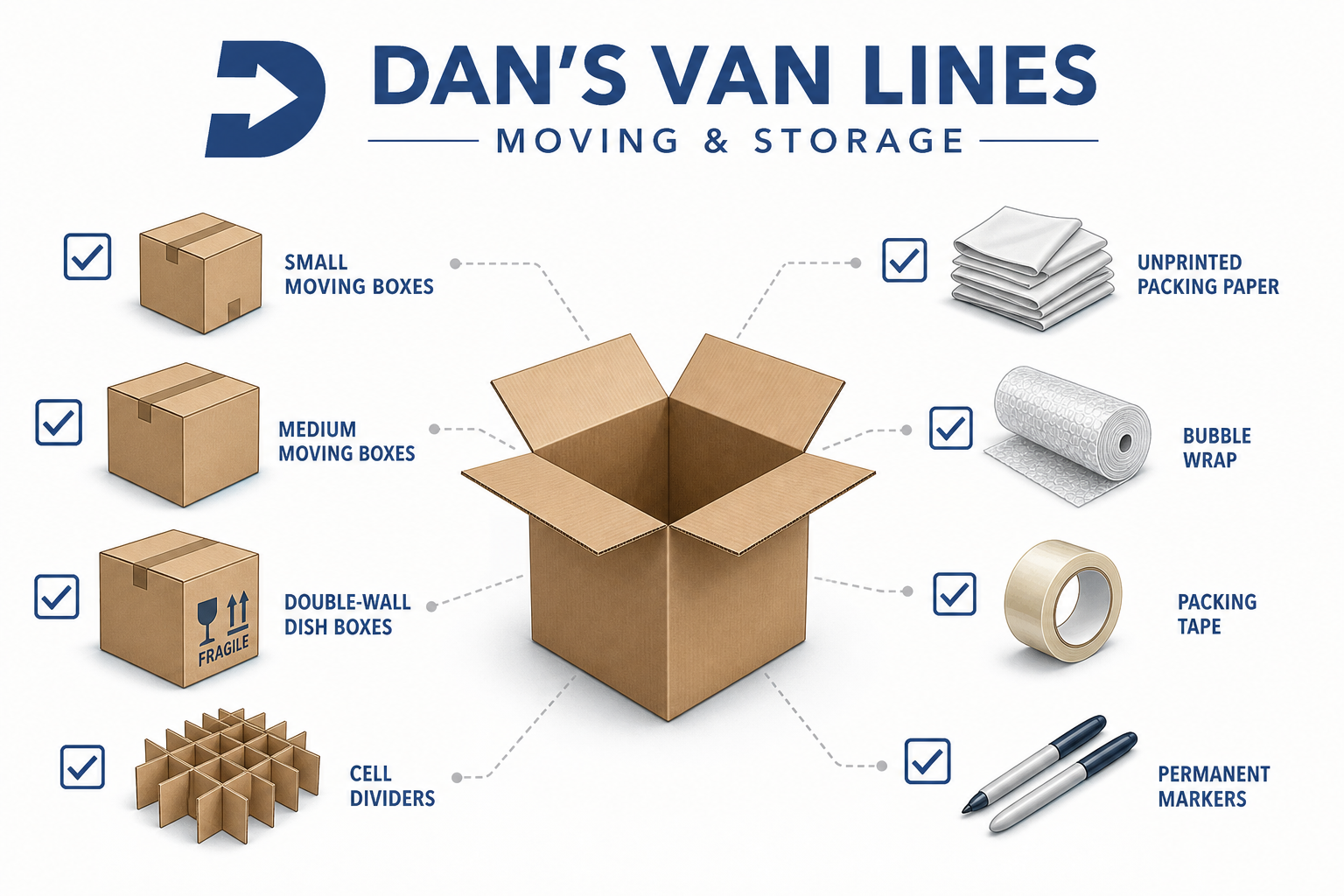
For dishes, glassware, and other breakable household items, moving guides commonly recommend small or medium boxes, dish-pack or double-wall boxes, cell dividers, packing paper, bubble wrap, packing tape, and permanent markers. A guide to dish-pack boxes for kitchen items describes these stronger cartons as better suited for heavy, breakable contents like plates, china, and glassware.
Small and medium boxes are usually easier to control than large boxes. Large cartons can become too heavy, encourage shifting, and make breakable contents harder to carry safely. A fragile box should feel solid, not loose or overloaded.
Use materials that separate, cushion, and label each fragile box
Good supplies serve three jobs. They separate each item from the next, cushion the box against pressure, and communicate handling instructions after sealing. For most household fragile packing, start with these basics:
Small or medium moving boxes for most fragile items
Dish-pack or double-wall boxes for dishes, china, and heavier breakables
Cell dividers for glasses, stemware, and similarly shaped pieces
Unprinted packing paper for wrapping dishes, china, and glass surfaces
Bubble wrap or foam pouches for especially delicate or valuable items
Packing tape to reinforce and seal the carton
Permanent markers for room labels, box numbers, and handling notes
Unprinted packing paper is especially useful around fine china, decorated dishes, and glass. Several packing guides recommend it over newspaper because ink can transfer onto surfaces. Save bubble wrap, foam pouches, and corner protectors for pieces that need extra shock protection, such as crystal, antiques, collectibles, and sentimental valuables.
Pack dishes and plates vertically with padding between every piece
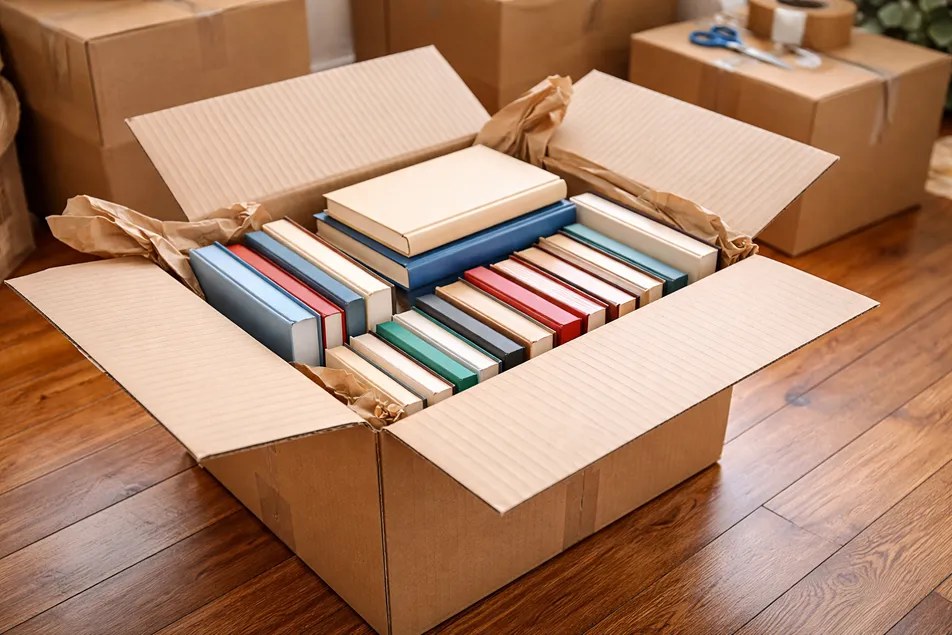
Plates and dishes may seem sturdy because they stack neatly in cabinets, but a moving box creates different pressure. The most repeated best practice is to wrap each item individually and pack plates vertically on their edges, like records, rather than flat in a stack. Vertically packed plates are better positioned to resist pressure during transit.
Start with a cushion layer at the bottom of the box. Crumpled packing paper creates a soft base before any dishes go inside and keeps the first row from resting directly on the hard carton.
Wrap each plate completely before placing it in the box. Add paper between rows, fill gaps around corners, and avoid open space where dishes can move. A packing guide that recommends wrapping each dish individually also emphasizes using enough filler so the contents do not shift.
A dish box should feel tight without bulging
The box should be snug, but not strained. If the sides bulge or the top flaps cannot close flat, the box is overpacked. That creates pressure on the contents and makes the carton more likely to fail.
After placing dishes vertically, add cushioning along the sides and on top. The top layer matters because boxes may experience pressure during carrying and loading. A final cap of crumpled paper helps absorb pressure before it reaches the dishes.
Bowls can sometimes be nested, but only when paper or padding sits between each piece. More fragile or valuable bowls should be wrapped individually. Handles, rims, and protruding details need extra paper because those points chip or crack more easily.
Mugs and cups follow the same rule. Wrap each one on its own, protect the handle, and do not let ceramic touch ceramic. A sturdy daily-use handle can still snap if another item presses against it during the move.
Use dividers and upright placement for glassware and stemware
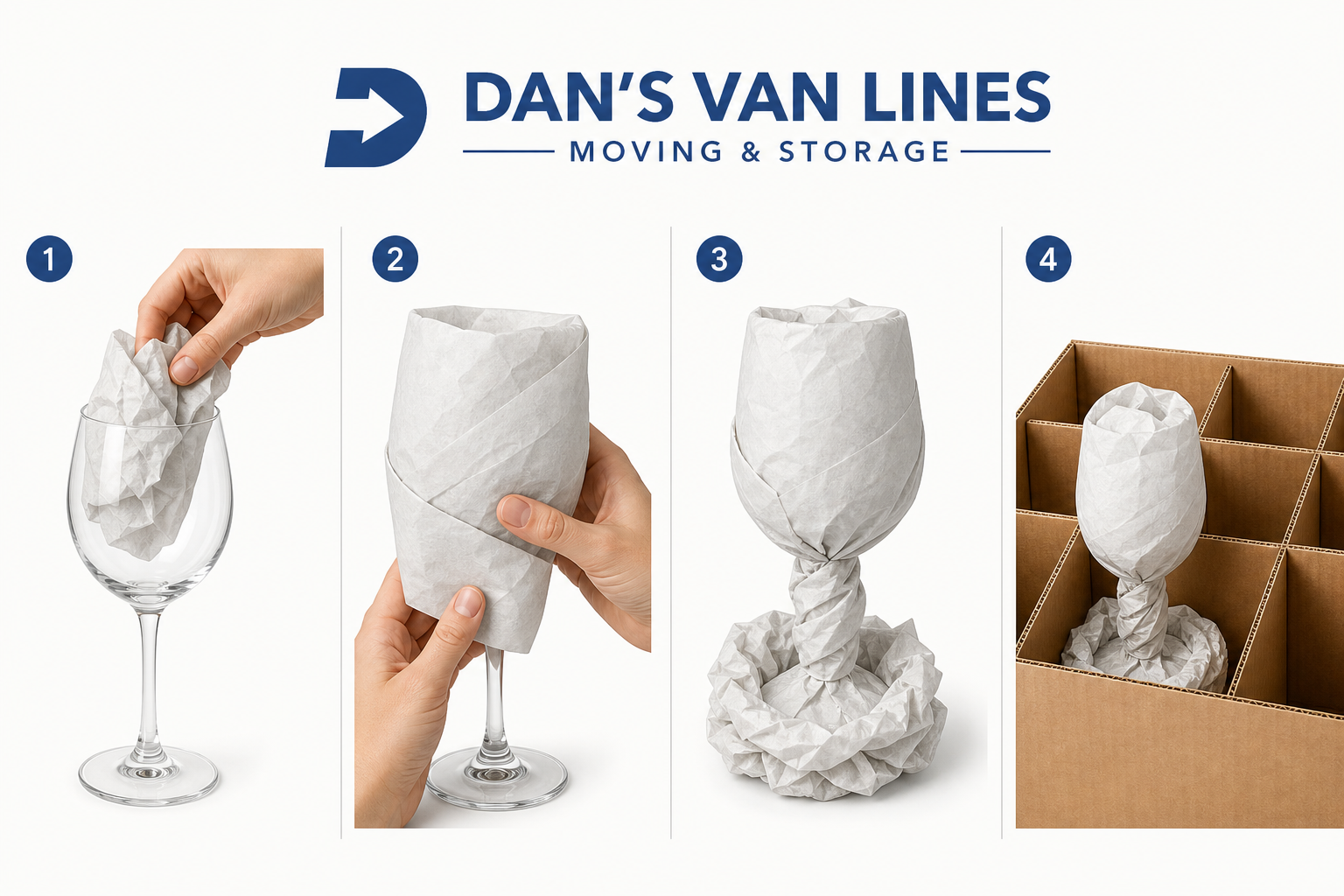
Glassware needs separation as much as cushioning. The safest box is not simply one filled with soft material, but one where each piece has its own protected space. Dividers and cell kits are useful for drinking glasses, stemware, and similarly shaped pieces.
Cell dividers reduce glass-to-glass contact by keeping each item in an individual compartment. For everyday glasses, stuff the inside with crumpled packing paper, then wrap the outside before placing the glass upright in its cell. Upright placement helps glassware sit in a stable, natural position.
Stemware needs more attention because the stem and base are weak points. Several moving resources recommend extra bubble wrap or foam around those areas, along with stemware-specific cell boxes. A packing guide that discusses cell dividers for glassware notes their value for reducing contact between pieces.
Protect the inside, outside, stem, and base of each glass
Think of each glass in layers. First, support the inside with paper. Second, wrap the outside surface. Third, add extra protection to the most fragile parts. Finally, place the item in a divider so it cannot bump another glass.
Do not rely on one thin sheet of paper around stemware or crystal. These items are vulnerable to impact, vibration, and pressure. If a piece is especially valuable, sentimental, or delicate, add bubble wrap or foam and consider packing it separately from ordinary glassware.
After the cells are full, fill any remaining voids around the dividers. Even a divided box can shift if there is extra space around the cell kit. Before sealing, place a cushion layer on top so glassware is not pressed directly against the flaps.
This is one of the most natural times to consider help. For fragile glassware, crystal, fine china, collectibles, and sentimental valuables, our full-service packing team can wrap, box, and protect items that need more than standard DIY packing.
Protect ceramics, collectibles, and antiques by preventing direct contact
Ceramics, collectibles, antiques, and sentimental décor pieces need one simple rule applied carefully: no item should touch another item directly. Chips, scratches, broken handles, cracked corners, and damaged decorative details often happen when pieces vibrate against each other inside a box.
Wrap each piece individually, then immobilize it with padding. A ceramic vase, figurine, or collectible should not be able to roll, lean, or knock against the side of the carton. Pay attention to handles, legs, lids, corners, raised details, and any part that sticks out from the main body.
For delicate collectibles, double-boxing adds a second layer of protection. The item is wrapped and placed in a snug smaller box, then that box goes inside a larger box with padding on every side. Guidance on double-boxing delicate items describes this method as useful for especially fragile or valuable pieces.
Document high-value and sentimental pieces before sealing the box
Before packing antiques, collectibles, or sentimental valuables, take photos and note their condition. This helps you remember what was packed, where it went, and whether an item had existing wear before the move. Documentation is also useful when tracking high-priority possessions during unpacking.
Inventory notes do not need to be complicated. Assign a box number, write the room destination, and record a high-level description of the contents. If the box should remain upright, should not be stacked, or needs careful handling, include that in the notes and on the box.
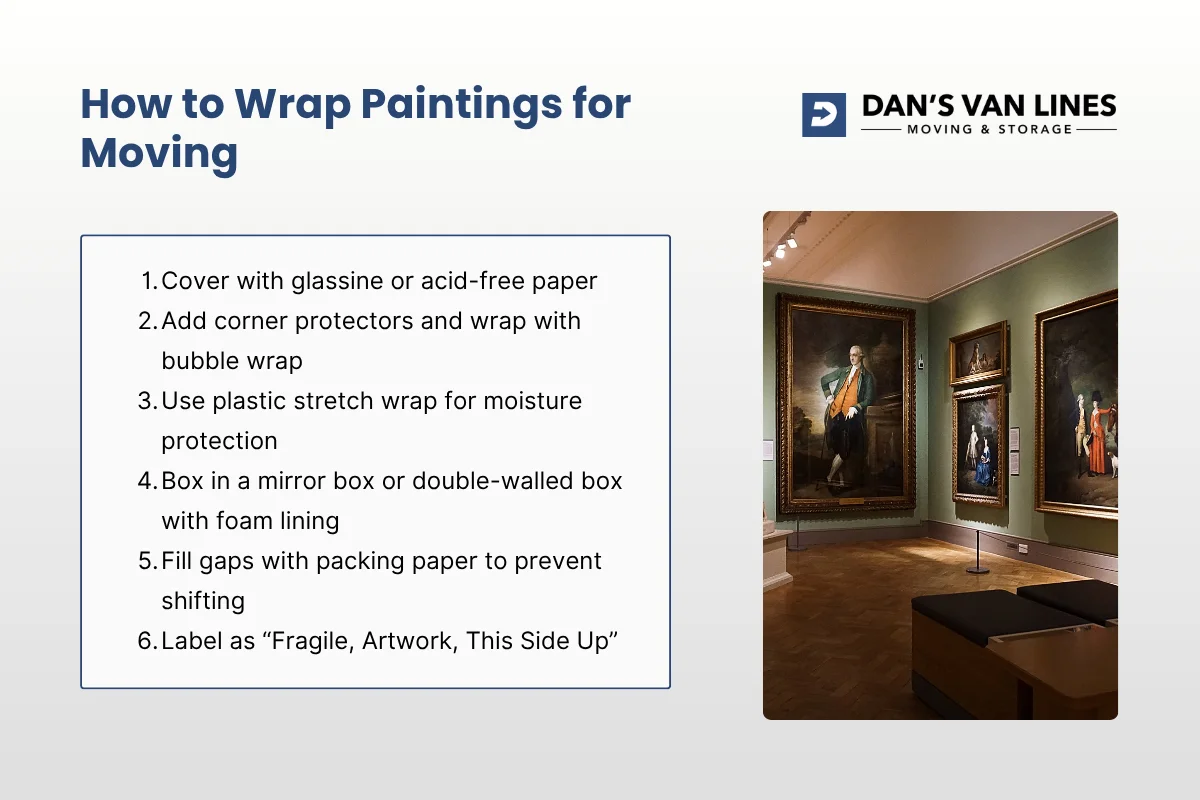
Mirrors, framed décor, and artwork follow the same anti-shift and anti-pressure thinking. Some guidance recommends corner protectors, bubble wrap, and painter’s tape on glass surfaces to help reduce shattering risk if impact occurs. These items may not belong in a dish box, but they still need protection against pressure and movement.
For anything irreplaceable, use a stricter standard than you would for everyday items. If you would be devastated to lose it, give it more cushioning, a smaller dedicated box, stronger outer protection, and clearer labeling.
Stack fragile boxes so weight, movement, and pressure stay controlled
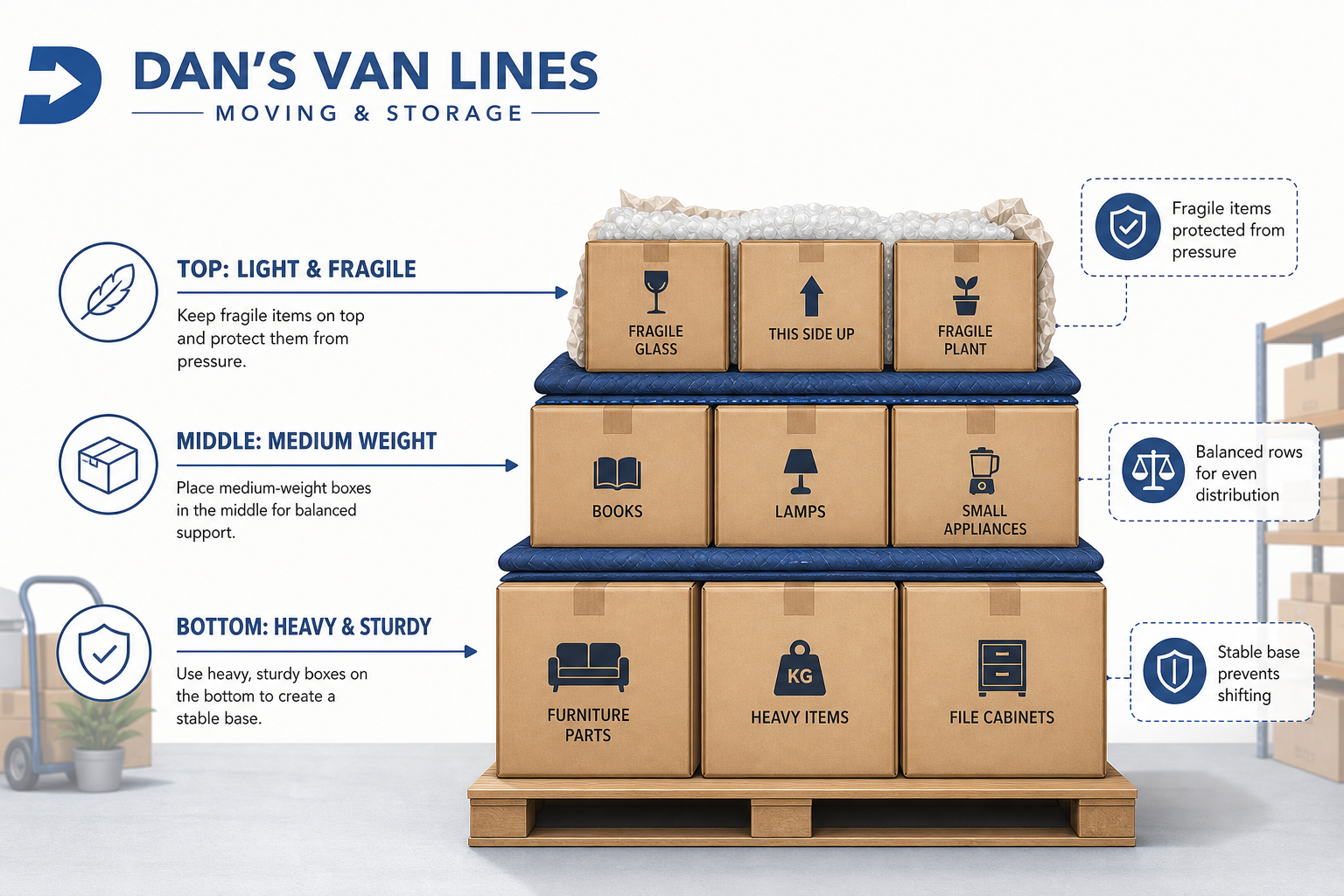
Smart stacking starts inside the box. Heavy items belong low, lighter items belong above them, and empty space should be filled so nothing rattles. A fragile carton should become one tight, immobile unit before it is sealed.
The shake test is a simple way to check your work. Close the box and shake it gently. If you hear or feel movement, reopen it and add filler. Some guides also recommend pressing lightly on the closed flaps to make sure the contents feel cushioned rather than pressed against hard surfaces.
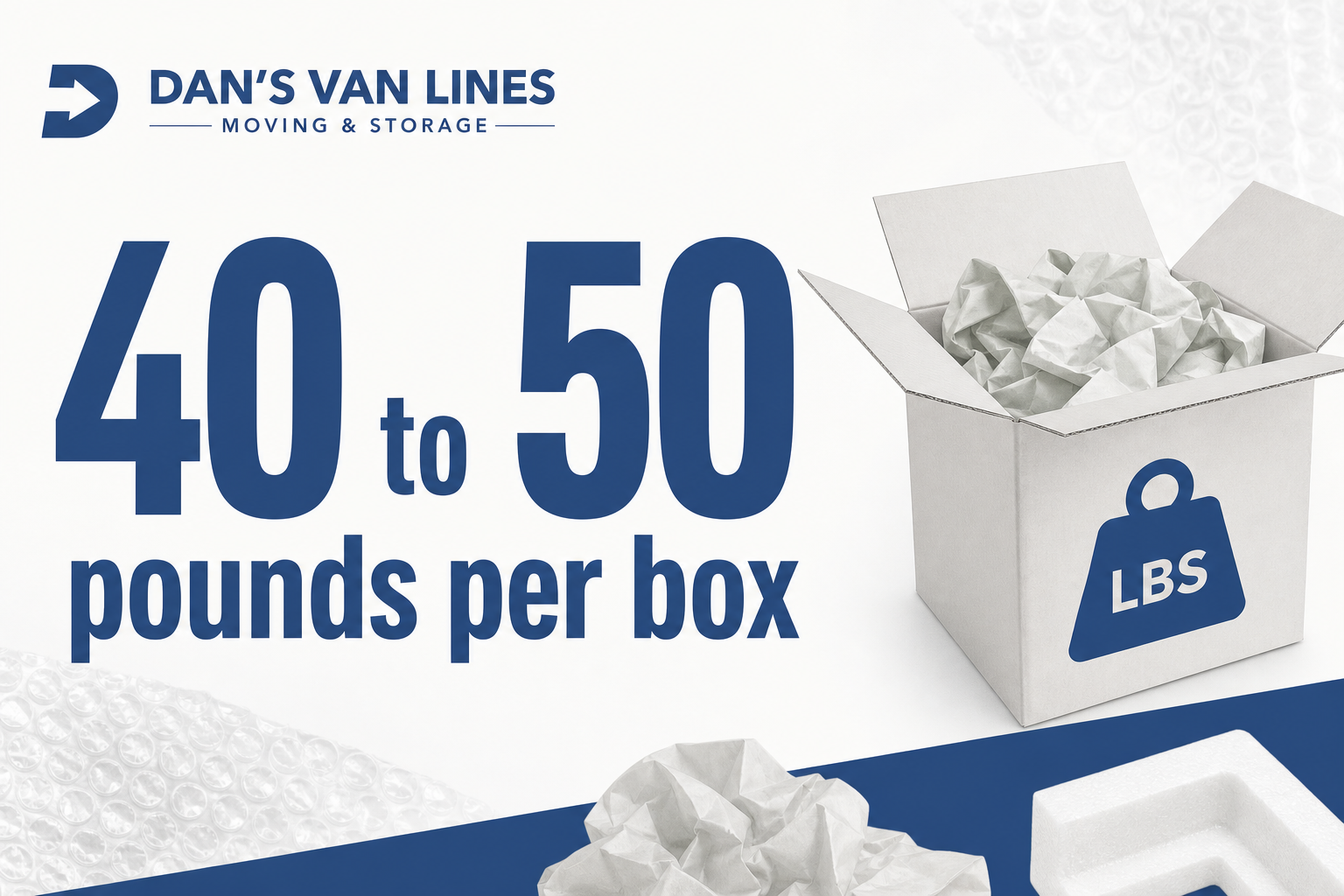
Weight matters. Fragile cartons should stay small enough to carry easily and should not become so heavy that they are likely to be dropped or mishandled. Some professional packing guidance sets a target of 40 to 50 pounds per box or lower for fragile cartons.
Keep fragile cartons on top of sturdier items during loading
The same weight rule applies after the boxes are packed. Fragile cartons should not be buried beneath heavy or sturdy boxes. They are generally better placed last on the truck and kept on top of stronger items, where they are less likely to be crushed.
Avoid unstable stacks with fragile boxes at the bottom. Even well-packed glassware can break if enough weight presses down from above. Stacking should protect the box structure as well as the contents.
Do not overpack a box until it bulges. Bulging sides mean the contents are under pressure and the carton is harder to stack safely. Do not underpack it either. Empty space allows items to shift, and shifting is one of the most common causes of breakage.
Use padding to create firmness without force. When the box closes flat, feels solid, and passes the gentle shake test, it is better prepared for carrying, loading, transport, and unloading.
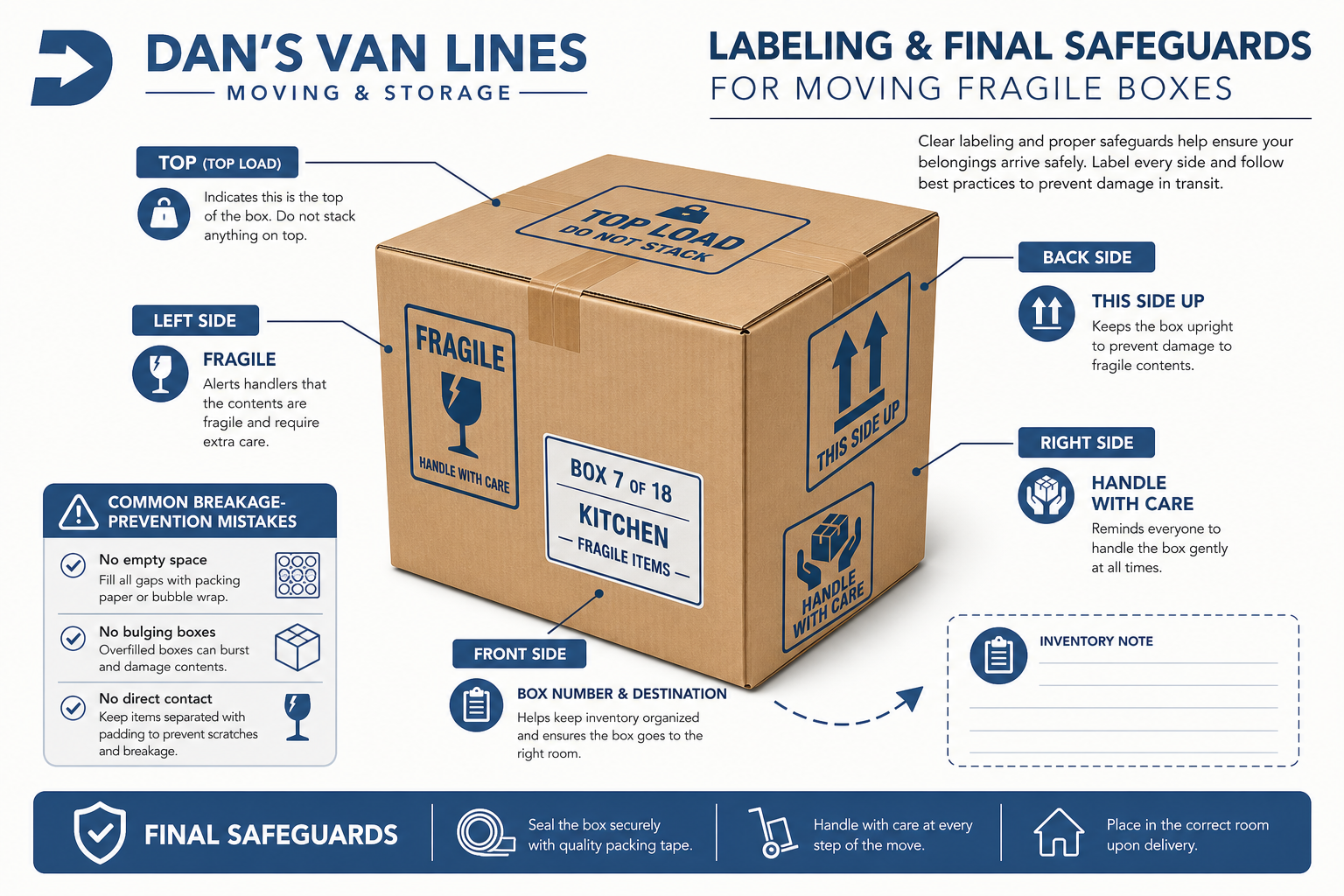
Label fragile boxes with handling instructions that are visible from every side
Labels are not just for finding dishes after the move. They help people understand how a box should be carried, stacked, and loaded. A fragile box with no clear markings can be treated like any other carton, even if the contents need top loading or upright placement.
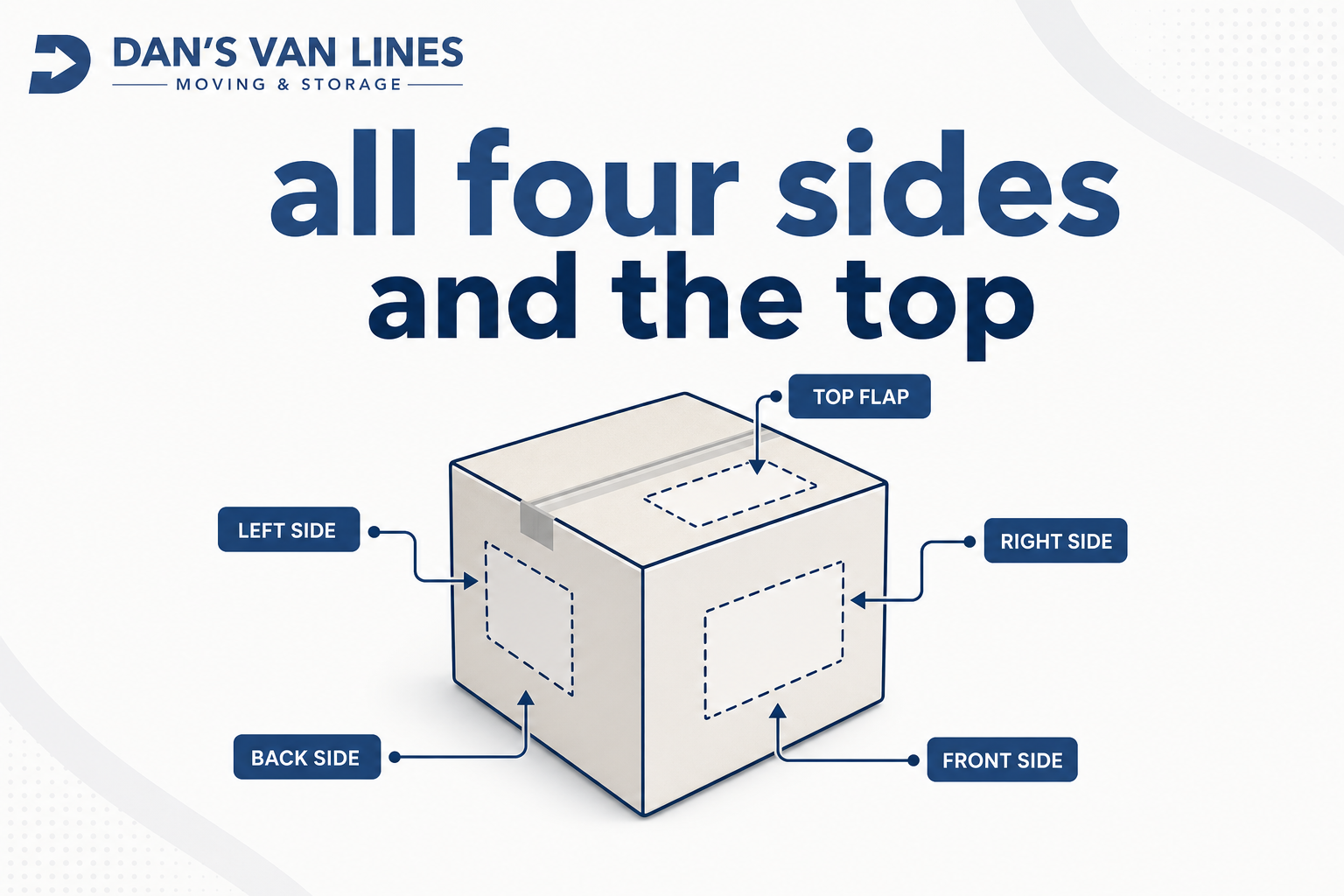
Mark boxes with “FRAGILE,” “THIS SIDE UP,” and, when useful, “HANDLE WITH CARE.” Some guidance also recommends labels such as “Do Not Stack” or “Top Load” for contents that require special handling. A labeling resource recommends marking orientation-sensitive boxes on all four sides and the top so instructions are visible from any angle.
Pair labels with a master inventory list. Number each fragile box, list the room destination, and note contents at a high level. If a box contains crystal, ceramics, collectibles, antiques, or sentimental pieces, mark that in your inventory so it can be prioritized during unpacking.
Avoid the packing mistakes that most often lead to breakage
Many broken items trace back to preventable errors. These mistakes usually come from rushing, using the wrong supplies, or assuming ordinary storage habits will work in a moving box. Before sealing fragile cartons, check for the problems that cause the most damage.
The key takeaway is simple: fragile packing needs separation, cushioning, firm support, and clear handling instructions. If one of those pieces is missing, the risk of breakage rises. Watch for these common issues:
Using large boxes for heavy or fragile contents
Packing plates flat instead of vertically on their edges
Letting glass, ceramic, or china pieces touch each other directly
Leaving empty space that allows items to shift
Overpacking until the box bulges or will not close flat
Using newspaper on fine china or decorated glass where ink may transfer
Skipping extra protection for stems, handles, rims, corners, and bases
Treating antiques, crystal, collectibles, and sentimental valuables like everyday dishes
Forgetting to label boxes on multiple sides with handling instructions
If you are packing durable everyday dishes and have the right materials, DIY packing can work well. For antiques, crystal, fragile décor, collectibles, sentimental valuables, or anything difficult to replace, professional packing is often the safer choice.
Dan’s Van Lines offers full-service packing for moves in Alexandria and Northern Virginia, including careful wrapping, boxing, and protection for fragile belongings. To get help with packing fragile items for your next move, Get a Quote or call us today at (703) 553-0900.











.webp)
%20(1).webp)
.webp)
.webp)
.webp)
.webp)
.webp)


.avif)
%201.svg)

%201.svg)
%201.svg)