
Furniture damage during a move usually starts in predictable places: corners, legs, edges, drawer fronts, upholstery, and glass. The right protection plan focuses on those first-contact points before anything is carried through a doorway or loaded into a truck.
At Dan’s Van Lines, we help homeowners, renters, and businesses in Alexandria and Northern Virginia protect furniture through careful preparation, padding, wrapping, loading, and securing. If you have questions before an upcoming move, reach out through our contact page.
Start With Clean, Empty, and Dry Furniture Before Wrapping
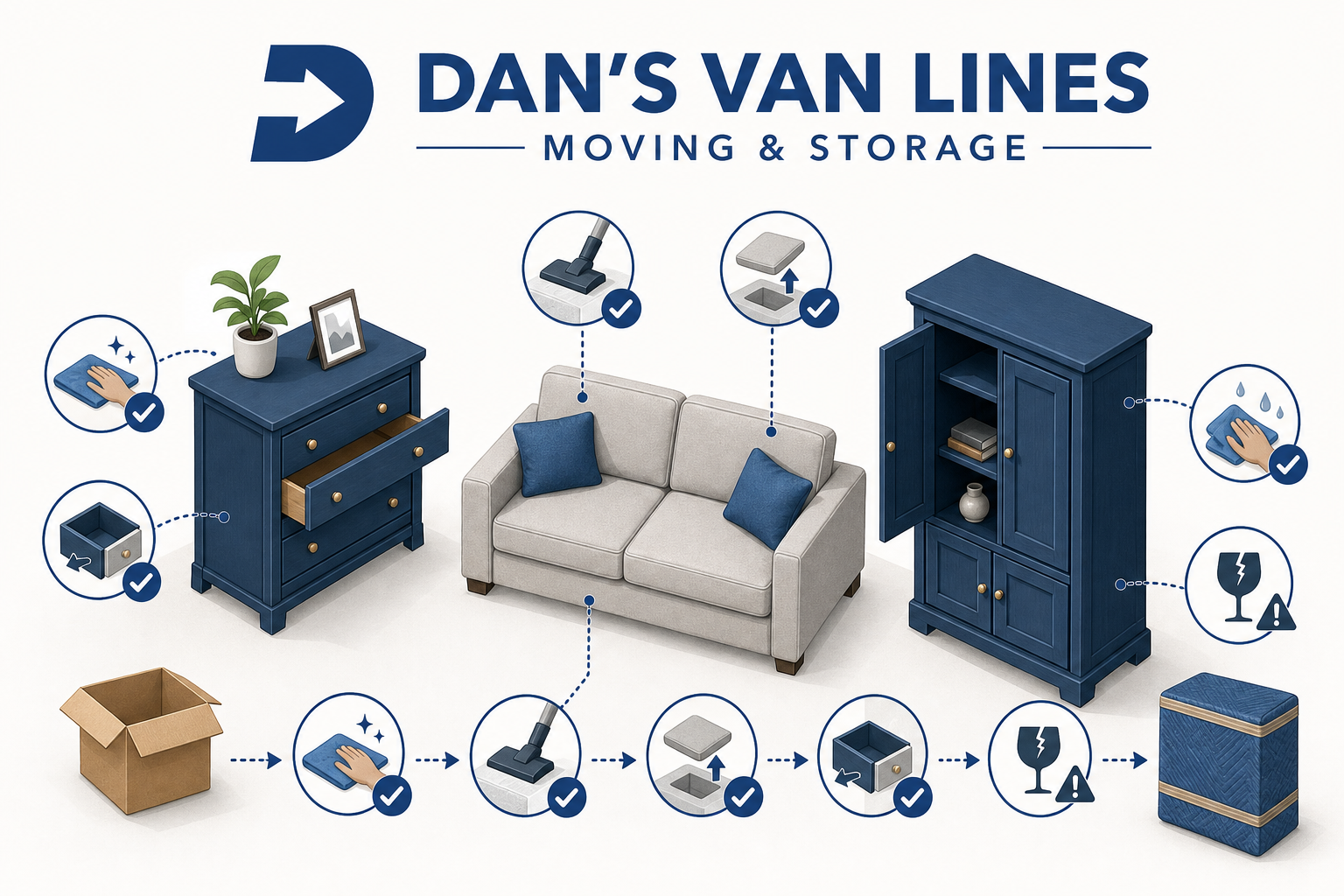
The first step in learning how to protect furniture when moving is preparation. Pads and blankets work best against clean, dry surfaces. If dust, grit, or moisture gets trapped under padding, scratches or moisture problems can still happen during transit or storage.
Professional movers typically prepare furniture by cleaning surfaces, checking for loose parts, and identifying weak points. Wood and metal should be dusted or wiped. Upholstery should be vacuumed. Surfaces should be fully dry before any blanket, pad, cover, or plastic film is added.
Furniture should also be emptied. Drawers, cabinets, shelves, hutches, desks, and wardrobes should not travel with heavy contents inside. Extra weight can strain joints, shift the center of gravity, and make a piece harder to carry safely.
Customer prep that makes furniture protection more effective
Before moving day, customers can reduce risk by clearing each furniture piece so movers can wrap it properly. The goal is not to wrap everything yourself, but to make each item easy to inspect, cover, and secure.
This preparation also helps movers decide what should be disassembled, what needs extra padding, and which pieces require special handling. For antiques, glass pieces, and high-value furniture, noting existing condition and fragile areas helps the crew plan the right protection.
A practical pre-move checklist includes:
Remove fragile decor, lamps, electronics, books, dishes, and loose items from furniture.
Empty drawers and cabinets so weight does not shift during carrying or transport.
Dust wood surfaces, wipe metal, and vacuum upholstered furniture.
Make sure furniture is dry before any blanket, pad, or cover is applied.
Remove cushions, pillows, removable shelves, and detachable hardware when practical.
Point out antiques, designer pieces, glass tops, loose joints, or existing damage to the moving crew.
Use Moving Blankets and Furniture Pads as the Main Protection Layer
Thick moving blankets and furniture pads are the primary layer used to protect most furniture. They cushion impact, reduce vibration, and shield finishes from scratches and scuffs. Sheets or light fabric are not a substitute because they offer little impact protection and can slide out of place.
Professional crews use pads to cover broad surfaces, edges, corners, legs, arms, and areas likely to touch walls, railings, door frames, or truck walls. The most important areas are often first-contact points: dresser corners, table edges, sofa arms, appliance sides, and protruding trim.
According to professional furniture wrapping guidance, movers commonly protect wood furniture with moving blankets first, then secure those blankets so they do not slip during carrying or loading.
Padding should be targeted, not just draped over the top
A loose blanket over the top of a dresser may look protective, but it leaves vulnerable areas exposed. Corners, legs, trim, and lower edges are often the places that strike door frames or truck walls. Good pad placement covers those areas and stays in place.
For wood furniture, movers wrap exposed surfaces and pay extra attention to edges and decorative trim. For upholstered furniture, blankets or fitted covers are tucked around cushions, arms, and backs. For appliances, pads cover broad sides and edges before securing materials are applied.
For delicate or high-value pieces, extra cushioning may be added under the blankets. Bubble wrap, foam, cardboard corner protectors, and folded padding can help protect corners, carved details, glass elements, and other vulnerable features. Tape should attach only to blankets, paper, or cardboard, never directly to finished furniture.
The best protection is layered and snug. It should cover the full piece, overlap at seams, and stay tight enough to prevent shifting while avoiding direct adhesive contact with the furniture surface.
Use Shrink Wrap to Secure Padding, Not as the First Layer
Shrink wrap, also called stretch wrap, is useful during a move, but it is often misunderstood. It is mainly a securing layer, not the primary protection layer. Plastic film helps hold blankets and pads in place, keeps drawers or doors from shifting, and prevents cushions from moving.
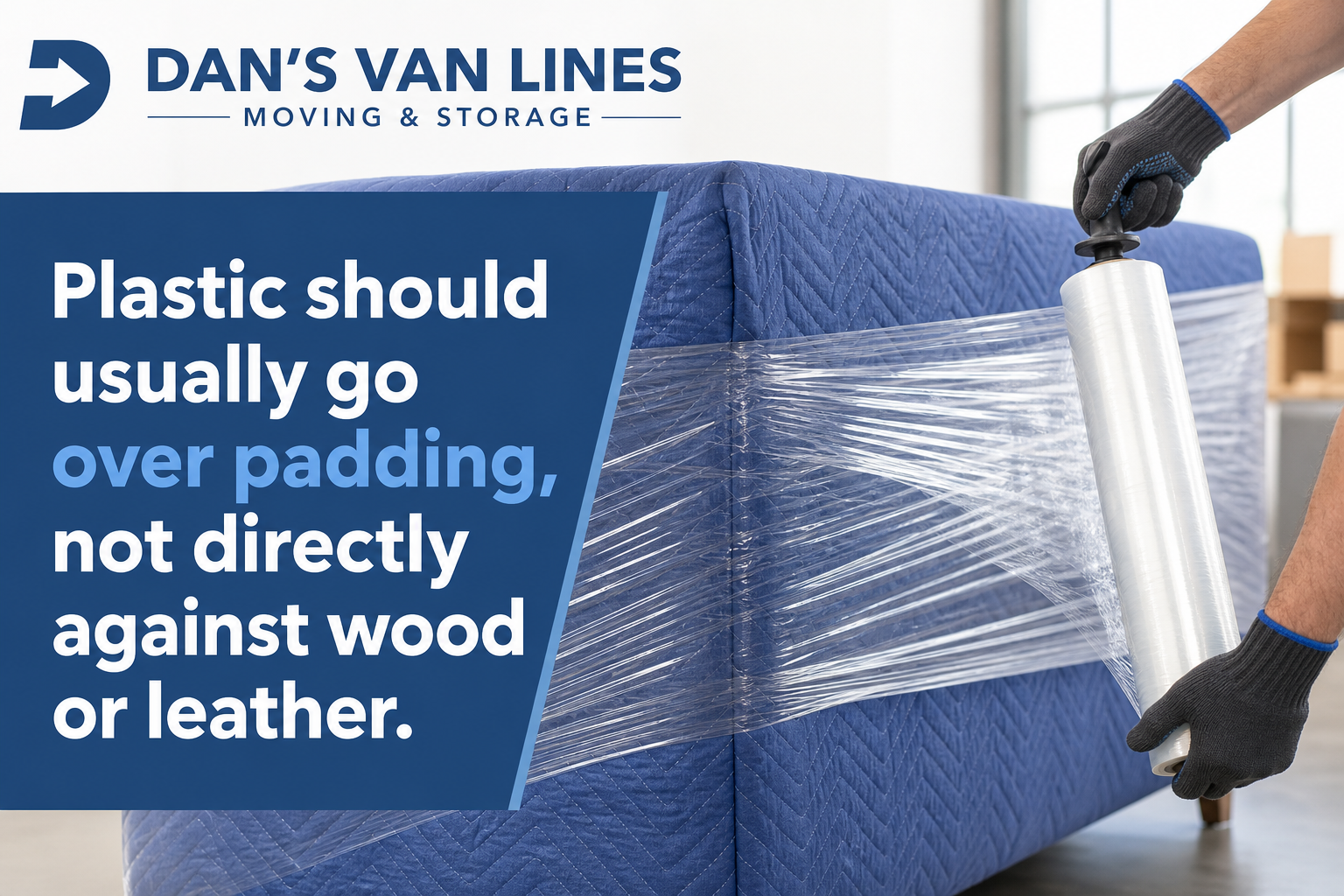
The key rule is simple: plastic should usually go over padding, not directly against wood or leather. When plastic is applied directly to finished wood, leather, or other sensitive materials, it can trap moisture and cause damage, especially during storage or temperature changes.
Movers often apply stretch wrap in overlapping passes, both horizontally and vertically, to create a continuous shell around the padded item. Plastic wrap and furniture pads are commonly used together because the wrap keeps the pads from sliding while the pads provide cushioning.
This is one place where professional handling matters. Our crews use padding first, then secure it with the right wrapping method so the protection stays in place while furniture is carried, loaded, transported, and unloaded.
Why tape should never touch finished furniture
Tape can cause serious finish damage when applied directly to wood, leather, veneer, painted surfaces, or polished furniture. It may leave adhesive residue or pull at the surface when removed. In some cases, tape damage can be worse than a small moving scuff.
Instead, tape should only touch protective materials such as blankets, cardboard, or paper. Stretch wrap is often preferred because it sticks to itself rather than to the furniture. Used correctly, it secures the protection layer without bonding to the surface underneath.
Drawers and doors should also be handled carefully. Movers may secure them with stretch wrap over padding or with straps, depending on the item. The goal is to keep moving parts from swinging open without putting adhesive on the furniture itself.
Protect Wood, Upholstery, Leather, and Glass With Different Wrapping Methods
Different materials need different protection. A solid wood dresser, a leather sofa, an upholstered sectional, and a glass tabletop should not all be wrapped the same way. The safest method depends on the surface, the risk points, and whether the item is going directly to a new home or into storage.

Wood furniture is usually cleaned, padded with moving blankets, reinforced at corners, and secured with stretch wrap over the padding. Plastic should not sit directly on bare wood because moisture can become trapped against the finish. Corners may need folded blankets, foam, or cardboard protectors.
Upholstered sofas and chairs need full coverage with breathable covers or moving blankets. Padding should tuck around arms, backs, and cushion areas so fabric is not exposed. Stretch wrap can hold the pads in place, but the piece should not be sealed in a way that traps moisture against the fabric.
Leather furniture needs airflow during protection
Leather requires special care because it is porous and can be harmed by direct plastic contact. Professional guidance warns against wrapping leather directly in plastic or bubble wrap because it can trap heat and moisture against the surface.
A better method is to place clean moving blankets or breathable cotton covers against the leather first. Stretch wrap, if used, should secure the padding without creating an airtight seal around the leather for long periods. This protects the surface while allowing more airflow than direct plastic contact.
Glass and mirrors need cushioning plus rigid support
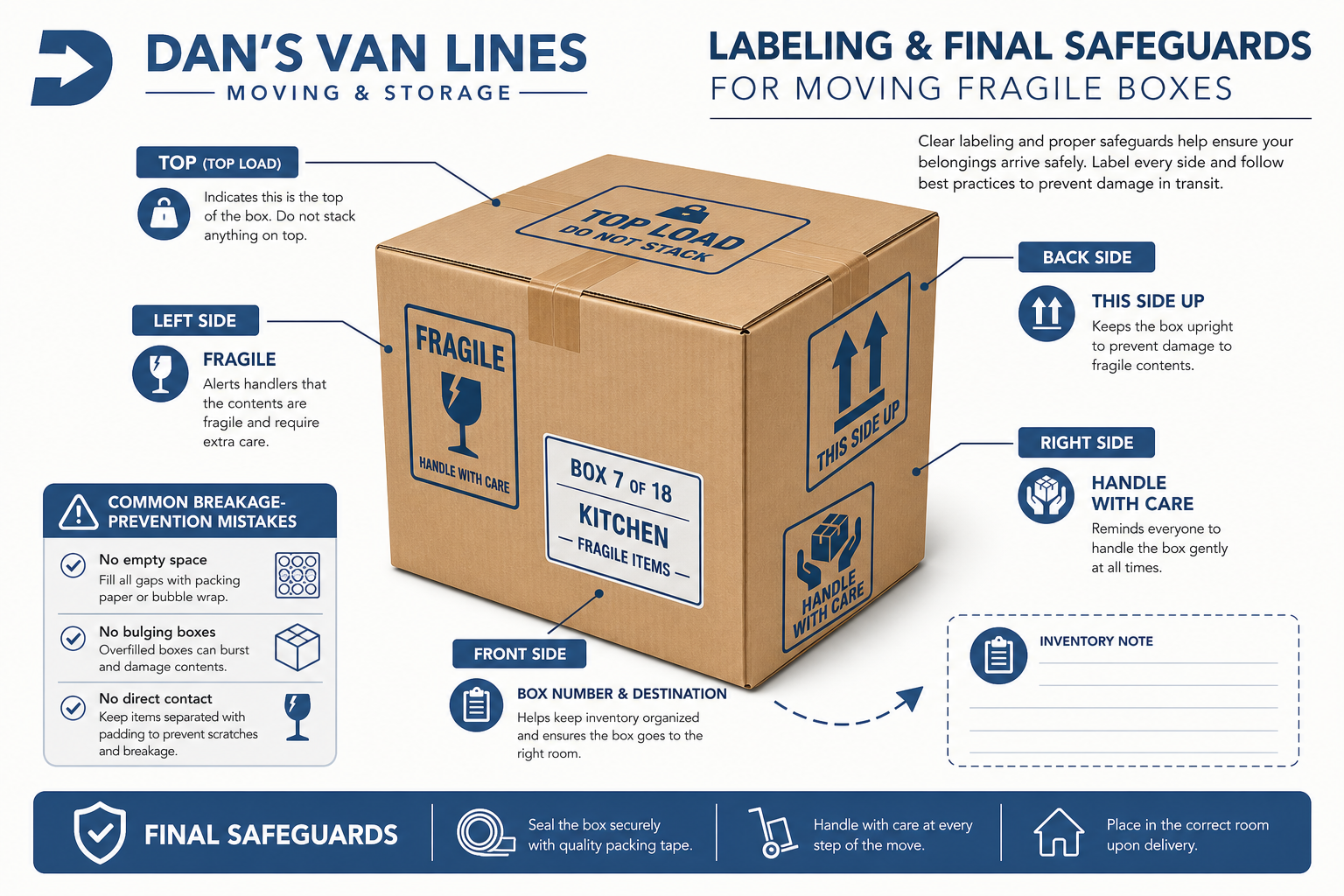
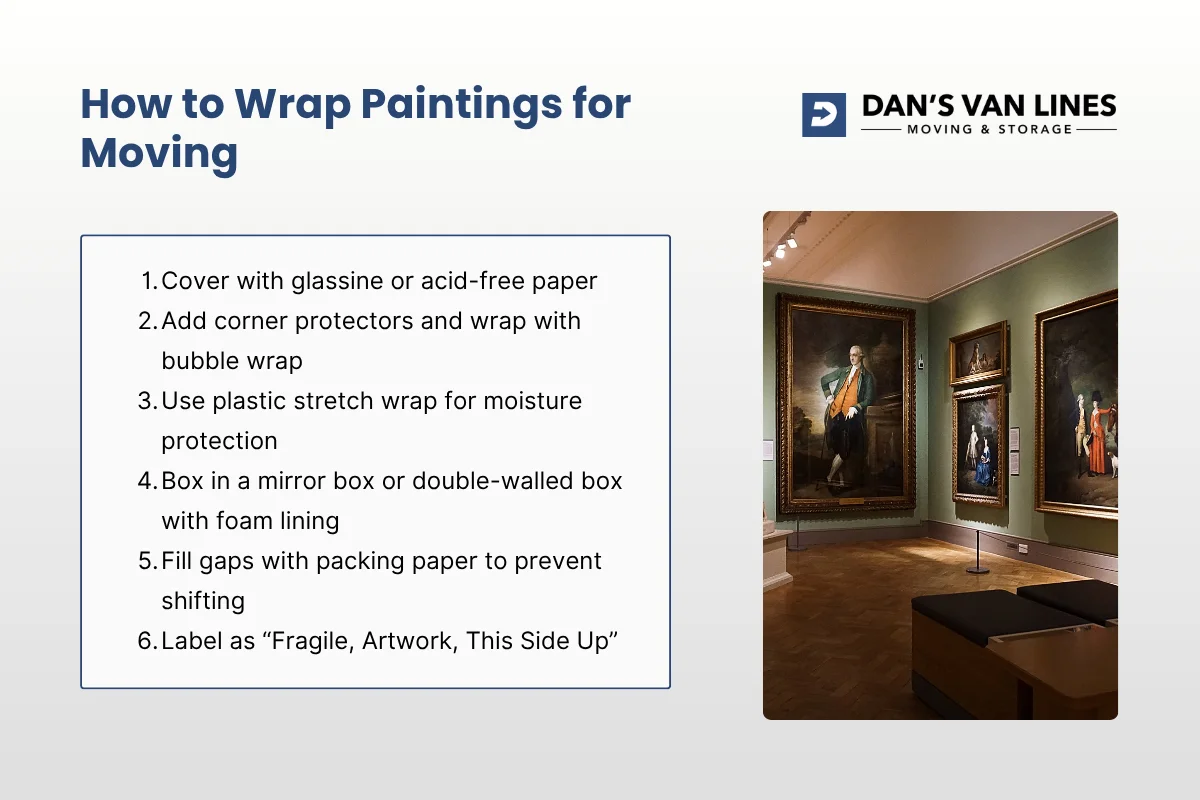
Glass protection focuses on cushioning and structure. Movers may tape an “X” across glass to help limit shattering, then add packing paper, rigid cardboard, bubble wrap, and moving blankets. Corners need special attention because chips and cracks often start at edges.
Glass tabletops and mirrors should travel vertically, standing on edge in padded positions, rather than lying flat. Flat transport increases the chance of flexing or breakage if weight is placed on top. Once protected, glass pieces should be secured so they cannot slide or tip during transit.
Disassemble Large Furniture So It Can Be Padded and Carried Safely
Disassembly helps protect furniture because it reduces stress on joints and makes large pieces easier to maneuver. Tables with detachable legs, bed frames, headboards, footboards, removable shelves, and sectional sofa components are often safer when separated and wrapped as individual parts.
Moving a table with legs attached can strain the joints when the table is tilted, carried through a doorway, or loaded into a truck. Removing the legs when the design allows it lets movers wrap the tabletop as a flatter, easier-to-handle piece. The legs can then be padded separately.
Sectionals also benefit from separation. Each section can be wrapped individually, which helps protect upholstery and frame connections. Large sections are generally safer loaded upright rather than stacked in a way that compresses cushions or strains joints.
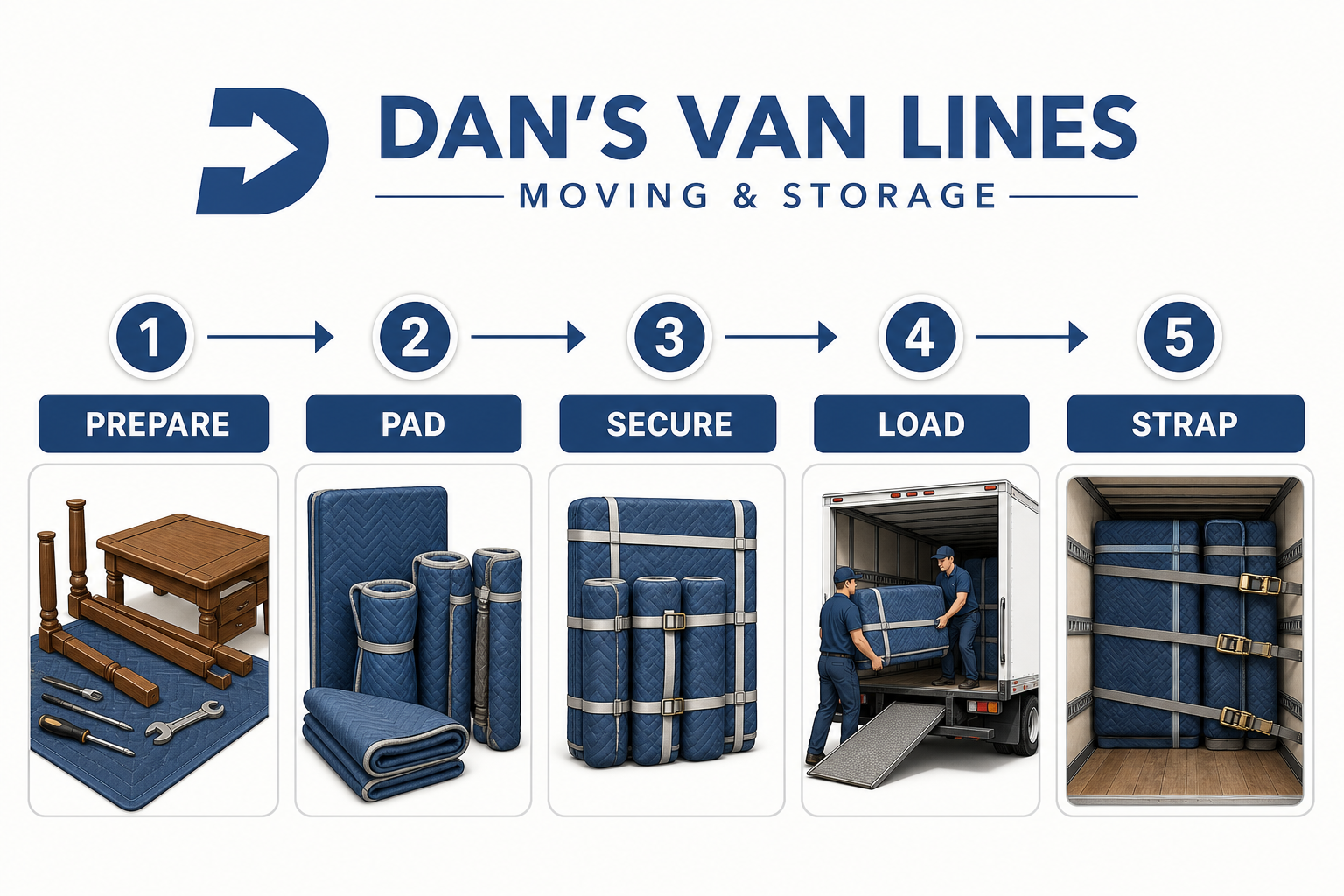
Professional movers follow a prepare, pad, secure, load, and strap process
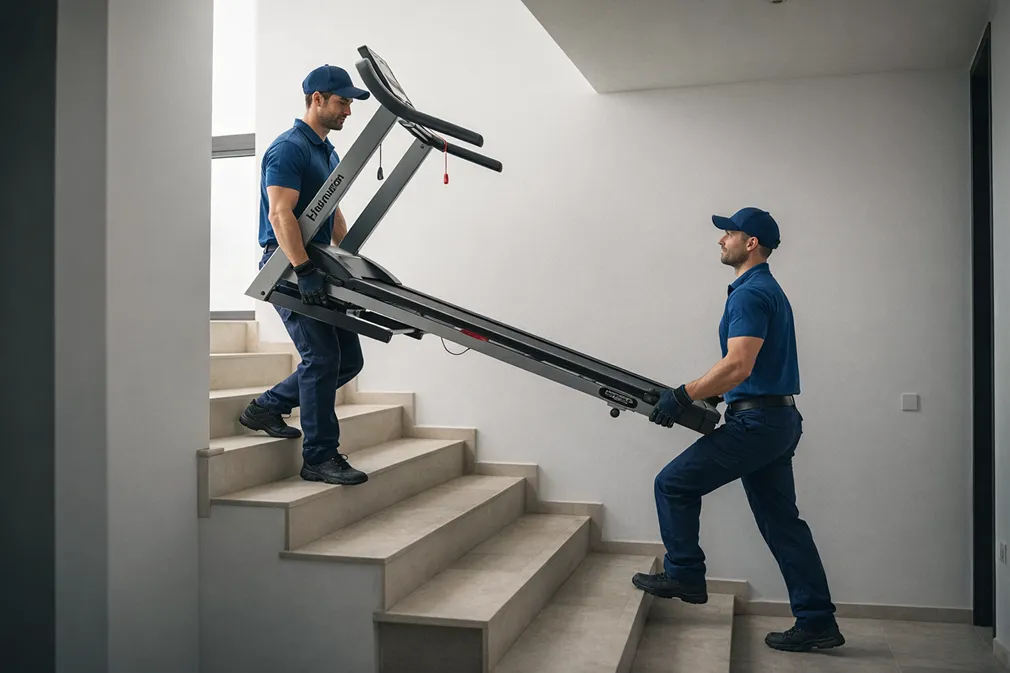
Furniture protection does not stop once the blankets are on. After preparing and padding an item, movers secure the padding, carry the piece with the right equipment when needed, position it carefully in the truck, and strap it so it cannot shift.
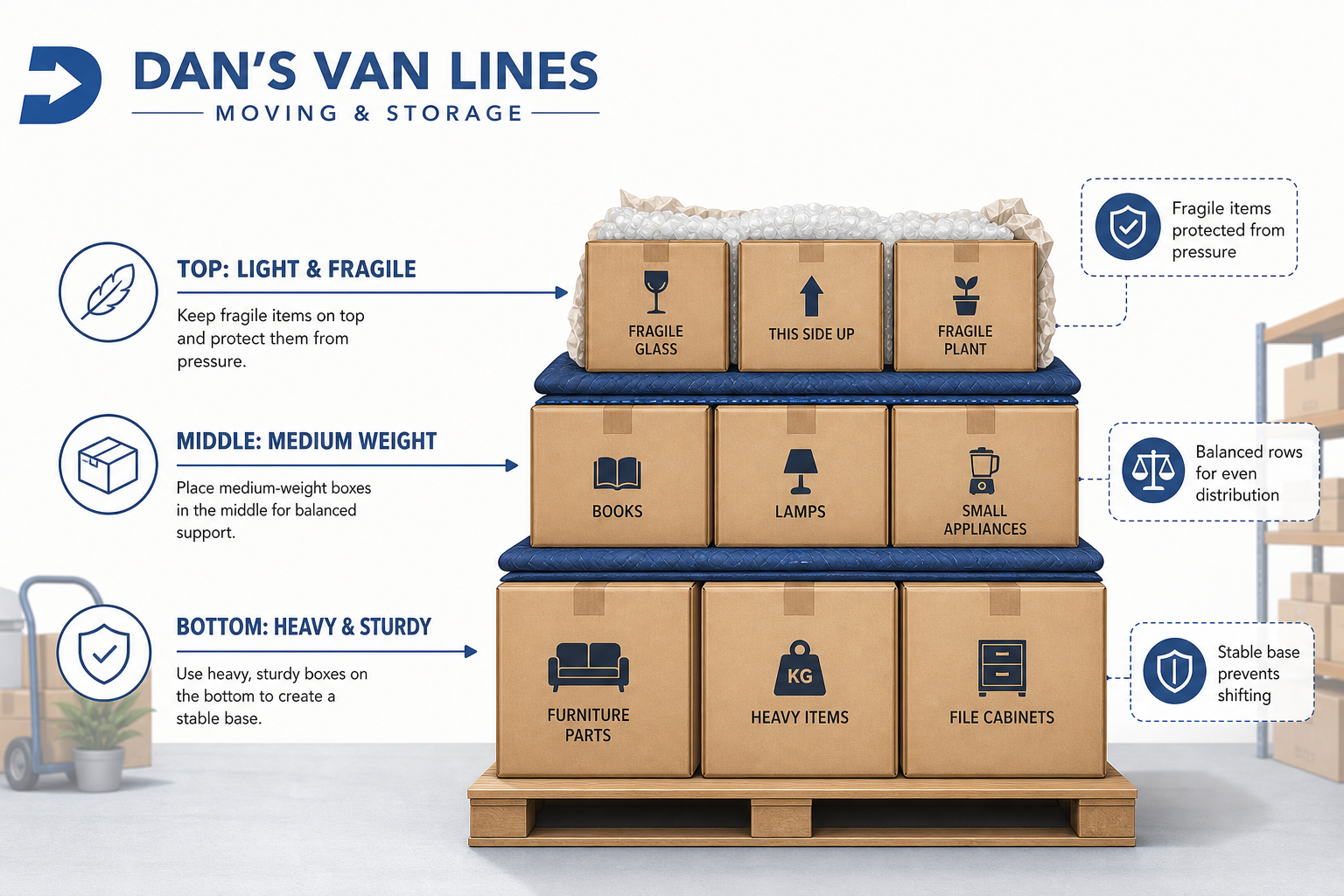
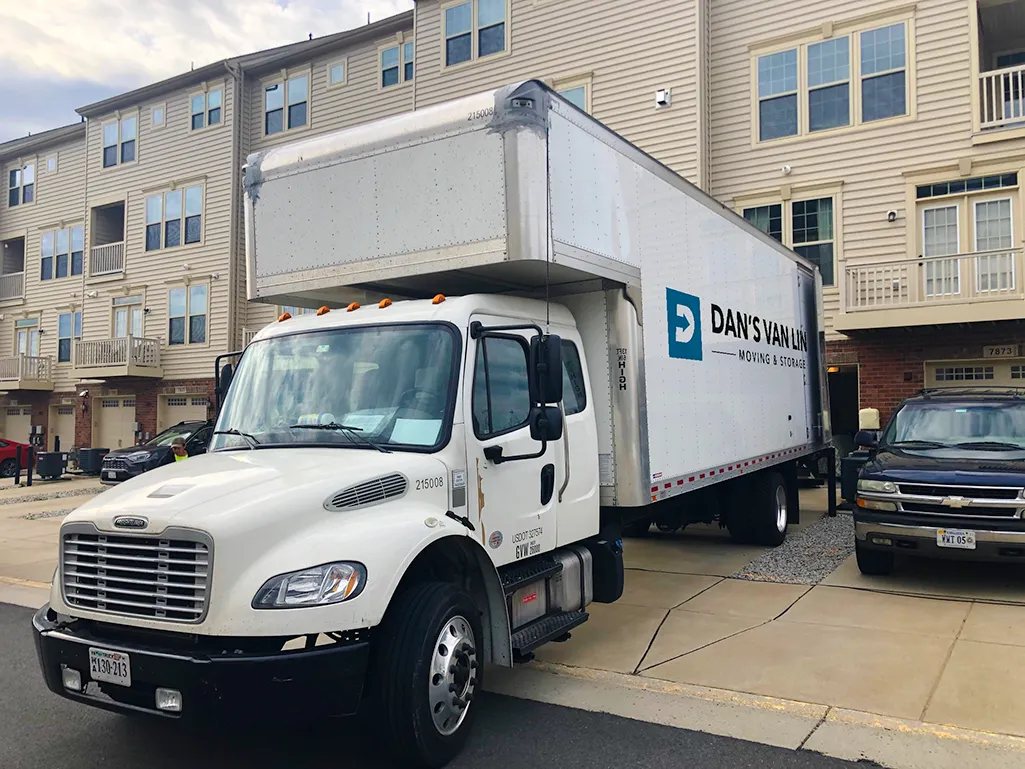
Inside the truck, heavy items are placed on the floor and often against walls. Lighter and more fragile items are positioned so they are not crushed. Pads are used as buffers between furniture pieces and between furniture and truck walls. Gaps are minimized so items cannot slide during braking or turns.
Common damage in DIY moves often comes from unsecured drawers, poor stacking, exposed corners, and shifting during transit. Packing mistakes that damage goods include using insufficient padding, leaving items exposed, relying on plastic alone, and failing to secure furniture properly.
Good loading is as important as good wrapping. A fully padded dresser can still be damaged if it slides across a truck floor or has heavy items stacked on a finished surface. Professional crews plan the load so furniture is cushioned, balanced, and held in place.
Avoid Common Mistakes That Lead to Scratches, Dents, and Finish Damage
Many furniture protection problems come from a few repeat mistakes. Avoiding these errors can make the difference between a smooth move and preventable damage. The biggest lesson is that furniture needs cushioning and secure placement, not just a quick covering.
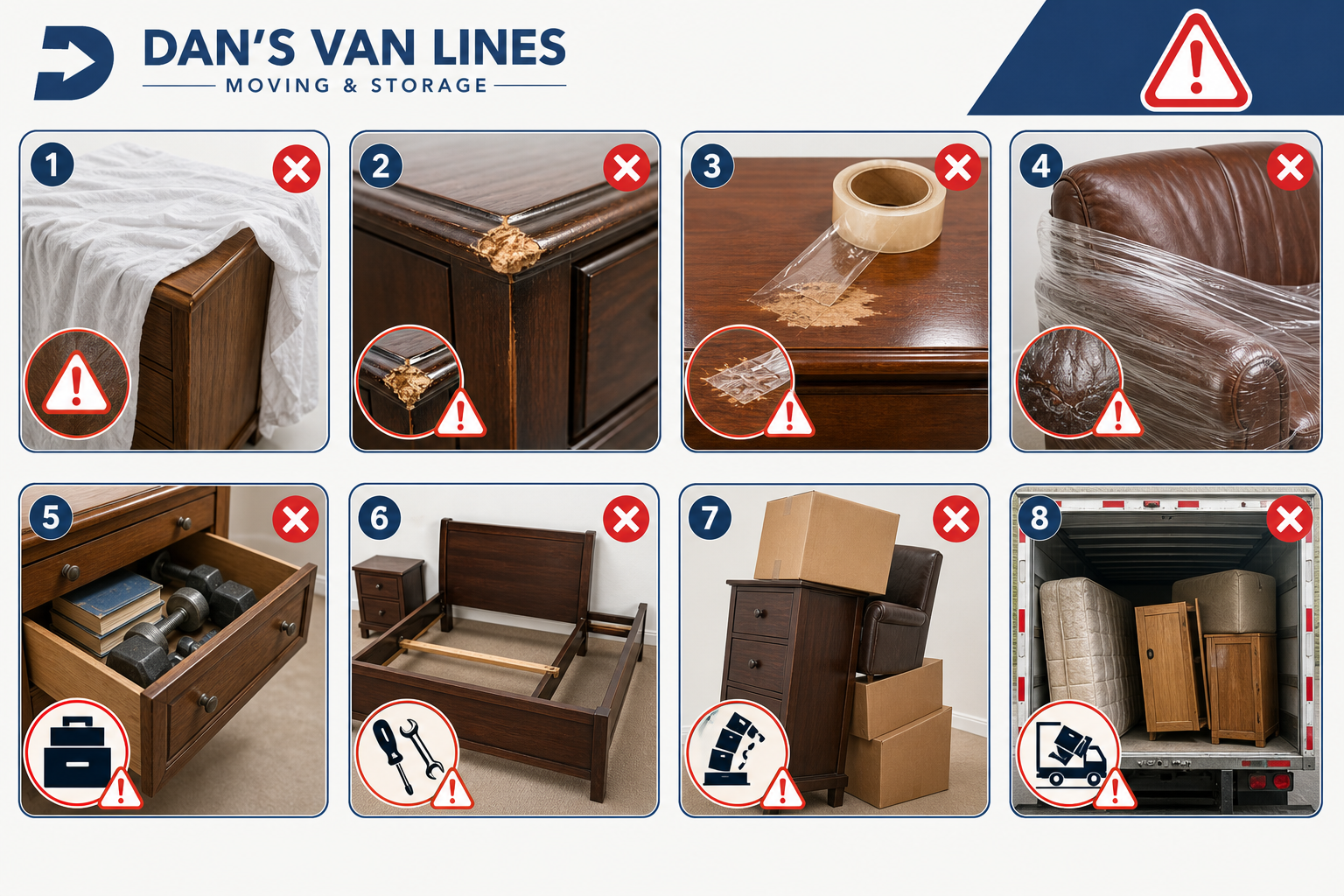
Thin layers are one of the most common problems. Bed sheets, light blankets, or loose fabric may prevent a little dust, but they do not provide the impact protection of thick moving blankets and furniture pads. They also tend to shift, exposing corners and edges.
Another mistake is relying on plastic alone. Shrink wrap is helpful for securing pads, but it should not be treated as a protective cushion. Plastic directly on wood or leather can trap moisture, and it does not absorb dents or impacts the way a thick pad does.
Furniture protection mistakes to avoid before and during the move
When customers ask how to protect furniture for moving, the answer often starts with what not to do. These mistakes are common because they seem convenient, but they can create scratches, dents, residue, moisture issues, or structural stress.
The safer approach is to empty and clean furniture, let movers apply proper layers, and avoid shortcuts that put finished surfaces at risk. Protection should stay in place from the room, through the doorway, into the truck, and all the way to unloading.
Watch out for these preventable problems:
Using sheets or thin fabric instead of thick moving blankets or furniture pads.
Leaving corners, legs, arms, or lower edges exposed.
Applying tape directly to wood, leather, veneer, painted surfaces, or polished finishes.
Wrapping wood or leather directly in plastic as the only protection layer.
Leaving heavy items inside drawers, bookcases, hutches, desks, or cabinets.
Skipping disassembly for tables, beds, or sectionals that are designed to come apart.
Stacking heavy furniture on lighter pieces or delicate upholstery.
Failing to strap and stabilize furniture inside the truck.
The safest furniture moves combine clean preparation, thick padding, careful wrapping, smart disassembly, and secure loading. Each step supports the next. When one is skipped, the risk of scratches, dents, shifting, or finish damage increases.
If you want trained movers to handle the padding, wrapping, loading, and transport for your upcoming move, Dan’s Van Lines can help with local, long distance, storage, office, specialty, and packing services. Get a Quote through our contact page, or call us today at (703) 553-0900.











.webp)
%20(1).webp)
.webp)

.webp)
.webp)
.webp)
.webp)


.avif)
%201.svg)

%201.svg)
%201.svg)