
Floors take a lot of punishment during a move. Heavy furniture, rolling dollies, muddy shoes, sharp corners, and repeated trips through the same hallway can leave scratches, dents, cracked tile, torn vinyl, or stained carpet if the route is not protected before lifting begins.
The best approach is not one product for every room. Professional movers match protection to the floor type, create a clear traffic path, use the right equipment, and adjust for weather conditions. That combination protects the home while keeping the move efficient and safe.
At Dan’s Van Lines, we help homeowners, renters, and businesses move throughout Alexandria and Northern Virginia, so floor protection is part of the practical planning that makes moving day go smoothly. If you have questions about protecting your home during a move, you can reach our team at (703) 553-0900.
Floor protection works best when it matches hardwood, tile, vinyl, and carpet
Different floors fail in different ways. Hardwood and engineered wood are vulnerable to scratches, dents, and finish wear. Tile and vinyl can resist some everyday traffic, but they are still vulnerable to cracking, chipping, tearing, and scuffing when weight is concentrated in a small area.
Carpet has its own risks. Dirt, moisture, and spills can get pushed deep into the fibers by repeated foot traffic. A clean-looking entryway can become the dirtiest part of the house once shoes, boxes, and dollies pass through it dozens of times.
That is why professional floor protection starts with identifying the floors along the main route. The path from bedrooms, living areas, stairs, and hallways to the door and truck should be treated as one continuous work zone, not a set of isolated rooms.
Hardwood floors need grit control and rigid surface coverage
Hardwood protection starts before any board or runner goes down. Grit can act like sandpaper under shoes, furniture pads, or dolly wheels, so cleaning the floor first is an important step. Once the surface is clean and dry, movers typically cover traffic lanes with rigid floor board, heavy-duty paperboard, builder’s paper, red rosin paper, X-Board, Floor Shield, or Ram Board.
Hardwood and engineered wood benefit from coverage that spreads weight and keeps abrasive particles away from the finish. According to moving guidance on how to protect your floors, hardwood routes should be protected with materials suited to the finish and expected traffic.
Furniture sliders or felt pads can help reposition pieces, but they are not permission to drag furniture across wood. Even with pads, grit trapped underneath can scratch. Whenever possible, heavy furniture should be lifted and carried, then set down gently.
Tile and vinyl floors need load distribution at impact points
Tile, grout lines, and vinyl seams are especially vulnerable where heavy items pivot, bounce, or cross thresholds. A hand truck wheel carrying a loaded appliance can concentrate force into one small point. If that happens at a tile edge or transition, damage becomes more likely.
Rigid boards are the main solution. Ram Board, Masonite sheets, plywood, or X-Board can distribute weight across a wider area. This is especially important along hallways, near doorways, at tight turns, and anywhere dollies will rotate.
Vinyl also needs protection from tearing and scuffing. Cardboard, hard-surface film, red rosin paper, or rigid boards may be used depending on the traffic level. Adhesive hard-surface films can help with dirt and minor abrasion, but they should be used only on appropriate surfaces and removed promptly after the move.
Carpet needs film or clean runners that stop dirt and moisture
Carpet protection is usually about keeping dirt, mud, water, and spills out of the fibers. Adhesive carpet protection film is commonly used because it sticks lightly to carpet and creates a clear barrier along hallways, stairs, and living areas.
On stairs, carpet film is often cut to fit each tread instead of being wrapped in one long sheet. This helps the film sit flatter and reduces shifting underfoot. The front edge of each stair tread needs special attention because that is where traffic and wear concentrate.
Carpet film should not be treated as permanent protection. Most guidance recommends removing it soon after the move, within the product’s stated limits. Leaving adhesive film in place too long can make removal difficult or cause discoloration in sunlit areas.
A protected moving path keeps people, furniture, and floors safer
Floor protection works best when it follows the actual route movers will use. Before heavy lifting begins, professional crews typically walk the home, identify the main exits, check tight turns, and decide where boxes, furniture, and equipment will travel.
This step prevents a common mistake: protecting only the front door area while leaving corners, hallway turns, stair landings, or bedroom paths exposed. Damage often happens at pivot points, not in the wide-open spaces where movement is easiest.
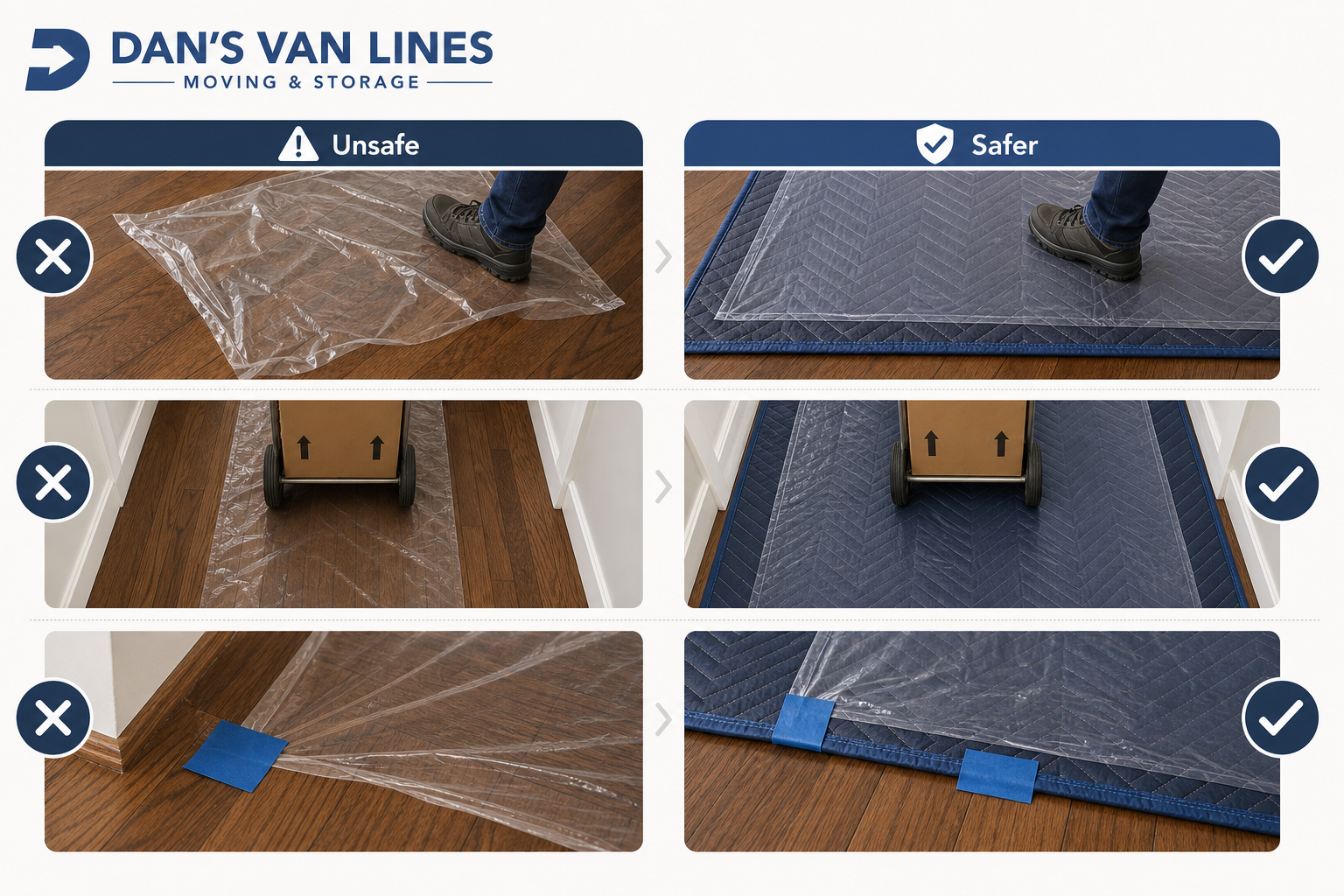
A good path also reduces trip hazards. Loose rugs, unsecured plastic, curling runners, and raised seams can cause sudden shifts that damage floors and create safety risks for anyone carrying a heavy item.
Movers plan the route before the first heavy item moves
The safest moving path is usually the simplest one. Small rugs and runners should be removed or secured so they cannot bunch up. Packed boxes should be staged away from the path, not stacked where movers need to turn with furniture.
Door frames and banisters can be wrapped with moving blankets or foam protectors, especially in tight spaces. That helps prevent accidental impact and reduces the chance that a furniture corner will force a sudden correction underfoot.
At Dan’s Van Lines, our local and long distance moving crews treat floor protection as part of route planning, not an afterthought. Once the protected path is established, the crew can work with fewer interruptions and fewer risky pivots.
Continuous coverage prevents exposed damage zones
The strongest floor plan usually creates one continuous protected lane from room to exit. Movers may use rigid board on hardwood, tile, or vinyl, then switch to carpet film or a clean runner where the route crosses carpet.
Transitions matter. If a board ends abruptly or a runner curls at the edge, people may step half-on and half-off the protected area. That can increase slips, edge wear, and scuffs just outside the covered zone.
Seams should be taped so boards do not creep apart as dollies turn. Tape should usually go on the protective layer itself, rather than directly on delicate finishes, unless the product and surface are appropriate for that use.
Floor runners, Ram Board, carpet film, and ramps each solve a specific moving problem
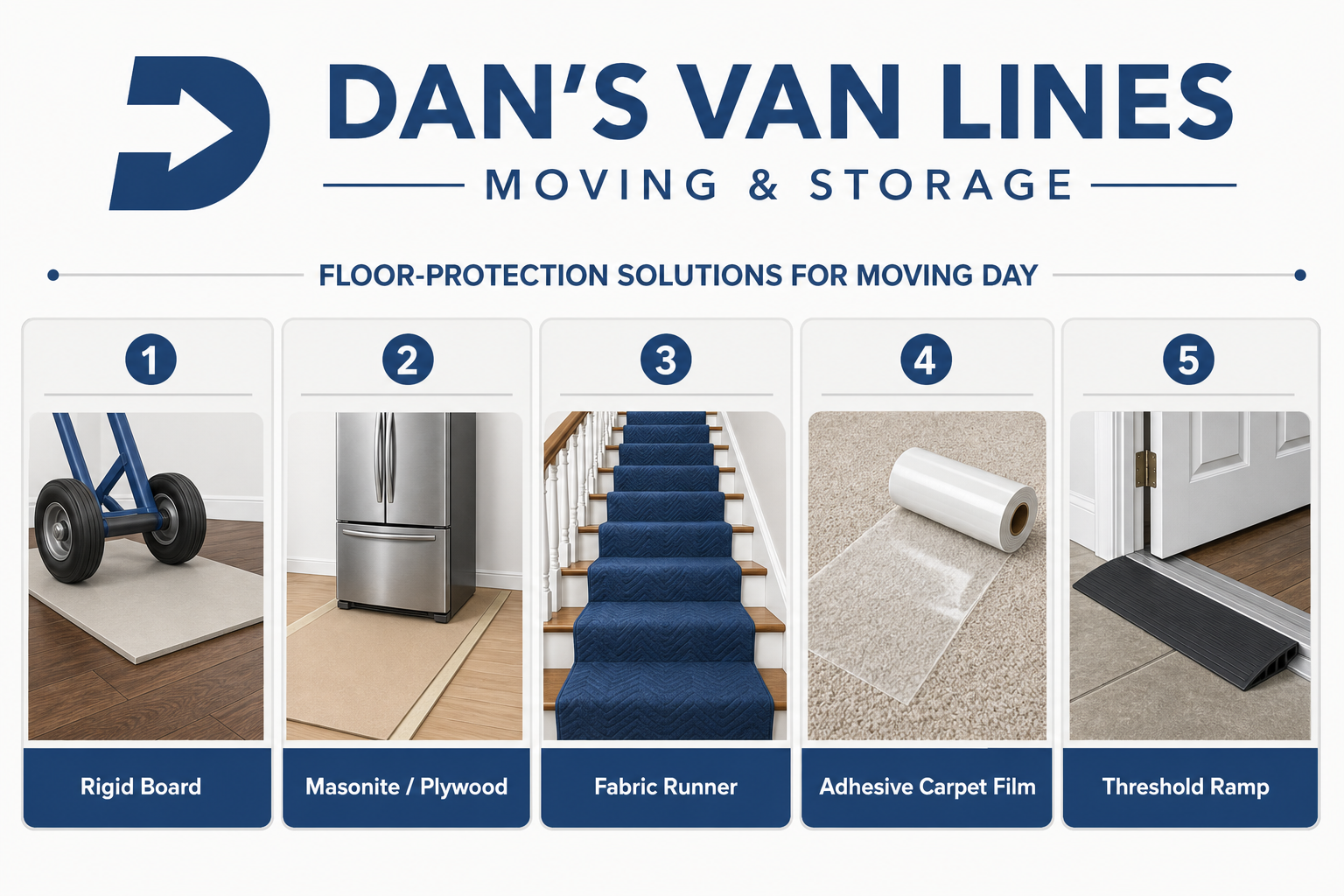
No single floor protection product solves every risk. Ram Board and Masonite help distribute weight. Floor runners add traction. Carpet film blocks dirt and moisture in fibers. Ramps and threshold plates reduce impact at doorways and steps.
Choosing the right combination matters because moving creates different types of stress at the same time. A hallway may need impact protection for dollies, traction for movers carrying furniture, and moisture control near the entry.
The main takeaway is simple: use rigid protection where heavy rolling loads travel, flexible runners where grip matters, adhesive film only on the surfaces it is designed for, and ramps where wheels cross height changes.
Ram Board and similar rigid boards: These are used on hardwood, tile, and vinyl to protect traffic lanes from rolling loads, dropped items, and concentrated pressure. Proper installation starts with a clean, dry surface, then the board is cut to fit and secured at seams.
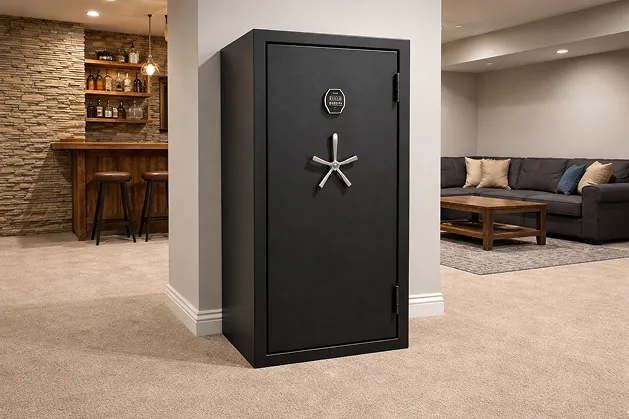
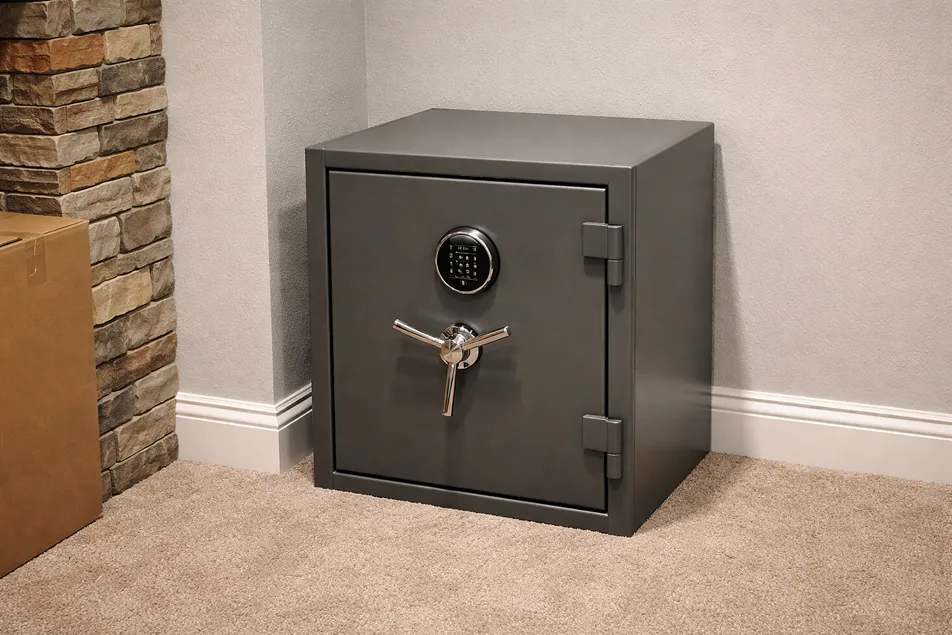
Masonite sheets or plywood: These can be used where heavier loads, appliances, or safes are expected. Rigid sheets help spread weight across tile edges, grout lines, vinyl seams, and wood surfaces.
Neoprene or fabric floor runners: These add traction in hallways, stairways, and narrow entries. Runners should lie flat, be wide enough for the route, and be secured at the ends or edges when needed.
Adhesive carpet film: This is designed for carpeted stairs, corridors, and rooms. It protects against dirt, mud, and spills, but it should not be used on hard floors or delicate rugs.
Ramps and threshold bridges: These reduce repeated impacts when dollies cross steps, thresholds, or uneven transitions. They help prevent chipping, denting, catching, and bouncing at common damage points.
Rigid boards protect hard floors from rolling loads
Ram Board and similar rigid floor boards are especially useful because they create a durable surface over hardwood, tile, and vinyl. They are designed to handle the movement of people and equipment better than lightweight plastic or loose cardboard.
Installation quality matters. Boards should be wide enough for the entire traffic lane. If movers have to keep one foot on the protection and one foot off, the route becomes less safe and the exposed edge becomes a damage zone.
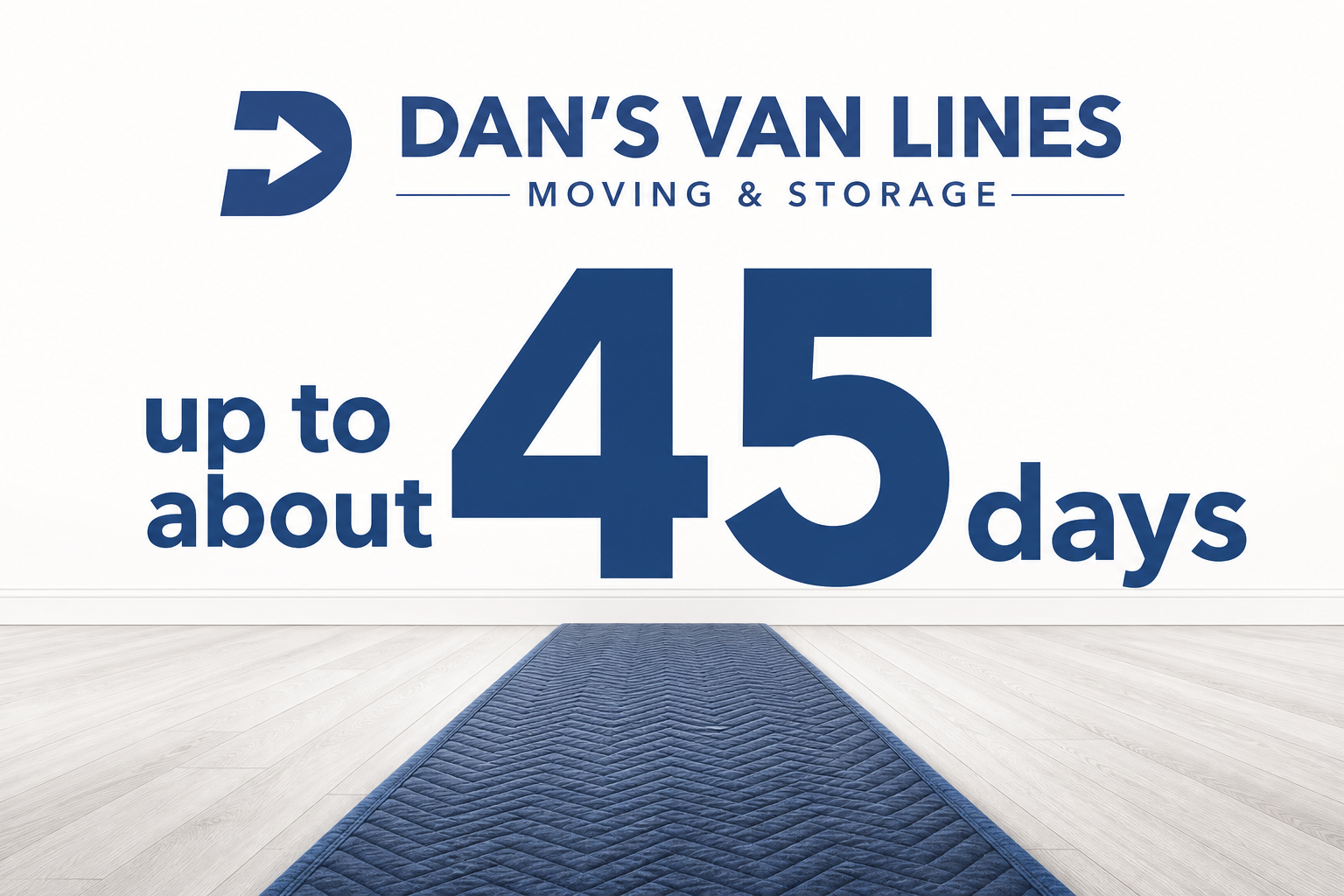
In areas where very heavy items will travel, movers may double-layer boards or add plywood. Guidance from Angie’s List notes that some products are rated for removal within defined windows, with certain films safe for up to about 45 days, depending on the product.
Floor runners improve traction in hallways, stairs, and entry corridors
Floor runners are useful where grip and flexibility are more important than maximum impact resistance. Neoprene runners or heavy fabric runners with rubberized backs can sit over hardwood, tile, vinyl, or other smooth surfaces to create a stable walking path.
They are especially helpful on stairs and narrow hallways. Instead of forcing rigid boards into awkward spaces, movers can cut or place runners so they lie flat and follow the shape of the route.
Runner edges should not curl or bunch. In high-traffic areas, movers often tape the ends or edges with painter’s tape or compatible low-tack tape. The goal is a path that stays put when movers pivot, turn, or carry weight through tight spaces.
Carpet film protects fibers from dirt, mud, and spills
Carpet film is valuable because it adheres to carpet and stays in place under foot traffic. It is commonly used on carpeted stairs, corridors, and rooms where boxes may be staged or carried through repeatedly.
Installation begins with clean, dry carpet. The film is unrolled, pressed into the pile, and smoothed to reduce air bubbles. On stairs, shorter sections can be cut for each tread so the film conforms to the stair nosing.
Carpet film should be removed carefully when the move is finished. Peel it back slowly and check that no residue remains. It should not be applied to hard surfaces or delicate rugs, where the adhesive could cause problems.
Ramps and threshold plates prevent repeated impact at transitions
Thresholds, steps, and doorway transitions are high-risk points. When a loaded dolly bumps over the same lip again and again, tile can chip, wood thresholds can dent, and vinyl seams can catch.
Portable ramps and threshold bridges help wheels roll smoothly over those changes in height. They also make the move safer because the crew does not have to fight the same obstacle with every load.
Whenever possible, ramps should connect to the protected route. A strong setup might use interior board, a threshold ramp, and exterior mats so the dolly path remains smooth from room to truck.
Safe moving techniques prevent damage that materials cannot stop
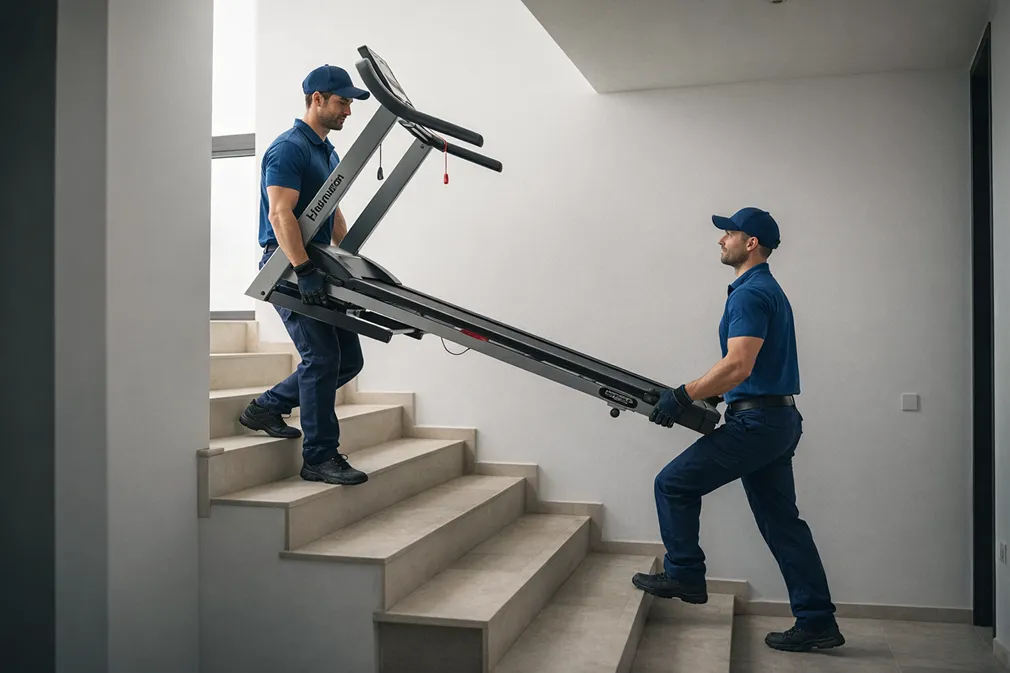
Floor coverings reduce risk, but technique still matters. Even a well-covered floor can be damaged if furniture is dragged, a dolly is overloaded, or a heavy item is dropped at a transition.
Professional movers rely on lifting, balancing, padding, and controlled turns. These habits reduce friction, prevent bouncing, and keep heavy contact points from digging into the floor.
Many preventable floor problems happen when someone tries to save time by sliding furniture directly across a surface. The safer approach is slower for a moment, but it can prevent scratches, gouges, and torn flooring.
Carry when possible and slide only with proper equipment
Carrying furniture is often safer for the floor than sliding it. Sliding concentrates friction and can grind fine debris into the finish. If an item is too heavy to carry safely, furniture sliders should be placed under each leg or corner.
Sliders reduce friction, but they still need a clean floor beneath them. If grit is trapped under the slider, it can scratch the surface as the item moves.
Heavy items should be lifted and set down gently, especially when crossing from one floor type to another. Tile edges, thresholds, stair landings, and vinyl seams deserve extra care.
Dollies need non-marking wheels and balanced loading
Dollies and hand trucks can protect movers from strain, but they must be suited to the floor. Rubber or non-marking wheels are preferred over hard plastic or metal wheels that can scratch, dent, or mark surfaces.
Loads should be balanced so the dolly does not tip, bounce, or slam down. A sudden shift can place too much force on one wheel or one corner of a heavy item.
At tight turns, movers may add extra cardboard or padding to pivot points. This helps protect trim and reduces the torque transferred through small contact areas on the floor.
Furniture should be measured and disassembled before tight pivots become necessary
Measuring large furniture, doorways, and hallways before moving day can prevent forced turns. Oversized pieces that barely fit through a doorway often cause the most floor stress because they require repeated pivots and corrections.
Disassembling furniture when needed can reduce that risk. Removing legs, detaching sections, or narrowing a piece can make it easier to carry without bumping walls or dragging corners.
Furniture legs and sharp edges should also be wrapped. If a piece swings unexpectedly, padding can reduce the chance of direct floor contact.
Rain, snow, mud, and grit require extra floor protection at the entry
Weather can turn a simple move into a floor protection challenge. Rain, snow, mud, slush, and wind-blown debris increase the chance of scratches, stains, and slippery walking surfaces.
The entry is the control point. If dirt and moisture are stopped there, the rest of the protected path stays cleaner and safer. If they are not controlled, shoes and wheels can carry grit throughout the home.
Weather protection is not just about adding plastic. Plain plastic on hard floors can be slippery, so it should not become the walking surface. If a moisture barrier is used near the door, it should sit under a stable runner or rigid board.
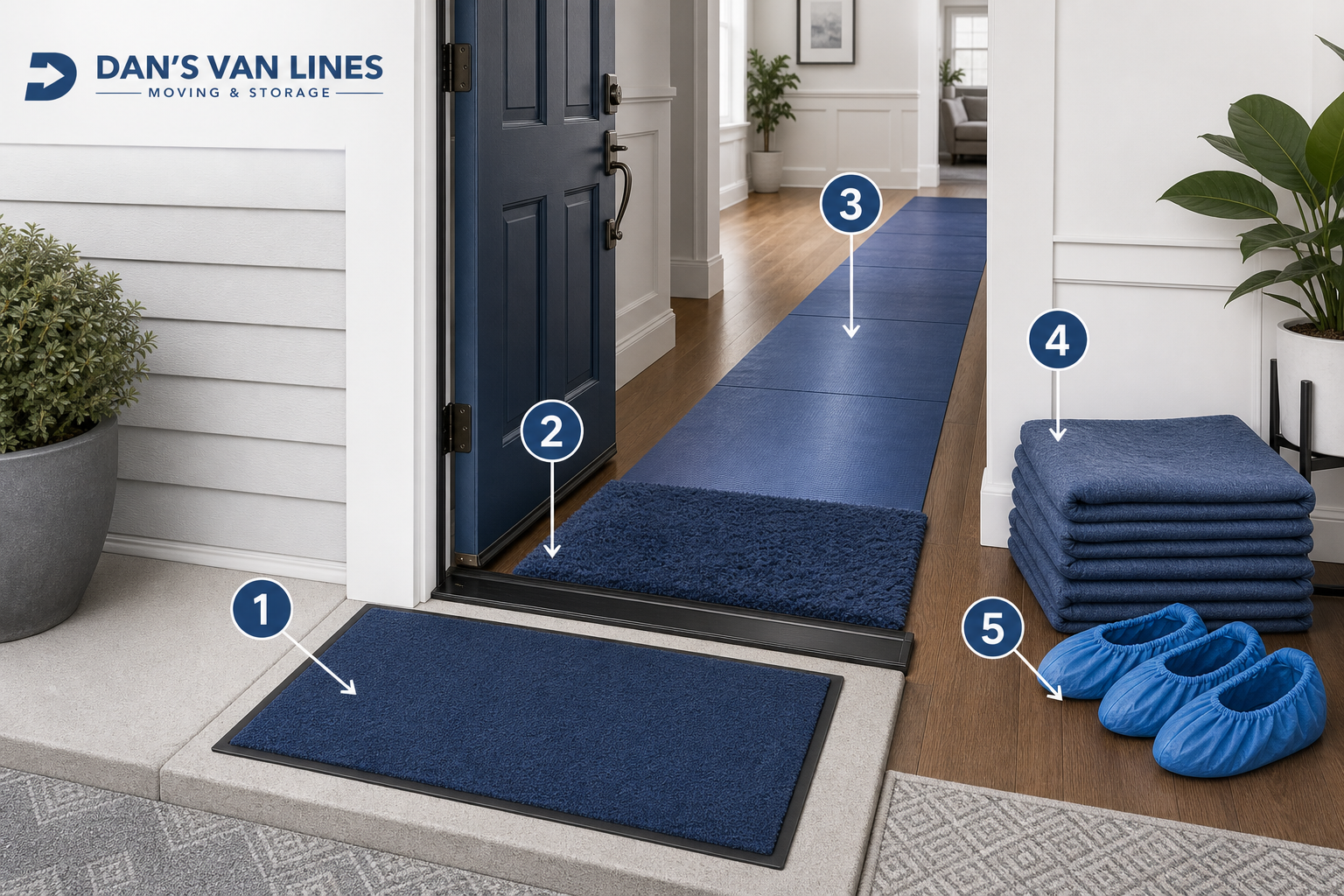
Place mats outside and inside the entrance: Large doormats and absorbent rugs help remove dirt and moisture before traffic reaches the main path.
Use rigid board near wet entries: Ram Board, Masonite, or similar materials help distribute weight and protect floors from limited moisture exposure better than loose cardboard.
Change towels or mats during messy weather: When mats become saturated, they stop helping. Swapping them out keeps the entry effective.
Keep grit off the protected path: Quick sweeping or vacuuming along the route helps prevent leaves, sticks, and particles from being crushed underfoot or under wheels.
Use shoe booties or clean indoor footwear when appropriate: Reducing dirt tracked inside helps keep protective materials working throughout a long move.
Wet conditions call for both moisture control and slip prevention
Absorbent rugs near the entry can help catch water, but they need to stay flat and secure. A bunched rug creates a trip hazard and can shift under a dolly.
Rigid board can be especially useful in wet conditions because it maintains a more predictable path than loose coverings. Some Ram Board-type products also provide limited spill protection, but standing water should still be wiped up promptly.
During long moves in rain or snow, entry coverings may need to be checked underneath. Trapped moisture can become a problem, especially near wood seams or thresholds.
Mud and grit should be stopped before they reach hardwood or carpet
Mud is messy, but grit is the bigger threat to many hard floors. Small particles can scratch finishes when pressure is applied by shoes, sliders, or wheels.
A layered entry setup works well: mat outside, absorbent rug inside, then rigid board or runner along the main path. On carpeted entries, adhesive carpet film can help keep mud from penetrating the fibers.
In back or garage entries where mud is common, temporary plywood or extra-thick boards can help keep dollies from picking up stones and carrying them indoors.
Common floor protection mistakes can create new moving-day hazards
Good intentions can still lead to damage if the wrong material is used. A product that works on carpet may damage hard flooring. A product that protects against dirt may become slippery if it is not secured.
The most common mistakes involve using the wrong surface covering, failing to secure seams, leaving gaps in the path, and misusing adhesive films or tape. Each one can expose the floor at the exact moment when heavy traffic is highest.
A simple rule helps: protection should stay flat, stay in place, match the surface, and be removed at the right time.
Plain plastic on hard floors can be unsafe without a stable layer above it
Plastic sheeting can block moisture, but it can also become slippery on hardwood, tile, or vinyl. If people or wheels travel directly over loose plastic, it can shift under pressure.
When a moisture barrier is needed at an entry, it should be paired with a stable runner or rigid board. This helps capture water without turning the route into a slip hazard.
Loose plastic should never replace a proper moving path. The protection must support safe walking and controlled rolling, not just cover the surface.
Under-sized paths leave scuffs along the edges
A narrow strip of protection may look sufficient when the house is empty, but it often fails once people start carrying wide furniture. Movers need enough protected width to walk and turn without stepping off the path.
Edges are especially vulnerable. If traffic repeatedly lands half on and half off the covering, the exposed floor beside the path can get scuffed or worn.
The same problem happens at turns. Corners and pivot points should get extra coverage because furniture and dollies concentrate force there.
Adhesive films and tape must be compatible with the surface
Adhesive carpet film belongs on carpet, not hardwood, tile, vinyl, or delicate rugs. Hard-surface films should also be used only where the product is designed to be used.
Tape deserves the same caution. High-adhesion tape placed directly on hardwood or vinyl can leave marks or pull at finishes. Painter’s tape or manufacturer-approved tape is preferred, and crews often tape protective materials to each other instead of taping directly to finished floors.
Adhesive films should be removed within the recommended window. Moving-focused guidance from Asian Tigers Group explains that carpet masking tape and protective sheets must be applied with care so they do not create removal problems or surface damage.
Post-move floor checks help catch scratches, scuffs, stains, and chips quickly
Floor protection does not end when the truck is loaded or unloaded. The last step is to inspect the route before and during removal of the protective materials.
A careful inspection helps identify whether any damage occurred and where it happened. It also prevents debris trapped under boards or runners from scratching the surface as materials are lifted and stacked.
Good lighting helps. A flashlight held at a low angle can reveal scratches, dull spots, chips, or scuffs that are hard to see from above.
Remove protective materials slowly and inspect each section
Boards, runners, and films should be lifted in sections. As each area is exposed, look for scratches on hardwood, chips or cracks in tile, torn vinyl, carpet stains, and scuffs near turns or thresholds.
Adhesive films should be peeled back slowly at a shallow angle. If residue appears or a finish seems affected, stop and address the issue carefully rather than pulling harder.
Rigid boards and runners should be checked for nails, screws, grit, or debris lodged underneath. That quick check helps prevent accidental scratching during cleanup.
Final cleaning reveals subtle floor damage
Once protection is removed, dry cleaning should come first. Sweeping or vacuuming removes grit and dust from the traffic route before any damp cleaning begins.
Hardwood should be cleaned with an appropriate cleaner and a lightly damp mop rather than being soaked. Tile and vinyl can be wet mopped with suitable cleaners, which can help reveal chips, tears, and scuffs in reflected light.
Carpet should be checked near entrances and staging areas. If mud or spills are found, prompt spot cleaning gives the best chance of preventing a lasting stain.
Document damage promptly if anything looks wrong
If damage is found, take clear photos immediately and note the location. High-risk areas include thresholds, stair landings, tight hallway turns, and the places where heavy furniture was staged.
Small hardwood scratches may be addressed with touch-up markers, filler sticks, or refinishing kits. Deeper gouges may require professional repair. Chipped tile may be patched, while cracked tiles often need replacement.
Vinyl tears can sometimes be patched with matching material, and carpet dents may relax over time. When damage is connected to a licensed mover and documented promptly, customers may be able to file a claim under the mover’s valuation coverage or insurance.
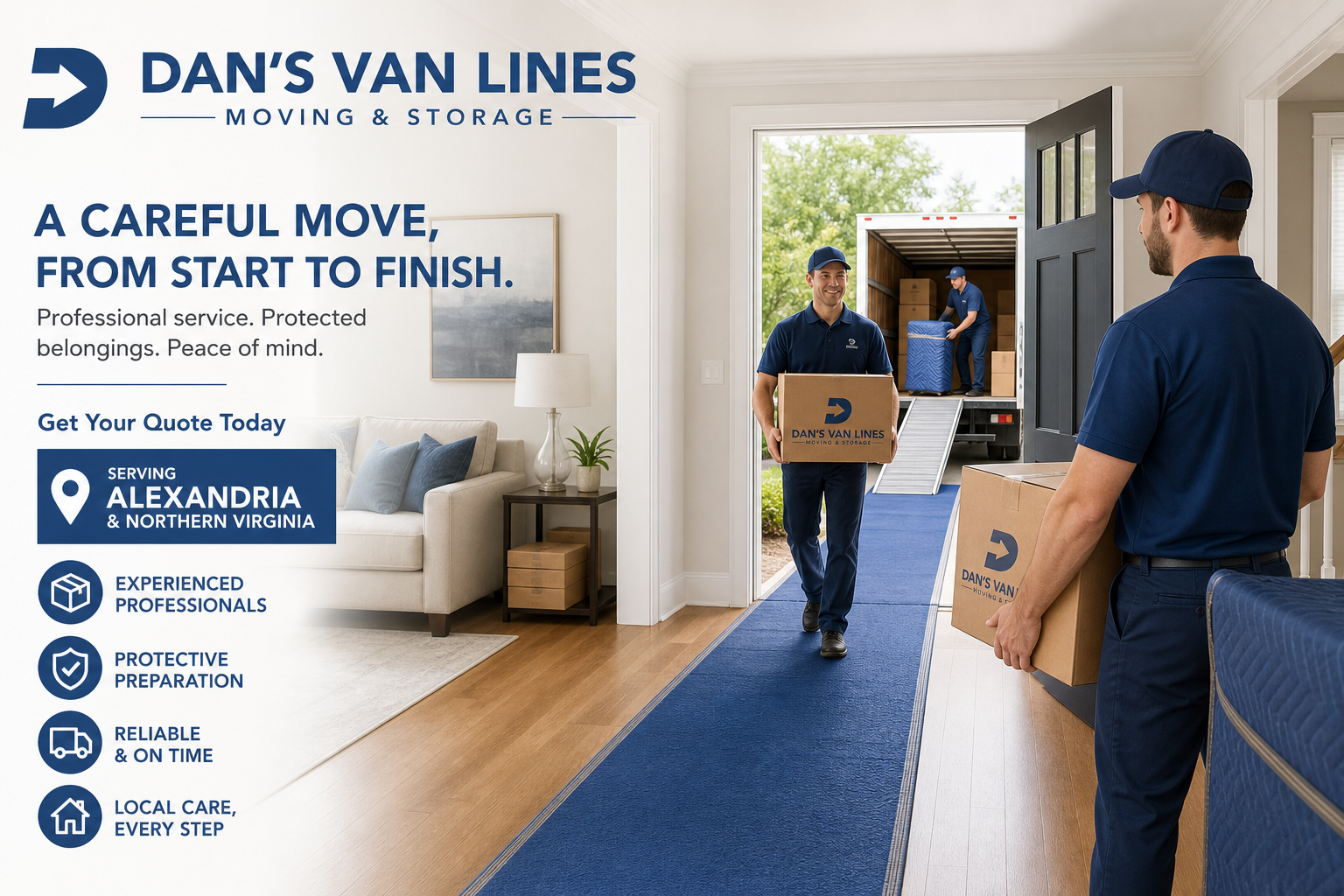
A well-protected move starts with the right plan, materials, and crew
Protecting floors during a move is a practical process: clean first, map the traffic path, match materials to each flooring type, secure every edge, use the right equipment, and inspect the route afterward. Runners, Ram Board, carpet film, ramps, and careful lifting techniques each play a different role.
The most effective moves do not rely on luck or a few scattered mats. They create a continuous, stable route from room to truck and adjust that route for hardwood, tile, vinyl, carpet, stairs, thresholds, and weather.
If you are planning a move in Alexandria or Northern Virginia and want a team that treats your home with care, Dan’s Van Lines can help with local moving, long distance moving, packing, storage, office moving, international moving, and specialty moving. Get a Quote by calling (703) 553-0900 or visiting https://www.dansvanlines.com/contact-us.







.webp)
%20(1).webp)
.webp)
.webp)
.webp)
.webp)
.webp)


.avif)
%201.svg)

%201.svg)
%201.svg)