
An office relocation is not just a larger version of a household move. A business move has workstations, files, technology, furniture systems, shared spaces, employees, customers, building rules, and deadlines all moving at the same time. The work has to be planned so the company can stay organized before, during, and after move day.
That is why many companies look for office relocation specialists rather than general transport help. The right team understands how to plan the move around business priorities, label and track assets, stage departments in the right order, and support day-one readiness at the new space.
Dan’s Van Lines provides office moving services for businesses in Alexandria and Northern Virginia, with more than 25 years of moving experience. We work with companies that need practical planning, careful handling, and a move process built around reducing disruption.
If you have questions while planning an office relocation, you can contact our team at https://www.dansvanlines.com/contact-us or call (703) 553-0900.
Office relocation specialists help businesses control downtime, assets, and move-day complexity
Commercial moves involve more moving parts than most people see at first. Desks, conference rooms, file areas, employee contents, IT hardware, archives, furniture, and shared equipment all need a defined destination. If the plan is unclear, even a short move can create confusion when employees return to work.
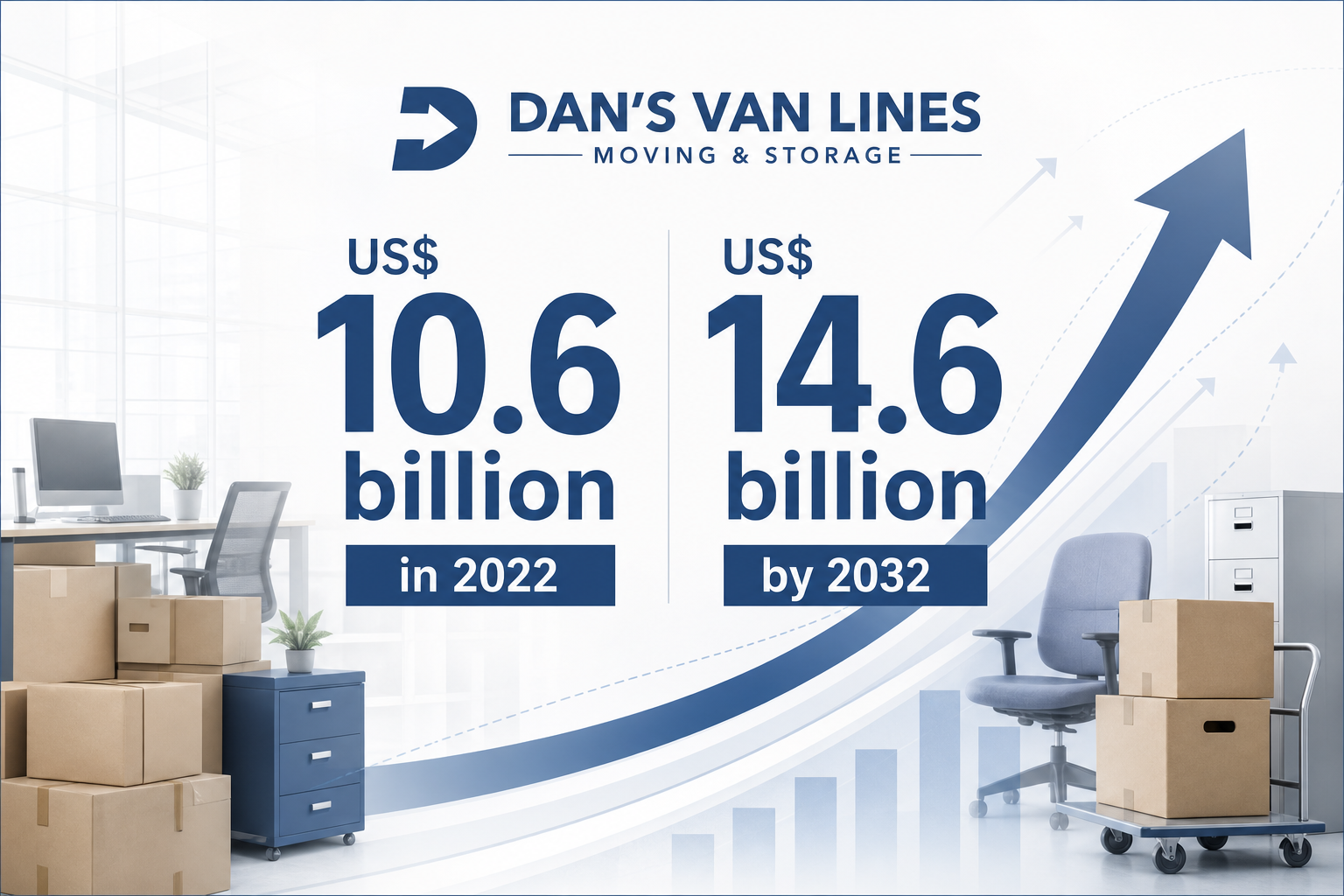
The office relocation market has grown because companies increasingly need coordinated support for complex workplace transitions. The global office relocation services market was valued at about US$ 10.6 billion in 2022, with forecasts suggesting growth to US$ 14.6 billion by 2032. That scale reflects how common structured office moves have become for companies of different sizes.
Office relocation specialists help by turning the move into a managed project. Instead of simply loading furniture and boxes, the move team helps organize what moves, when it moves, where it goes, and how the business will restart operations in the new or renovated space.
Office relocation is a business continuity project, not only a transportation task
A successful move is measured by more than whether items arrive. It is also measured by whether teams can find what they need, whether priority spaces are usable, and whether the organization avoids avoidable downtime.
That is why business relocation services often include planning, packing, labeling, asset tracking, storage coordination, and phased execution. These services are designed to keep the business in control while physical assets are being moved.
Business relocation services can support small offices, corporate teams, and large workplaces
Small offices and large workplaces face different challenges, but both benefit from an organized relocation process. A small office may need a fast, clearly labeled move with minimal interruption. A large office may need phased department moves, multiple floor plans, coordinated elevator access, and more detailed asset tracking.
Commercial moving providers commonly support office, retail, warehouse, institutional, and industrial relocations. One business moving market outlook describes services that include office, retail, warehouse, and institutional relocations, along with on-site surveys and detailed move planning for different facility types.
For office-based companies, the scope often includes workstation contents, desks, seating, conference rooms, reception areas, file cabinets, storage rooms, and shared equipment. The more employees and departments involved, the more important it becomes to define the sequence before move day.
Small office moves still need clear labeling and destination planning
A small office relocation can seem straightforward until the team starts sorting employee contents, supply rooms, client files, printers, and shared equipment. Without a labeling system, boxes can arrive in the wrong room and employees may lose time searching for essentials.
For a small business, even a short disruption can affect customer service and internal workflow. A relocation plan should identify which items are critical for the first day, which can be unpacked later, and which items should not move at all.
This level of planning helps keep the move efficient. It also reduces the chance that employees spend the first day in the new office solving avoidable logistics problems.
Large office relocations often require phased teams, floors, or departments
Larger workplaces usually need more structure because the move affects more people, spaces, and systems. Floor-by-floor or department-by-department planning helps reduce the risk of disrupting the entire company at once.
Office relocation workflows often divide the project into pre-move preparation, cutover and transport, and day-one readiness. This structure lets the company confirm floor plans, assign destination labels, sequence priority departments, and prepare critical work areas before employees arrive.
For large workplaces, office relocation specialists also help coordinate staging areas, building access, employee communication, and placement at the destination. The goal is to prevent a chaotic move day by making as many decisions as possible before the trucks are loaded.
Warehouse and industrial relocations require more detailed scope mapping
Business relocation services are not limited to traditional offices. Many commercial moves involve warehouses, distribution areas, industrial spaces, or mixed-use facilities where office staff, inventory, racking, equipment, and work areas all have to be considered together.
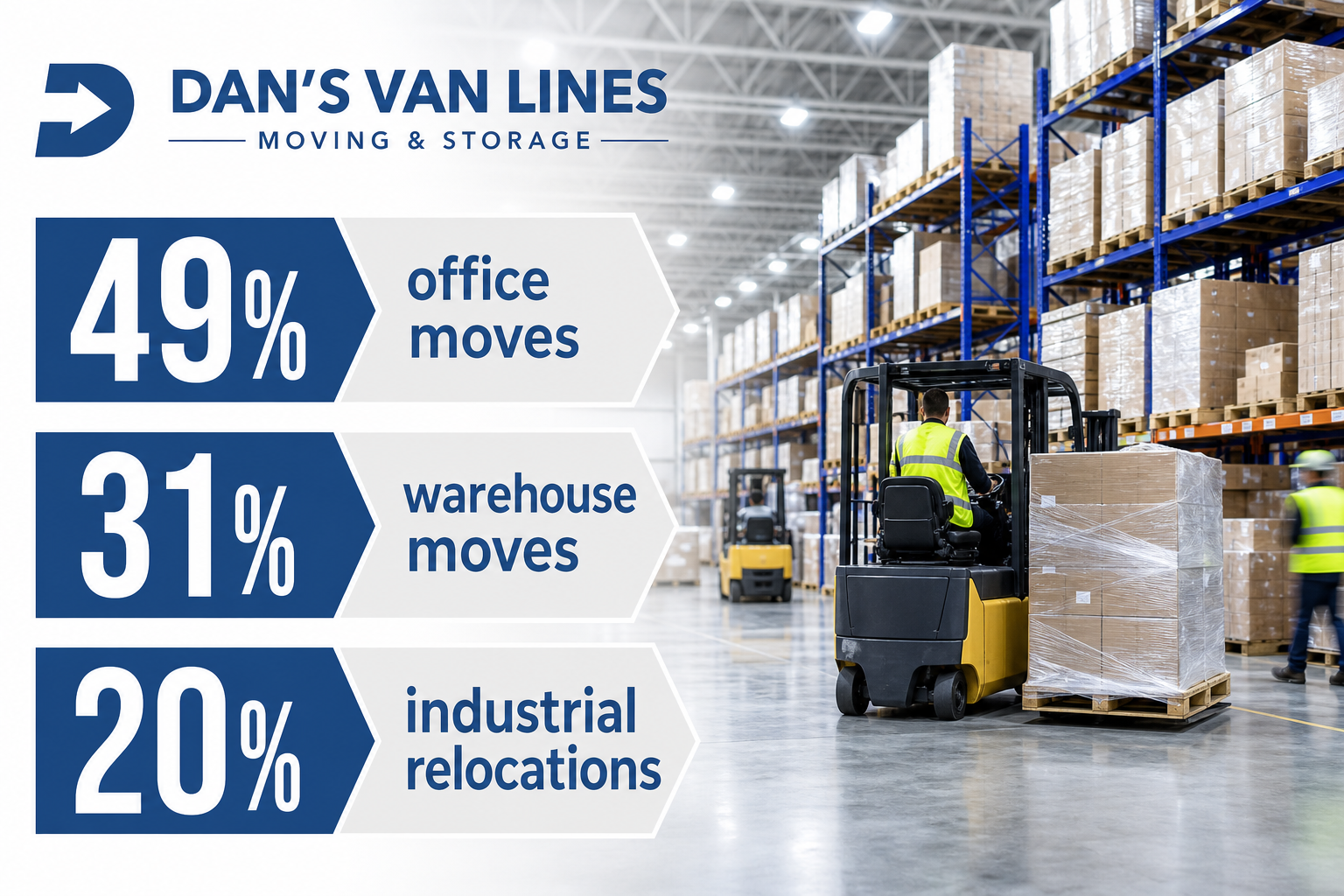
Commercial relocation data shows that office moves represent 49% of all commercial relocations, while warehouse moves account for about 31% and industrial relocations about 20%. The same research describes 1.4 million commercial relocation projects globally in 2023, with North America contributing about 620,000 moves.
Warehouse and industrial relocations often need more detailed planning because the assets may include palletized materials, racking, heavier equipment, inventory zones, and operational areas. The move plan should identify what is being relocated, what needs special handling, what can be staged, and what must remain accessible during the transition.
Warehouse relocations depend on inventory visibility and staging
A warehouse move is especially sensitive to asset visibility. If inventory, fixtures, or equipment are not tracked clearly, the business may lose time locating items after the move.
Professional inventory lists, asset tags, and defined staging areas help maintain order. These tools give the business a clearer view of what has moved, what remains, and what is temporarily stored.
Warehouse relocations may also involve phased movement of storage zones. This can help avoid unnecessary disruption when the company cannot pause all operations at once.
Industrial and mixed-use facilities need special handling and sequencing
Industrial facilities can include offices, production areas, storage areas, equipment, racking, and materials that require more than standard office packing. These moves need site-specific planning because different areas may have different safety, access, and operational requirements.
Industrial and commercial movers often describe support for plants, distribution centers, institutional facilities, and internal workplace reconfigurations. In these settings, sequencing matters because some areas may need to remain active while others are being moved or reconfigured.
The best plan separates critical operations from lower-risk areas. That allows the business to move in manageable stages instead of creating one large disruption.
Specialized facilities need extra attention to equipment, records, and chain of custody
Some business relocations involve sensitive environments such as healthcare offices, labs, educational institutions, government agencies, or other specialized facilities. These moves may include confidential records, specialized equipment, strict timelines, or public-sector coordination requirements.
Commercial relocation research notes that educational institutions contributed more than 48,000 moves globally, while government entities accounted for more than 32,000 relocations. These projects show why specialized facilities often need movers who understand careful asset handling, clear documentation, and controlled movement.
In specialized environments, the relocation plan should not treat every item the same. Some assets may require protective wrapping, sealed containers, supervised transport, or defined chain-of-custody procedures.
Specialized facility moves should identify sensitive assets early
The planning phase should identify which items are fragile, confidential, high value, operationally critical, or difficult to replace. This lets the move team assign the right protection and sequence.
For example, office equipment, document archives, IT hardware, and specialized materials may all need different handling methods. The move plan should define those needs before packing begins.
When sensitive assets are identified late, the project is more likely to experience delays or rushed handling. Early identification gives the business more control.
Packing, labeling, and inventory tracking create the backbone of an organized office relocation
The most visible part of an office move is the physical transport, but the organization system behind the move is what keeps the project on track. Packing, labeling, and inventory control determine whether items arrive in the right location and can be used quickly.
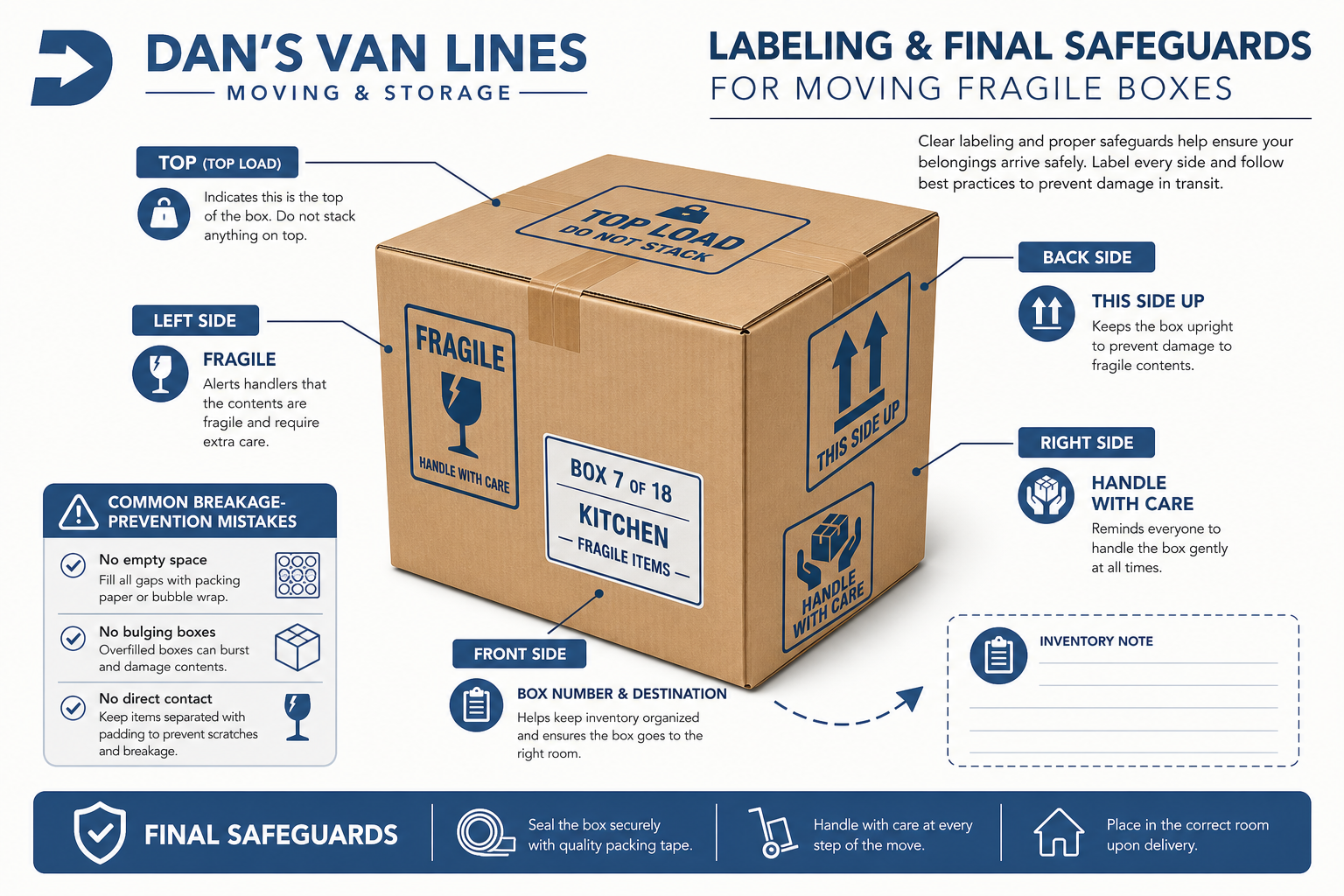
Commercial movers frequently use room-level labels, zone identifiers, color-coding, numbering systems, and staged areas. These systems tell movers where each item belongs and help employees understand how the new space is being rebuilt.
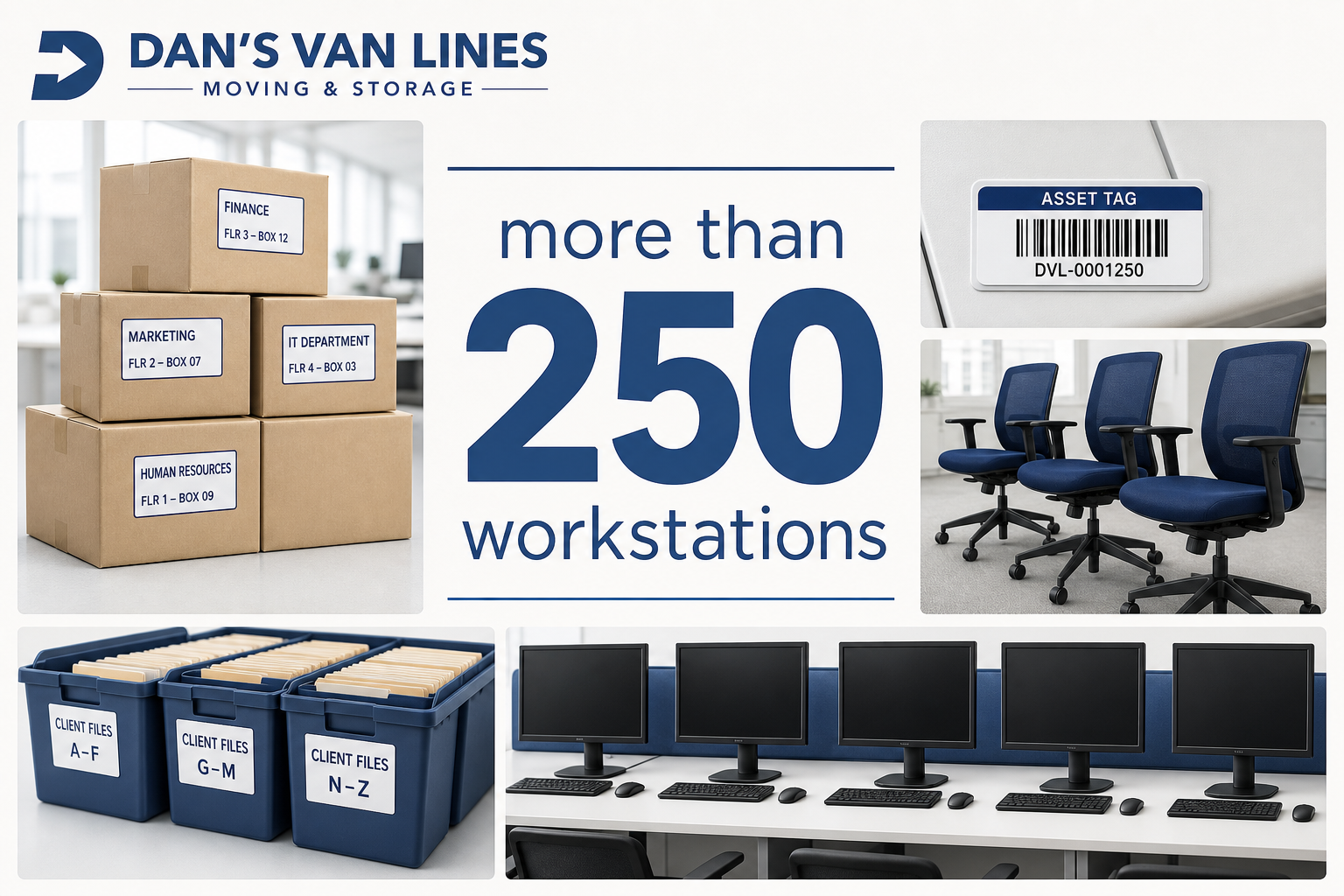
The average office relocation in global commercial datasets involves the transfer of more than 250 workstations, including IT hardware, document archives, and office furniture. At that scale, the details cannot be managed by memory alone.
Packing systems: Commercial-grade packing materials and careful packing procedures help protect office contents, documents, shared supplies, and equipment during transport.
Room and zone labels: Labels connect each item to a specific destination, such as a floor, department, room, workstation, or storage area.
Staging areas: Staging creates order before loading and after delivery, especially when some departments move before others.
Inventory lists: Written or digital lists help the business confirm what is moving, what is stored, and what has been delivered.
Asset tags: Tags are useful for furniture, fixtures, equipment, and other assets that need to be tracked through the move.
This is one of the places where an experienced office moving provider fits naturally into the process. Dan’s Van Lines offers office moving services for businesses that need trained movers, careful handling, and support for safe, efficient, fully insured business relocations.
Storage can solve timing problems during renovations, phased moves, and delayed occupancy
Not every office relocation happens in one clean step. Sometimes the new space is not ready. Sometimes a company is renovating in phases. Sometimes furniture, files, fixtures, or archived materials need to be removed from the current space before they can be placed in the final destination.
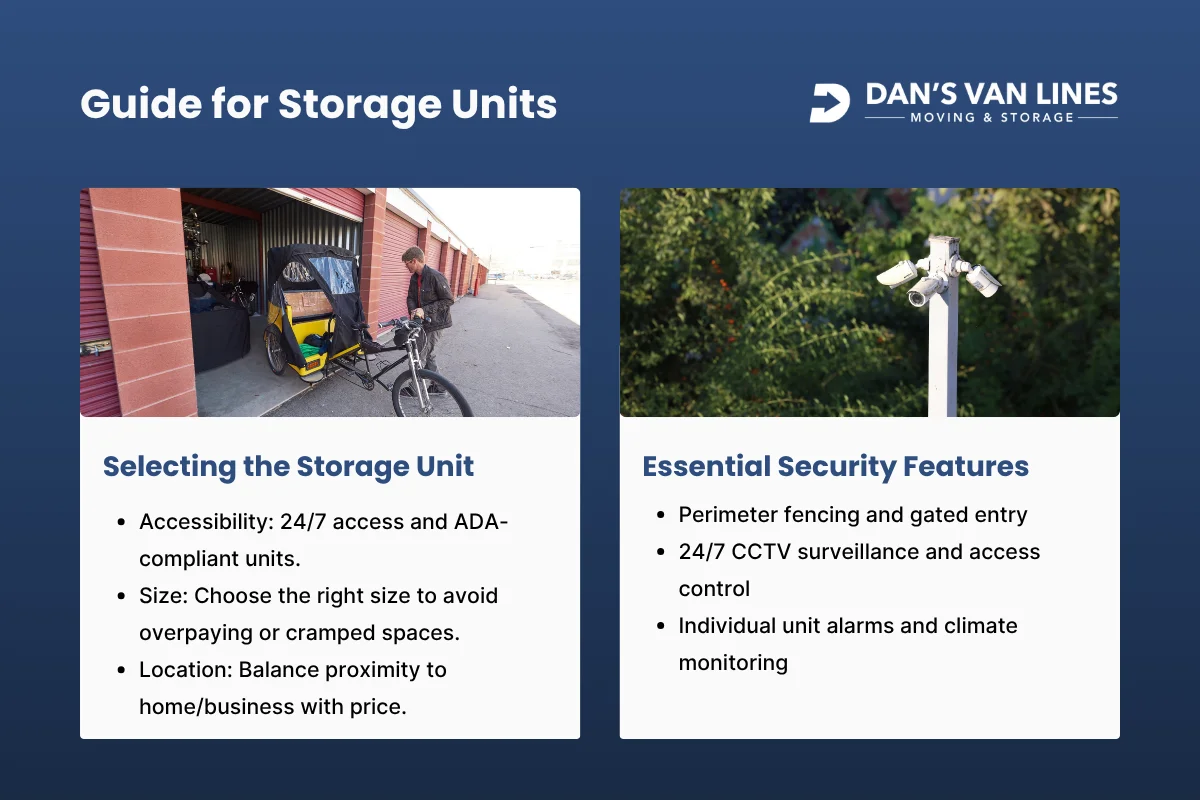
Storage can help bridge that gap. Commercial moving firms commonly provide short-term and long-term storage for office furniture, fixtures, and archives, especially when occupancy dates shift or renovation schedules overlap with relocation schedules.
Storage is most useful when it is tied to asset management. The business should know what is in storage, where it is stored, and when each item will return to the workspace.
Renovation projects often rely on temporary movement and re-entry planning
During renovations, teams may move into swing space or temporary offices while construction continues. Some furniture or archives may need to be stored until the renovated areas reopen.
This creates a move that is less like a single relocation and more like a sequence of controlled transitions. The business may move out, operate temporarily, and then move back into a redesigned space.
A good plan defines each phase. It should identify what leaves first, what stays active, what goes into storage, and what returns when each section is ready.
Phased office relocation helps companies reduce disruption during the move
Phasing is one of the most important tools for limiting business disruption. Instead of moving every person, department, and asset at once, the company moves in planned segments.
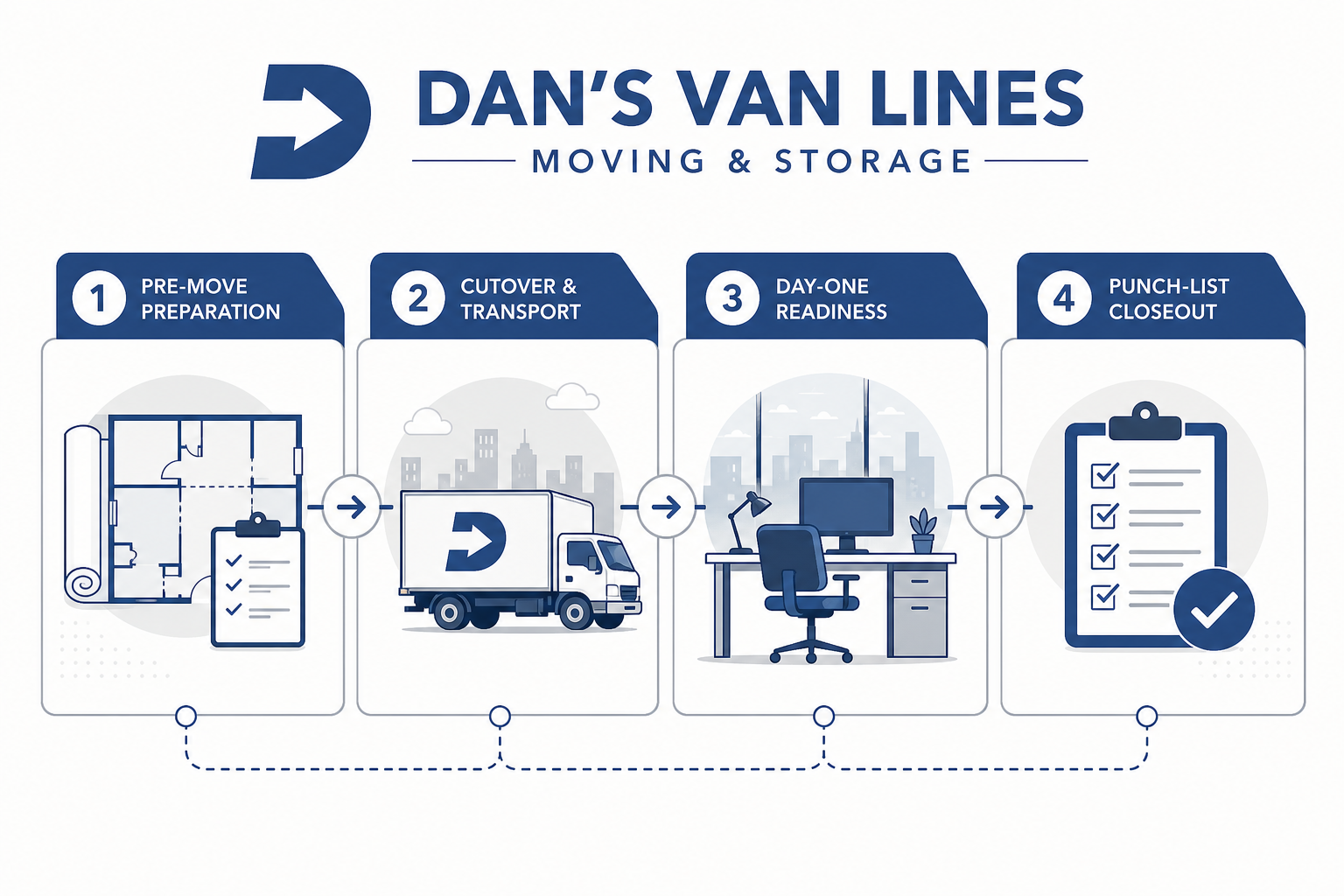
Office relocation specialists commonly use phased and floor-by-floor moves for larger operations. A structured workflow can include pre-move preparation, cutover and transport, and day-one readiness, with each stage focused on maintaining control.
Phasing is especially helpful when some departments are more critical than others. A company may decide to move lower-risk areas first, protect customer-facing departments until the last practical moment, or schedule major transport during evenings or weekends.
Pre-move preparation: Confirm floor plans, room names, point-of-contact roles, packed asset lists, and items that require special handling.
Cutover and transport: Move teams or zones according to business priority, using destination labels and completion tracking at origin and destination.
Day-one readiness: Place priority desks, shared spaces, workstations, and essential areas first so teams can resume work faster.
Punch-list closeout: Address remaining items, surplus areas, storage needs, or lower-priority spaces after critical functions are restored.
The phased approach also improves communication. Employees know when their area moves, managers know what to expect, and the move team can focus on one defined stage at a time.
Reliable office relocation specialists begin with a detailed walkthrough and written plan
Choosing a relocation partner should start with planning quality. A walkthrough gives the moving team a chance to review access points, elevators, loading constraints, building rules, furniture, equipment, and destination requirements.
Industry information shows that roughly 10% of U.S. businesses relocate their offices annually, creating ongoing demand for providers that can manage commercial projects. Broader moving industry data also shows the scale of available providers, with the Better Business Bureau reporting 17,936 moving companies and 109,062 employees in 2023.
Because there are many providers in the market, businesses should look beyond basic availability. The right office relocation specialists should be able to explain the scope, timeline, labeling method, staffing approach, storage needs, and risk controls in plain language.
A strong commercial move plan answers practical questions before move day
The best move plans are specific. They define what is being moved, what is not being moved, who makes decisions, and what happens if timing changes.
A walkthrough and planning process should clarify the business’s operational priorities. This includes which departments need the least disruption, which assets require special handling, and which areas must be ready first at the destination.
Before selecting a provider, companies should be able to compare the clarity of each mover’s plan. A vague plan can lead to rushed decisions later.
Scope of work: The plan should identify offices, workstations, furniture, files, storage areas, equipment, warehouse zones, or specialized spaces included in the move.
Move sequence: The timeline should show whether the move happens by department, floor, function, or priority level.
Labeling method: The mover should explain how cartons, furniture, equipment, and destination zones will be labeled.
Storage needs: The plan should define whether items will move directly, be staged temporarily, or enter short-term or long-term storage.
Day-one priorities: The business should identify which rooms, teams, desks, and shared spaces need to be functional first.
Risk controls: The provider should address asset protection, insurance, tracking, confidentiality, and special handling needs.
Digital tracking and asset management are becoming more important in commercial relocation
Commercial relocation is increasingly tied to visibility. Businesses want to know where their assets are, what has been delivered, what remains in storage, and what still needs attention.
Market analyses note that more than 23,000 professional commercial movers worldwide are scaling through digitalization, real-time tracking, and fleet modernization. These tools are especially useful when a project involves many workstations, multiple departments, warehouse assets, or specialized equipment.
Tracking does not replace careful planning, but it strengthens it. When labels, inventories, and asset lists match the move sequence, the business has a clearer way to verify progress and resolve exceptions.
Asset tracking is most valuable when the move has many destinations
A simple move into one open space may not need the same tracking detail as a multi-floor office, warehouse, or specialized facility. Complexity increases when items are assigned to different rooms, departments, storage areas, or future phases.
Asset tags and inventories help prevent misplaced furniture, records, equipment, and supplies. They also make it easier to distinguish between items that have been delivered and items intentionally placed in storage.
For companies with large workplaces, phased renovations, or delayed occupancy, visibility can reduce uncertainty during a stressful transition.
How to prepare your business before office relocation specialists arrive
A moving partner can manage the physical relocation process, but the business still plays an important role. Internal preparation helps the move team work faster and reduces last-minute questions.
Preparation should begin with decisions about what is moving and what is staying. Companies should also assign internal contacts who can answer questions about departments, priority areas, technology, confidential materials, and building coordination.
The most effective preparation is practical and specific. It gives employees clear direction and gives the move team the information needed to execute the plan.
Internal decisions should be made before packing begins
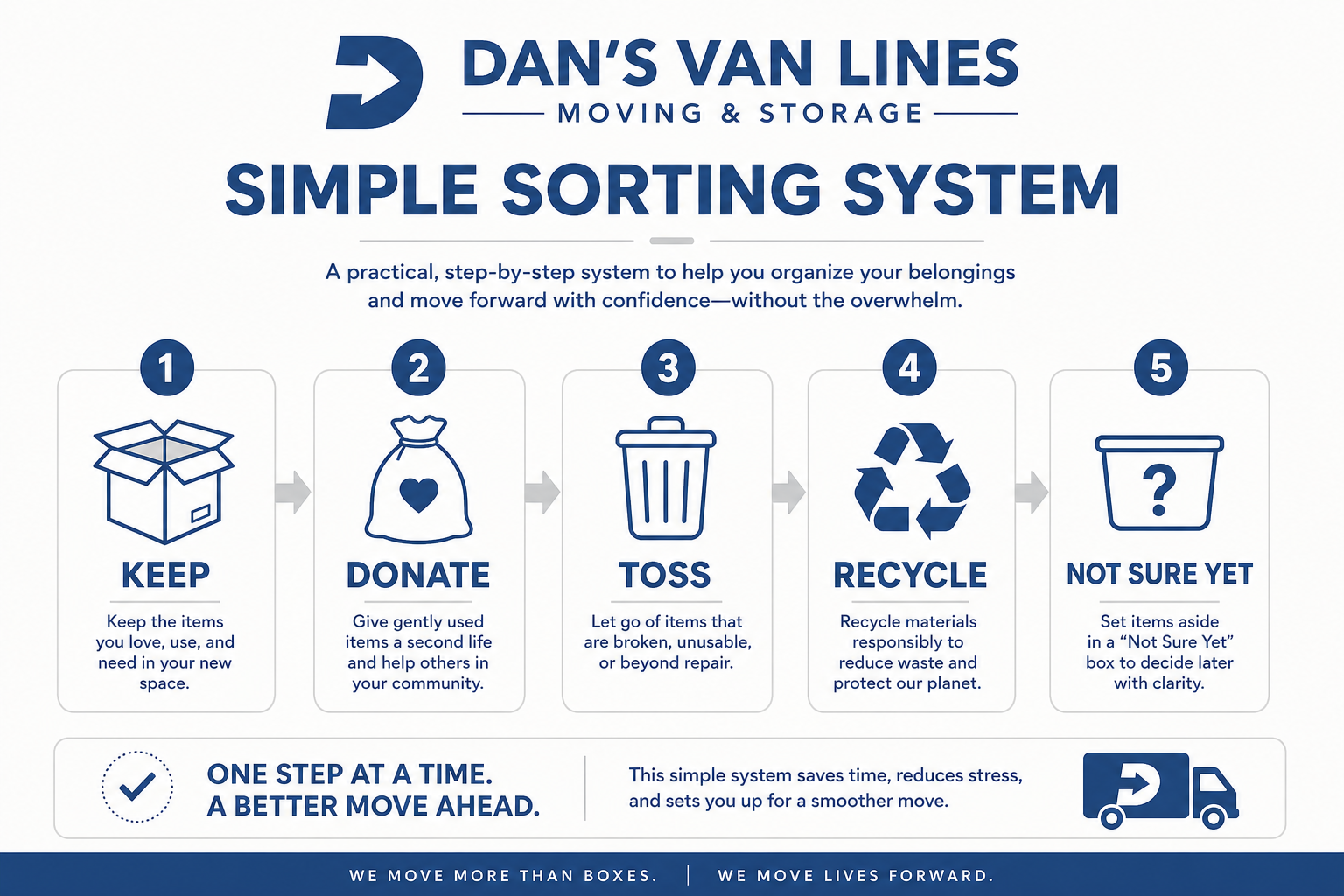
Before packing starts, the business should decide what will be moved, stored, discarded, or handled separately. These decisions are easier to make before boxes are sealed and furniture is staged.
Employees also need guidance. If staff are responsible for personal desk contents, they should know what to pack, how to label it, and when it must be ready.
Managers should confirm which areas are business-critical. That information helps the relocation team build a sequence that supports operational continuity.

Office relocation specialists give commercial moves a more controlled path from planning to day-one readiness
Whether a company is moving a small office, a large corporate workplace, a warehouse, or a specialized facility, the core challenge is the same: assets, people, spaces, and timelines must come together without unnecessary disruption.
Office relocation specialists help by creating structure. They define the scope, label and track assets, sequence the move, protect sensitive items, coordinate storage when needed, and focus on making priority areas ready for use.
For many businesses, the value is not just in moving furniture from one address to another. It is in keeping the relocation organized enough that employees can return to work with less confusion and fewer delays.
If your business is planning an office relocation in Alexandria or Northern Virginia, Dan’s Van Lines can help with professional office moving, packing, storage, specialty moving, and related business relocation services. Get a Quote today at https://www.dansvanlines.com/contact-us or call (703) 553-0900.











.webp)
%20(1).webp)
.webp)
.webp)

.webp)
.webp)
.webp)


.avif)
%201.svg)

%201.svg)
%201.svg)